


What if the "tobacco velvet" or "lychee" listed on your coffee bag isn't an added syrup, but a hidden message from the soil itself? Many enthusiasts find the distinction between flavored coffee and authentic flavor notes confusing, especially when technical jargon feels more like a barrier than an invitation. You've likely stared at a label promising stone fruit while only tasting bitterness, wondering if your palate is simply unrefined. It's a common hurdle, yet identifying these nuances is a skill anyone can master. This coffee flavor notes guide is designed to demystify that sensory language, helping you translate professional cupping terms into a deeper appreciation for your daily ritual.
With 85% of coffee drinkers now brewing at home and specialty coffee consumption reaching record highs in 2026, the demand for quality and clarity has never been greater. We'll show you how to decode the influence of origin, roast level, and experimental fermentation on the final cup. You'll learn to distinguish between the bright acidity of an anaerobic single-origin and the rich, reliable body of a Milano blend. By the end of this guide, you'll possess the tools to select beans that align perfectly with your personal preferences, turning every brew into a moment of intentional luxury.
Key Takeaways
- Understand the vital distinction between chemically flavored beans and the natural complexity of specialty Arabica.
- Explore how terroir and processing methods dictate whether your cup leans toward vibrant fruitiness or deep, chocolatey clarity.
- Master a professional sensory framework by using this coffee flavor notes guide to transition from general impressions to precise descriptors.
- Refine your palate with practical techniques, such as aeration, to observe how a flavor profile evolves as it cools.
- Elevate your daily ritual by identifying signature notes, like toasted bread and cocoa, within sophisticated selections like the Milano Blend.
Demystifying Coffee Flavor Notes: Natural Complexity vs. Artificial Additives
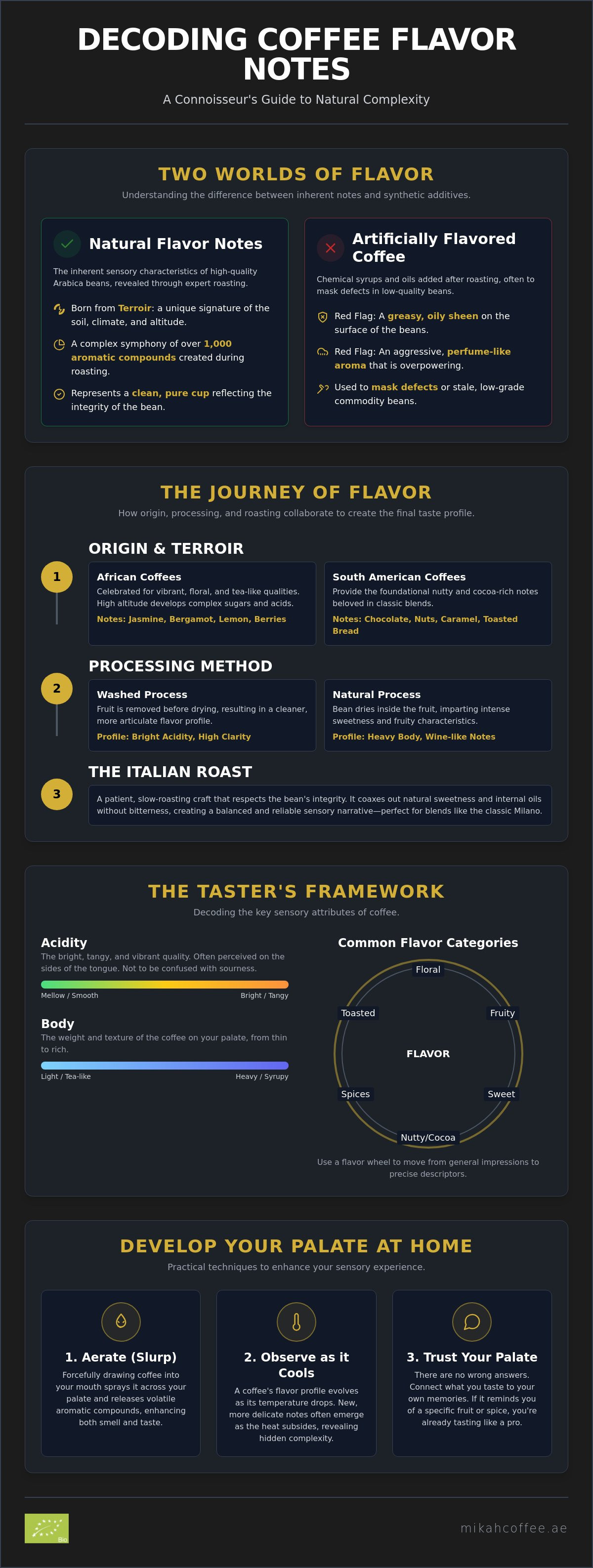
When you encounter a label promising "notes of dark chocolate and orange zest," it's easy to assume someone added an extract during the roasting process. In the world of specialty coffee, this couldn't be further from the truth. These descriptors represent the inherent sensory characteristics of the Arabica bean, forged by the earth and revealed by the flame. This coffee flavor notes guide isn't about teaching you to taste things that aren't there. It's about providing the vocabulary to describe the incredible chemical complexity already present in every high-quality brew.
The Chemical Symphony of Roasted Coffee
During the roasting process, a series of complex transformations known as the Maillard reaction occurs within the bean. This reaction rearranges sugars and amino acids to create hundreds of volatile organic compounds (VOCs). These are the same molecules found in other natural foods; a specific compound might be identical to one found in a ripe raspberry or a toasted almond. While wine is often celebrated for its complexity, roasted coffee actually contains a higher concentration of aromatic compounds, often exceeding 1,000 unique signatures. Flavor notes are the perceived aromatic and gustatory profile of unflavored beans as experienced through the senses.
Tasting Notes vs. Flavored Coffee
Distinguishing specialty beans from chemically flavored alternatives is essential for any connoisseur. Artificial "mall coffees" often use thick, oily syrups to mask low-quality beans or defects. Red flags include a greasy sheen on the beans or an aggressive, perfume-like scent that lingers long after the bag is closed. In contrast, the Italian slow-roasting tradition focuses on purity. This method coaxes out the bean's natural sweetness and internal oils without the need for synthetic additives. It's a patient craft that respects the integrity of the harvest.
To truly understand these nuances, many enthusiasts look toward the professional practice of coffee cupping, which uses a standardized environment to isolate specific flavors. This method allows the taster to evaluate the "cleanliness" of the cup, ensuring no outside influences interfere with the bean's story. Your palate is a deeply personal tool, and there are no wrong answers in sensory exploration. Don't feel pressured to identify every subtle hint of "stone fruit" immediately. Trust your own olfactory memory. If a particular cup reminds you of a crisp autumn morning or a specific spice from your childhood, you're already mastering the art of the connoisseur.
The Alchemy of Origin: How Terroir and the Italian Roast Shape the Profile
Every coffee bean is a traveler. Long before it reaches your cup, it carries a genetic and geographic signature known as terroir. This French term, borrowed from the world of fine wine, encompasses the altitude, soil composition, and climate of the region where the coffee was grown. In high-altitude regions like those in Ethiopia or Colombia, the coffee cherries mature slowly. This extended growth period allows the plant to develop a higher density of sugars and acids, resulting in the complex profiles found in any professional coffee flavor notes guide.
Processing methods further refine this raw potential. A "washed" process, where the fruit is removed before drying, typically highlights clarity and bright acidity. Conversely, "natural" processing, where the bean dries inside the fruit, imparts heavy, wine-like notes and intense berry sweetness. While single-origin coffees offer a snapshot of a specific farm, the Italian philosophy favors the art of the blend. By combining beans from diverse regions, a roaster can create a balanced, reliable sensory narrative that a single farm simply cannot achieve alone. This intentional curation ensures that the sharp citrus of one bean is softened by the deep, chocolatey base of another.
Regional Profiles: From African Berries to South American Cocoa
African coffees, particularly those from Ethiopia, are celebrated for their vibrant, floral, and tea-like qualities. They often present notes of jasmine, bergamot, or lemon zest. In contrast, South American beans from Brazil and Colombia provide the foundational nutty and cocoa-rich notes that many drinkers find comforting. These specific regions are meticulously selected for premium Milano blend coffee beans, where the goal is a harmonious marriage of African brightness and South American depth. It's a structured approach to flavor that prioritizes a complete, rounded experience over isolated, singular notes.
The Roaster’s Hand: Crafting the Milano Soul
The roasting process is where the bean's potential meets the roaster's intent. Italian slow-roasting is a patient discipline. It avoids the scorched, oily surfaces of commercial dark roasts, focusing instead on preserving the delicate internal oils. As the roast progresses, the flavor profile shifts across The Coffee Taster's Flavor Wheel. Early stages highlight "enzymatic" notes like flowers and fruit. As heat increases, the Maillard reaction moves the profile toward "sugar browning," creating the toasted bread and caramel notes central to the Milano soul. Consistency is the hallmark of this craft; each batch must mirror the last to uphold the tradition of the blend. If you're looking to experience this balance in your own kitchen, you might consider exploring our range of specialty coffee selections to find your perfect match.
The Taster’s Framework: Decoding Acidity, Body, and the Sensory Wheel
How do we move from a vague impression of "good coffee" to a precise, professional description? The answer lies in a structured framework that prioritizes observation over guesswork. When using a coffee flavor notes guide, the goal is to peel back the layers of a brew much like an onion. We begin with the broad categories and work our way toward the specific nuances that define a particular harvest. This methodical approach transforms a simple morning drink into a sophisticated sensory study, allowing you to appreciate the craftsmanship behind every bean.
The industry standard for this exploration is the SCA Coffee Taster’s Flavor Wheel. It's designed to be read from the inside out. Start at the center with general descriptors like "Fruity" or "Roasted." Once you've identified the core family, move to the next tier to find "Citrus" or "Nutty." Finally, the outermost ring offers the most precise notes, such as "Grapefruit" or "Hazelnut." This logical progression prevents the palate from becoming overwhelmed and provides a shared language for enthusiasts and professionals alike.
Acidity: The Spark of the Cup
In the world of specialty coffee, acidity is a virtue, not a flaw. It's the "spark" that provides structure and lift, preventing the darker, heavier notes from feeling muddy. It's vital to distinguish between "bright" acidity and "sour" coffee; sourness is often a sign of under-extraction or poor roasting, while brightness is a sign of quality. Different acids create different sensations:
- Citric Acid: Think of the sharp, refreshing zing of a lemon or lime.
- Malic Acid: A smoother, more rounded acidity reminiscent of a crisp green apple.
- Phosphoric Acid: Often found in high-altitude beans, it creates a sparkling, effervescent mouthfeel.
To identify acidity, pay attention to the "tingle" on the sides of your tongue. Does it remind you of a tart berry or a mellow stone fruit? This clarity is what separates a mundane cup from a masterpiece.
Body and Mouthfeel: The Texture of Luxury
While flavor is about what you taste, body is about what you feel. It's the weight and viscosity of the liquid on your palate. A coffee can have a light, tea-like body that feels elegant and ethereal, or a heavy, syrupy body that coats the tongue in a velvet-like texture. This weight is largely determined by the presence of coffee oils and fine particles. If you prefer milk-based drinks, using the Mikah milk frother online can help you achieve a professional-grade microfoam that enhances this perceived luxury, adding a creamy dimension to your daily ritual.
Interestingly, these sensory skills aren't limited to coffee. Developing a refined palate allows you to appreciate the vegetal sweetness and umami depth of ceremonial grade matcha UAE. Whether it's the grassy notes of high-end tea or the toasted bread aroma of an Italian espresso, the framework remains the same: observe, categorize, and enjoy.
The Art of the Sip: A Practical Guide to Developing Your Palate at Home
Developing a refined palate is less about luck and more about intentionality. While professional labs use standardized cupping, you can easily replicate this sensory depth in your own kitchen. This part of our coffee flavor notes guide focuses on the "slurp" technique. By forcefully drawing the coffee into your mouth, you aerate the liquid. This creates a fine mist that travels to the back of your throat, engaging your retronasal olfaction. It's here that the brain truly decodes complex aromas like jasmine or toasted hazelnut. Without this aeration, you're only experiencing half of the bean's potential.
Clarity is also a product of your environment. Water quality is the silent variable in every brew; if your water is too hard or chemically treated, it will mute the delicate acids you're trying to identify. Use filtered water to ensure a clean canvas. Cleanliness of your equipment is equally paramount. Residual oils from yesterday's brew can go rancid, introducing a localized bitterness that masks the true profile of a premium Arabica bean.
Equipment and Flavor Perception
The tools you choose act as the lens through which you view the coffee's character. High-pressure environments, such as those created by professional espresso machines, tend to intensify sweetness and body by emulsifying oils into a rich crema. In contrast, the paper filtration of a V60 pour over kit UAE offers unparalleled clarity, allowing delicate floral highlights and tea-like textures to shine through. Brewing pressure alters the extraction of specific aromatic compounds, meaning the same bean will tell a different story depending on the device you use.
A Step-by-Step Home Tasting Ritual
A proper home tasting ritual follows a methodical pace. Temperature is a storyteller, and the narrative changes as the cup cools. Follow these steps to capture the full spectrum:
- Step 1: Fragrance and Aroma. Smell the dry grounds immediately after grinding, then evaluate the "wet" aroma once the water hits. Do you notice a shift from nutty to fruity?
- Step 2: The First Sip (70°C). At this temperature, primary sweetness is most apparent. It's the best time to judge the coffee's weight and basic flavor family.
- Step 3: The Cooling Phase. As the coffee nears room temperature, the perceived acidity increases. This is when hidden notes of stone fruit or bright citrus become unmistakable.
- Step 4: The Finish. Evaluate the aftertaste. A high-quality roast should leave a clean, pleasant lingering sensation rather than a dry or ashy one.
Ready to put these techniques into practice? Discover the perfect canvas for your sensory exploration by browsing our specialty coffee selections today.
Curating Your Morning Ritual: Exploring the Mikah Sensory Experience
Curating your morning ritual is the final step in your sensory education. While the previous chapters of this coffee flavor notes guide focused on the science and technique of tasting, this section is about the art of selection. Choosing the right bean is a commitment to quality that defines the rhythm of your day. It's about finding that perfect intersection between tradition and personal preference; ensuring every cup reflects the standards of a true connoisseur. When you approach your brew with intention, you're not just making a drink, you're practicing a craft that has been refined over centuries.
The transition from a casual drinker to a connoisseur requires a reliable sensory foundation. This is why many enthusiasts begin their journey with a blend that offers a structured, repeatable profile. By removing the volatility often found in single-origin beans, you can focus on mastering the variables of your brewing method. Once you've developed a baseline for excellence, you'll find it much easier to navigate more adventurous, seasonal selections that push the boundaries of traditional flavor profiles.
Signature Profiles: The Milano Blend Deep Dive
The Milano Blend serves as the cornerstone of our collection. It's an expertly crafted masterclass in balance, specifically developed to provide a reliable sensory benchmark for enthusiasts across the Emirates. Unlike single-origin beans that can fluctuate wildly in acidity or fruitiness, this blend offers consistent, evocative notes of toasted bread and rich cocoa. This consistency makes it the ideal starting point for training your palate. By returning to this familiar profile regularly, you'll find it much easier to notice how subtle changes in your water quality or grind size affect the final extraction and mouthfeel.
Elevating the Experience with Premium Hardware
Even the most exceptional beans require the right tools to reveal their hidden secrets. Precision is the key to unlocking the complex aromatics found in our Nespresso compatible capsules UAE. Many enthusiasts are surprised to learn that capsule technology, when executed with heritage roasting standards, can deliver the same nuanced body and sweetness as a traditional pull. It's all about maintaining the integrity of the bean from the roaster to the final sip. Professional-grade grinders and machines ensure that every particle extracts at a uniform rate, preserving the clarity of the cup.
We invite you to join the Mikah Coffee UAE community of connoisseurs who value the depth behind the drink. Our mission is to share a passion for Italian excellence with those who appreciate the finer details of the craft. Whether you're seeking a professional espresso machine for your home or our signature blends for your daily ritual, our experts are here to guide your discovery. Explore the full Mikah Coffee UAE collection online and discover how a dedicated focus on craftsmanship can elevate your daily life.
Mastering the Art of the Sip
Decoding a bean's sensory profile is more than a technical exercise; it is an act of mindfulness that honors the journey from soil to cup. Throughout this coffee flavor notes guide, you've explored how terroir, the Maillard reaction, and intentional brewing techniques converge to create a truly luxurious experience. By applying a structured framework and trusting your own olfactory memory, you've moved beyond simple caffeine consumption into the realm of professional sensory analysis. The nuances of a high-altitude Arabica are no longer a mystery, but a dialogue between the roaster's craft and your personal palate.
Since 1984, Mikah Coffee UAE has upheld an authentic Italian heritage by bringing only the finest, expertly curated selections to our community. Our connoisseurs travel the globe to source beans that offer unparalleled sensory depth, from the chocolatey balance of our Milano Blend to vibrant seasonal specialties. With nationwide UAE delivery on all premium beans and professional machines, your next discovery is never far away. Discover the sensory depth of our Milano Blend and specialty beans at Mikah Coffee UAE today and begin your journey into the extraordinary. Your perfect cup is waiting.
Frequently Asked Questions
Why does my coffee taste bitter instead of the notes listed on the bag?
Bitterness is often a sign of over-extraction caused by water that is too hot or a grind size that is too fine. When you brew for too long, you extract heavier, ashy compounds that mask the delicate nuances described in a professional coffee flavor notes guide. Try coarsening your grind or reducing your brew time to reveal the hidden sweetness and acidity within the bean.
Can I taste flavor notes if I add milk and sugar to my coffee?
Milk and sugar act as sensory buffers that significantly mute the coffee's natural acidity and delicate aromatics. While foundational notes like cocoa or toasted nuts might still be perceptible, the more ethereal hints of jasmine or stone fruit are usually lost. We suggest taking a small sip of your brew black before adding any accompaniments to truly appreciate its inherent character.
What is the Coffee Taster’s Flavor Wheel and how do I use it?
The Coffee Taster’s Flavor Wheel is a standardized industry tool designed to help enthusiasts move from general impressions to specific descriptors. To use it, always start at the center with broad categories like "Fruity" or "Nutty." As you refine your perception, move toward the outer rings to find precise terms like "Blackberry" or "Hazelnut." It's a vital resource for anyone using a coffee flavor notes guide to build sensory literacy.
Does the freshness of the roast affect the flavor notes?
Freshness is paramount because the volatile organic compounds responsible for aroma begin to dissipate the moment the roasting process ends. Most specialty beans reach their sensory peak between 7 and 21 days after roasting. Beyond this window, the vibrant, "enzymatic" notes like citrus and florals begin to fade, eventually leaving a flat or woody profile as the oils oxidize.
Are flavor notes actually added to the beans during roasting?
Authentic flavor notes are never added; they are the natural result of the bean's genetics, terroir, and the roasting process. Unlike commercial "flavored" coffees that use synthetic oils, specialty Arabica beans contain over 1,000 aromatic compounds that mimic familiar scents. The Maillard reaction during roasting simply coaxes these inherent characteristics to the surface, maintaining the purity of the harvest.
How does water temperature change the taste of my coffee?
Water temperature serves as the catalyst for extraction, with different flavors dissolving at different heat levels. Water that is too hot, typically above 96°C, can scorched the grounds and lead to a harsh, bitter cup. Conversely, water below 90°C often fails to extract enough sugars, resulting in a thin, sour taste. Finding the right balance is essential for achieving a clear, transparent profile.
What is the difference between "fragrance" and "aroma" in coffee?
Fragrance refers specifically to the scent of dry coffee grounds immediately after they've been milled. Aroma describes the scent of the coffee once it has been saturated with hot water and the "crust" has been broken. Both stages are critical for a complete sensory evaluation, as certain notes only become apparent when the coffee is in its liquid state.
Which coffee notes are best for beginners to try and identify?
Beginners should focus on identifying broad, contrasting categories such as "Chocolatey," "Nutty," or "Citrus." These foundational profiles are often clearly defined in balanced selections like our Milano Blend. Once you're comfortable distinguishing between a heavy, cocoa-rich body and a bright, acidic cup, you can begin the more advanced work of identifying specific fruits and spices.