


Did you know that the appetite for high-tier green tea in the region is growing at a staggering rate, with the value of ceremonial grade selections increasing by up to 22% annually? It's a clear signal that residents are no longer satisfied with mass-produced alternatives. You've likely encountered the confusion of evaluating disparate price points and vague labels while searching for authentic ceremonial grade matcha UAE. It's frustrating to seek a moment of calm only to be met with the grit and bitterness of a powder that's ceremonial in name only.
This guide is designed to bridge that gap, offering you the definitive standards required to identify a true gold standard harvest. We'll explore the sensory markers of quality and the impact of the latest 2026 food labeling standards on your purchase decisions. You'll learn how to curate a world-class tea ritual that fits seamlessly into a busy lifestyle, ensuring every bowl you whisk is a masterclass in purity and tradition. From identifying premium origins to finding a reliable brand for national delivery, your journey toward becoming a true matcha connoisseur begins here.
Key Takeaways
- Identify the geographical signatures of excellence, specifically why the Uji and Kagoshima regions remain the global gold standard for leaf purity.
- Master the sensory cues of high-quality ceremonial grade matcha UAE, from its electric emerald hue to the delicate, sweet umami finish that defines the grade.
- Uncover the technical artistry behind stone-ground tea, understanding how traditional granite mills and specific cultivars like Okumidori create a superior texture.
- Refine your daily preparation with expert techniques on water temperature and traditional tool usage to ensure a smooth, froth-heavy bowl every time.
- Discover the significance of direct sourcing and how a curated selection process guarantees the freshness and vibrancy of your 2026 harvest.
What Defines Authentic Ceremonial Grade Matcha in the UAE?
Ceremonial grade matcha is the vibrant, stone-ground result of the year's first tea harvest. In the diverse tea markets of Dubai and Abu Dhabi, where luxury is often defined by attention to detail, this 'gold standard' represents the absolute pinnacle of Japanese tea craftsmanship. The term 'ceremonial' isn't just a marketing label; it is a promise of purity. It signals that the powder is intended to be whisked with water and enjoyed alone, without the masking agents of milk or sugar. Understanding the history and cultural significance of matcha reveals why this specific grade is so revered; it was once reserved for the Japanese elite and Zen monks who valued its clarity of flavor. Today, finding authentic ceremonial grade matcha UAE requires looking toward the mist-covered hills of Uji or the nutrient-rich volcanic soils of Kagoshima. These regions offer the perfect microclimate, producing leaves with a depth of flavor that lower-altitude plantations simply cannot replicate.
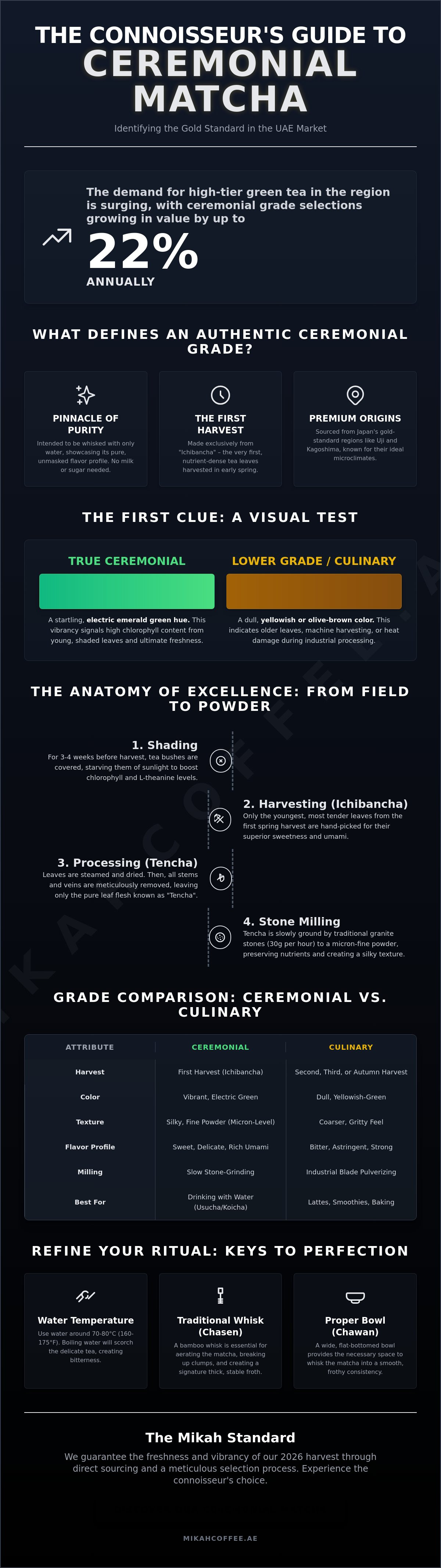
How do you know you've found the real thing? Start with a visual test. True ceremonial matcha possesses a startling, electric green hue. This vibrancy is a direct result of the high chlorophyll content found only in the youngest, most tender leaves. If the powder appears dull, yellowish, or olive, it's likely a culinary grade disguised as premium. When you open a tin of the highest quality, the color should look almost neon, a sensory indicator of the freshness and care taken during the harvest and milling process.
The Ichibancha Harvest: Why Timing is Everything
Timing is everything in the world of premium tea. The first harvest of the year, known as Ichibancha, occurs in late spring and is the only harvest used for true ceremonial grades. These first-flush leaves have spent the long winter months storing vital nutrients, resulting in a high concentration of L-theanine. This specific amino acid provides the natural sweetness and the 'calm-alert' feeling that connoisseurs seek. Later harvests, while useful for baking, lack this delicate chemical balance and often carry a sharp, astringent bitterness that overpowers the palate.
The Role of Shading in Chlorophyll Production
The secret to that signature umami lies in the shadows. For roughly three to four weeks before harvest, tea bushes are covered with traditional straw mats or black netting. This intentional process starves the plant of sunlight, forcing it to overproduce chlorophyll and amino acids to survive. This chemical transformation is what creates 'Tencha', the raw leaf material that is de-veined and de-stemmed before being stone-ground. Shading transforms standard green tea leaves into a profile that is rich, savory, and undeniably smooth on the tongue.
The Anatomy of Excellence: From Shaded Fields to Stone Mills
The journey from a shaded leaf to a bowl of whisked perfection is a study in precision. While the shading process sets the stage, the physical transformation of the leaf is where true quality is forged. Achieving a world-class ceremonial grade matcha UAE experience depends heavily on cultivar selection. Most premium harvests utilize the Yabukita cultivar for its reliable, classic taste, or the Okumidori for its deep, creamy finish. These leaves undergo a rigorous cleaning process where every stem and vein is removed. What remains is only the pure leaf flesh, known as Tencha. This meticulous separation is essential; even a small amount of fibrous stem material will ruin the silk-like texture and create a gritty, unappetizing mouthfeel that no amount of whisking can fix.
The chemical composition of matcha is remarkably sensitive to its environment during this processing stage. If you've ever wondered why some powders feel like velvet while others feel like sand, the answer lies in the milling method. Authentic ceremonial tea is ground using traditional granite stones. These mills turn at an incredibly slow pace, often producing only 30 grams of powder per hour. Why this painstaking speed? It prevents heat friction. High temperatures during industrial milling can effectively "cook" the delicate powder, destroying the heat-sensitive antioxidants and leaving the tea with a dull, yellow-green tint.
Granite Milling vs. Industrial Processing
Stone-grinding ensures a micron-level particle size, which is the secret behind that thick, stable froth that characterizes a well-prepared bowl. Industrial alternatives often produce larger, jagged particles that sink to the bottom of the bowl rather than suspending in the water. For those seeking this level of artisanal precision, exploring the Ceremonial Grade Matcha at Mikah offers a direct encounter with this traditional craftsmanship.
Preservation Secrets for the UAE Climate
The UAE's environment presents a unique challenge for tea enthusiasts. Heat, light, and oxygen are the primary enemies of high-grade tea. In a climate where temperatures soar, preservation becomes an art form. Once the seal is broken, matcha begins to oxidize immediately, losing its vibrant color and sweet aroma. To protect your investment, airtight, light-blocking tins are non-negotiable. While many suggest a kitchen cupboard, the intense summer heat in the region often makes the refrigerator a safer choice for long-term storage. Just remember to let the tin reach room temperature before opening to avoid condensation, which can cause the powder to clump and spoil. By respecting these storage protocols, you ensure that every serving remains as fresh as the day it was stone-ground in Japan.
Ceremonial vs. Culinary: Selecting the Right Grade for Your Ritual
Choosing between grades is fundamentally a choice between two entirely different sensory experiences. If you intend to drink your tea "neat", mixed only with water, there is no substitute for the highest standard. Ceremonial grade matcha UAE stands apart because it lacks the sharp, hay-like bitterness found in lower-tier products. While culinary grade is a powerhouse in the kitchen, its bold, astringent profile is specifically designed to cut through the heavy fats and sugars of cakes or cookies. In contrast, the delicate sweetness of a ceremonial harvest is easily lost when baked, making it a precious resource better suited for the bowl.
Ceremonial grade is the only choice for a traditional water-based whisking ritual. When you whisk a first-harvest powder, you are engaging with the purest expression of the leaf. This grade is versatile enough to elevate a premium latte, where its natural creaminess complements high-quality milk without requiring added sweeteners. Understanding these distinctions helps you decide when to invest in the "Gold Standard" and when a robust culinary powder will suffice for your recipes.
The Sensory Comparison Table
Identifying the difference between grades becomes simple once you know what to look for. Use this comparison to evaluate your next purchase:
- Color: Ceremonial is a vibrant, electric emerald; Culinary appears as a dull olive or brownish-yellow.
- Texture: Ceremonial is talc-like and silky to the touch; Culinary feels slightly gritty or grainy.
- Aroma: Ceremonial offers a fresh, grassy, and slightly sweet scent; Culinary smells more like dry hay or earth.
You may encounter a middle ground in the UAE market often labeled as "Latte Grade." While this is frequently a high-quality second harvest that performs well with milk, it still lacks the refined umami of a true ceremonial first flush. The cost of ceremonial grade is justified by its nutrient density; you receive more chlorophyll and amino acids per gram, ensuring your investment pays off in both flavor and wellness.
The Health Connoisseur’s Perspective
The divide between grades isn't just about taste; it's about the chemical composition of the leaf. Because ceremonial leaves are shaded for longer periods and harvested during the first flush, they contain significantly higher levels of L-theanine. This amino acid is responsible for the "calm alertness" that many tea drinkers prefer over the jittery spikes of coffee. The concentration of EGCG, a powerful antioxidant, is also vastly superior in these younger leaves. For a deeper technical dive into how these classifications are determined, you can explore this guide on matcha grades explained. This knowledge empowers you to select a product that aligns with your health goals and your palate.
The Modern Ritual: Preparing Your Matcha to Perfection
Mastering the preparation of ceremonial grade matcha UAE is less about following a recipe and more about honoring a meditative art. To respect the stone-ground purity of the leaves, you must employ the correct artifacts. A traditional toolkit consists of the Chawan, a wide, deep-bottomed bowl; the Chasen, a bamboo whisk with hand-carved tines; and the Chashaku, a slender bamboo scoop. These tools aren't merely decorative. The Chasen is engineered to aerate the tea, creating the micro-foam that releases the complex umami aromas we explored in previous sections. Without these specific instruments, you risk a flat, lifeless beverage that fails to showcase the vibrant character of a first-flush harvest.
Precision in water temperature is your most critical variable. Boiling water is the absolute enemy of fine matcha. It scalds the delicate powder, resulting in a bitter, scorched flavor that masks the natural sweetness of the tea. Aim for exactly 80°C. This temperature coaxes out the L-theanine without activating the harsh tannins. When you begin whisking, use a brisk 'W' motion rather than a circular one. This technique encourages maximum aeration, resulting in a dense, velvety froth that sits beautifully on the surface. For those who prefer a contemporary touch, incorporating the Mikah milk frother allows you to achieve this silk-like texture with modern efficiency.
The Traditional Water-Based Preparation
Consistency starts with sifting. Never skip this step, as ceremonial matcha is so finely ground that it naturally clumps due to static electricity. Sifting ensures a smooth, lump-free experience that dissolves instantly. For a perfect balance, use a ratio of 1.5g of matcha to 60ml of 80°C water. This concentration provides a rich, full-bodied flavor without being overwhelming. If you're looking for a visual guide to perfect your technique, follow this step-by-step on how to make matcha tea.
The Elevated Matcha Latte for Busy Professionals
The UAE's fast-paced lifestyle often calls for a more contemporary ritual. A high-quality milk frother can create a professional-grade base for a ceremonial latte in seconds. When choosing a milk, oat milk is often the connoisseur's choice because its natural sweetness complements the umami of the tea without overpowering it. Dairy also works well, provided it is high-quality and not over-steamed. For those just starting their journey, these matcha for beginners hacks can help you integrate this luxury into a hectic morning schedule.
Elevate your daily routine by choosing the right equipment; explore our collection of professional tea and coffee tools to perfect your home ritual.
The Mikah Standard: Why Our Ceremonial Matcha is the Connoisseur's Choice
At Mikah, we believe that excellence is a universal language. Whether it's the perfect crema on a morning espresso or the electric green froth of a whisked tea, the standard of purity remains the same. We apply a legacy of Italian-style quality control to the world of Japanese tea, ensuring that every tin of our ceremonial grade matcha UAE meets the rigorous expectations of a true connoisseur. This isn't a mass-market product; it's a curated selection born from a passion for heritage and craftsmanship. By bridging the gap between traditional Japanese tea fields and the luxury lifestyle of the Emirates, we've created a boutique experience that prioritizes freshness above all else.
Our direct sourcing model is what sets us apart in a crowded market. We've secured the freshest 2026 harvests to ensure that our UAE clientele receives tea at its nutritional and sensory peak. In a region where import quality can vary wildly, we maintain a steady, reliable chain of custody from the stone mills to your doorstep. This dedication to timing ensures that the delicate antioxidants and vibrant color we've discussed are preserved perfectly. Whether you're a long-time enthusiast or just beginning your journey, our national delivery service brings this gold standard directly to you, regardless of where you are in the Emirates.
The Curator’s Promise: Quality Without Compromise
We don't just sell tea; we curate a sensory experience. Every batch of our ceremonial grade is selected for a specific, harmonious balance of natural sweetness and rich body. We understand that a world-class ritual requires more than just high-quality leaves. It requires the right tools. There is a beautiful synergy between our professional equipment, such as the Mikah milk frother, and the traditional matcha ritual. Our commitment to the UAE's growing community of beverage enthusiasts is simple: we provide the expertise and the products necessary to elevate a daily habit into a meaningful moment of calm.
Join the Ritual: Next Steps
Entering the world of high-tier matcha is a rewarding investment in your well-being and your palate. You can easily order our ceremonial matcha online through the Mikah store, ensuring you receive the same level of service you've come to expect from our coffee collections. To ensure your home setup is complete, consider exploring our matcha preparation kits which provide the essential tools for an authentic experience. For those who value variety in their morning routine, we also invite you to explore our Mikah Coffee Beans - Milano Blend. It's the ultimate Italian coffee experience, serving as the perfect bold companion to the delicate, refined nature of our ceremonial tea.
Refining Your Daily Ritual
The transition from a casual tea drinker to a true connoisseur begins with an appreciation for the subtle details. You've explored the significance of the Ichibancha harvest and the mechanical precision of granite milling, which remain the non-negotiable pillars of quality. This isn't just about a beverage; it's about reclaiming a moment of sensory clarity in a busy world. Finding authentic ceremonial grade matcha UAE shouldn't be a matter of chance. It's a conscious choice to prioritize purity and craftsmanship over mass-produced convenience.
Every tin we offer is sourced directly from Japan's premier tea regions and sealed for absolute freshness in light-blocking tins to protect delicate nutrients. We ensure your journey toward the gold standard is seamless, offering national delivery across the UAE within 24-48 hours. Whether you're whisking a traditional bowl or preparing a silk-textured latte, the excellence of your ingredients defines the depth of your ritual.
Elevate your daily ritual with Mikah’s Ceremonial Grade Matcha
We look forward to being part of your journey toward a more mindful and refined daily practice.
Frequently Asked Questions
Is ceremonial grade matcha worth the extra cost in the UAE?
Ceremonial grade is absolutely worth the investment for those who intend to drink their tea neat. It utilize only the first-harvest leaves, which are stone-ground to preserve delicate nutrients and a refined flavor profile. In the UAE market, where discerning palates value purity, the absence of bitterness and the higher concentration of L-theanine justify the premium price compared to lower-tier culinary alternatives.
Can I use boiling water to prepare my ceremonial matcha?
Boiling water should never be used as it scorches the powder and activates bitter tannins. The ideal temperature for ceremonial grade matcha UAE is exactly 80°C. This specific heat level allows the natural sweetness and complex umami notes to bloom without compromising the tea's vibrant color or its fragile nutritional integrity.
What is the difference between ceremonial grade and culinary grade matcha?
The primary difference lies in the harvest timing and the meticulousness of the processing. Ceremonial grade consists of the youngest "first flush" leaves that are de-veined and stone-ground into a silk-like powder. Culinary grade uses later harvests that are naturally more fibrous and astringent. While the former is designed for whisking with water, the latter is intended as a bold ingredient for baking.
How should I store my matcha to keep it fresh in the UAE heat?
Storing your tea in an airtight, light-blocking tin within a cool environment is essential to combat the region's humidity and heat. Once opened, many connoisseurs prefer refrigeration to prevent rapid oxidation. Always ensure the tin reaches room temperature before opening to avoid condensation, which can lead to clumping and a permanent loss of quality.
Does ceremonial grade matcha contain more caffeine than coffee?
A standard serving of matcha typically contains less caffeine than an average cup of coffee, yet it provides a more sustained energy boost. The high concentration of L-theanine in ceremonial leaves slows the absorption of caffeine into your system. This creates a state of "calm alertness" rather than the sharp spikes and crashes often associated with traditional espresso drinks.
How can I tell if my matcha has gone bad or lost its quality?
You can identify a loss in quality through color and aroma. Fresh, high-grade matcha should be a vibrant, electric green and smell fresh and grassy. If the powder has turned a dull olive or brownish-yellow, it has likely oxidized. A bitter, hay-like taste is another definitive sign that the tea has lost its premium characteristics.
Is it necessary to use a bamboo whisk for ceremonial grade matcha?
While modern tools like the Mikah milk frother are excellent for lattes, a bamboo whisk is traditional for water-based preparation. The hand-carved tines are specifically designed to aerate the tea, creating a stable micro-foam that enhances the mouthfeel. This aeration process is vital for releasing the full spectrum of aromas found in a premium, ceremonial grade matcha UAE harvest.
What does 'umami' mean in the context of high-quality matcha?
Umami refers to the "fifth taste," a savory, rich depth that balances the natural sweetness of the tea. In high-quality matcha, this profile is a direct result of the intentional shading process that increases amino acid levels. It provides a creamy, lingering finish on the palate that distinguishes a ceremonial grade from the flat, earthy notes of lesser varieties.