


Most people believe a bitter, lumpy cup of tea is simply the price of health, but true matcha should be a velvet-smooth indulgence. You've likely felt the frustration of watching a premium tin of green powder turn into a gritty, disappointing mess. It's a common struggle. Learning how to make matcha tea correctly is less about following a rigid recipe and more about mastering a sensory ritual where temperature and texture define the soul of the drink. You deserve that vibrant, frothy finish that looks like it belongs in a Kyoto teahouse, yet your home results often feel unrefined.
We're here to bridge that gap between amateur attempts and professional-level artistry. This guide promises to help you master the art of preparing ceremonial grade matcha using a blend of ancient traditions and modern refinements. We'll demystify the essential tools, from the traditional bamboo whisk to the precision of a modern milk frother, while solving the temperature secrets that eliminate bitterness for good. From sifting techniques to the perfect whisking motion, you'll discover how to transform your morning routine into a meditative, flawless ritual that rivals the finest boutiques.
Key Takeaways
- Discover why ceremonial grade matcha, harvested during the first flush, is the essential foundation for a smooth and vibrant finish.
- Learn how to make matcha tea with professional precision by mastering sifting techniques and the specific water temperatures that prevent bitterness.
- Understand the critical role of traditional tools, such as the bamboo whisk, in creating the perfect, creamy micro-foam.
- Unlock the secrets to a meditative morning ritual by avoiding common mistakes like cold vessels or unsifted powder.
- Gain the confidence to prepare a flawless bowl of tea that rivals the quality and texture of a high-end Japanese teahouse.
Understanding the Ritual: What Makes Matcha Extraordinary?
Matcha is more than a beverage; it's a meticulously crafted concentrate of the tea plant's very essence. Unlike traditional steeped tea where leaves are discarded, matcha consists of whole leaves stone-ground into a micro-fine powder. This ensures you consume every milligram of its vibrant chlorophyll and the rare amino acid L-theanine. Understanding the botanical journey of the leaf is the first step in learning how to make matcha tea that tastes like a masterpiece. It isn't just a drink. It's a botanical experience.
There's a distinct "slow-journalism" feel to this process that stands in stark opposition to the frenetic pace of modern mornings. By engaging with the cultural heritage of the Japanese tea ceremony, we find a bridge between ancient mindfulness and contemporary life. This ritual encourages us to linger on the details, from the aroma of the dry powder to the sound of the whisk against the bowl. It's a moment of intentionality in an otherwise hurried world. We don't just consume; we observe.
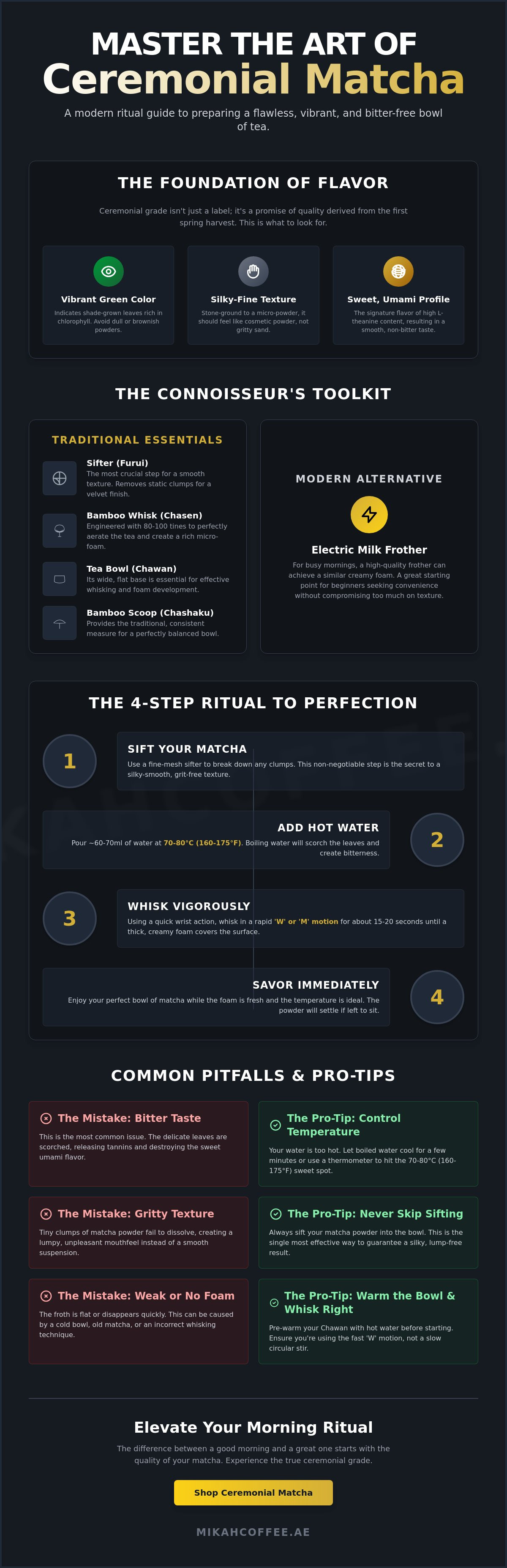
The distinction of ceremonial grade is not mere marketing jargon. It refers specifically to the ichiban-cha, or the first harvest of the spring. These young, tender leaves are shade-grown for several weeks before picking. This shade-growing technique forces the plant to overproduce chlorophyll and amino acids. The result is a signature sweet, umami-rich profile that defines a premium experience. As you master how to make matcha tea, you'll soon realize that the quality of the powder dictates the success of your final bowl.
The Vibrancy of Ceremonial Grade
Color is your first indicator of excellence. High-quality powder glows with an almost electric green hue, whereas lower grades appear dull or brownish. When you touch the powder, it should feel like fine silk or expensive cosmetic powder between your fingers. If it feels gritty, it won't whisk into the creamy foam you desire. For those curious about the nuances of harvesting and processing, our guide on matcha grades explained offers a deeper exploration into these quality tiers.
Matcha as a Functional Ritual
The true magic of matcha lies in "calm alertness." While coffee can often lead to jitters, the synergy between caffeine and L-theanine provides a steady, focused energy. Preparing your bowl becomes a meditative anchor for the day. While the potent antioxidant profile is a significant benefit, the true connoisseur values the preparation as a moment of profound sensory clarity. It's about how you feel during the process as much as the tea itself. Precision leads to peace.
The Connoisseur’s Toolkit: Essential Gear for Preparation
Precision is the hallmark of a connoisseur. While the quality of your leaves is paramount, the instruments you use to prepare them dictate the final texture and aromatic expression. To truly master how to make matcha tea, you must appreciate the mechanics of your tools. Each piece of equipment serves a specific purpose, transforming a simple powder into a suspended emulsion that delights the palate. Without the right gear, even the finest ceremonial powder can fall flat.
The Chawan, or tea bowl, is your primary vessel. It's designed with high, sloping sides and a wide base to provide ample room for the vigorous whisking required to aerate the tea. This space is vital. A standard mug is too narrow; it restricts movement and prevents the development of a thick froth. Complementing the bowl is the Chasen, a bamboo whisk carved from a single piece of wood. With 80 to 100 delicate tines, it's engineered to break down tea particles and create a stable micro-foam. For consistent flavor, the Chashaku (bamboo scoop) offers the exact measurement needed, ensuring you don't over-concentrate the bowl. Finally, never overlook the fine-mesh sifter. This is the most underrated tool in the kit. Sifting removes the tiny clumps formed by static electricity, ensuring a velvet-smooth mouthfeel every time.
Traditional vs. Modern Tools
While tradition offers a deep sense of connection, modern life sometimes demands efficiency. If you find the bamboo whisk intimidating, the Mikah Milk Frother is a sophisticated alternative. When used with a light touch, a high-quality electric frother can achieve a similar micro-foam, making the ritual accessible for a busy morning. Many beginners start with modern equipment before investing in a full matcha preparation kit. Whether you choose the ancient path or a contemporary twist, the goal remains the same: a flawless, vibrant bowl. To explore the best equipment for your kitchen, you can browse the curated selection at Mikah Coffee UAE.
Maintaining Your Equipment
Proper care extends the life of your tools and preserves the purity of your tea. Before each use, pre-soak your bamboo whisk in warm water for a few minutes. This softens the tines, making them flexible and less likely to snap during whisking. When cleaning your Chawan, avoid soap at all costs. The clay is often porous and can absorb chemical scents that ruin the delicate umami of your next bowl. Simply rinse with hot water and dry thoroughly. To maintain the Chasen's flared shape, always store it on a Kusenaoshi (whisk holder). This prevents the tines from curling inward and ensures the whisk remains effective for months to come. Taking these small steps ensures you continue to enjoy the full health benefits of matcha through a clean and precise preparation process.
A Step-by-Step Guide to the Perfect Bowl of Matcha
Mastering the preparation of this vibrant elixir requires patience and a gentle hand. While the earlier discussion focused on the botany and tools, the actual execution is where the ritual truly begins. If you are wondering how to make matcha tea that captures the full depth of its origin, you must start with a warm foundation. Pre-warming your Chawan is a critical, often skipped step. Pour hot water into the bowl and let it sit for a minute. A cold vessel "shocks" the tea, causing the aromatics to tighten and the temperature to drop too quickly. Once the bowl is warm, discard the water and dry the interior completely with a clean cloth.
Next comes the sifting secret. Static electricity naturally causes fine powder to clump, which leads to a gritty texture in the final cup. Place your sifter over the warm bowl and measure out 1.5 to 2 grams of powder, roughly two generous scoops with your bamboo Chashaku. Use the back of the scoop to push the powder through the mesh. This ensures every particle is separated, allowing for a velvet-smooth emulsion. As you explore what is matcha in a culinary sense, you'll find that this mechanical separation is what allows the water to fully coat each grain of tea.
Temperature control is your next priority. Never use boiling water. Pouring water at 100°C will scorch the delicate leaves, resulting in a harsh, astringent brew that masks the natural sweetness. The 80°C rule is absolute. If you don't have a temperature-controlled kettle, let your boiling water sit for about two minutes before pouring. Add your water and begin the whisking motion. Use your wrist, not your arm, to create a vigorous "W" or "M" shape rather than a circular stir. Whisk for 20 to 30 seconds until a thick layer of froth develops on the surface.
The Science of the Water
For those preparing tea in regions like the UAE, water quality is a significant factor. Desalinated tap water often contains mineral profiles that can mute the tea's natural umami or create a metallic aftertaste. Soft, filtered water is non-negotiable for a clear, sweet finish. The mineral content should be balanced; too many minerals interfere with the tea's solubility, while too few can leave the tea tasting flat. For the ideal Usucha, or thin tea, maintain a ratio of 70ml of water to 2g of tea powder.
Achieving the Perfect Crema
The hallmark of a well-prepared bowl is the micro-foam. You are looking for tiny, uniform bubbles that create a dense, creamy surface. If you see large, soapy bubbles, continue whisking with more speed but less pressure. Once the foam is stable, finish with a gentle, slow swirl of the whisk in the center before lifting it straight up. This breaks any remaining large bubbles and leaves a smooth, peaked finish. Your tea should look like a vibrant green espresso with a thick, luxurious head of foam that lingers until the very last sip.
Troubleshooting and Refinement: Overcoming Common Mistakes
Even the most dedicated connoisseur encounters a disappointing bowl from time to time. Achieving perfection is a process of refinement, and understanding how to make matcha tea involves a systematic approach to fixing common errors. If your tea tastes unpleasantly astringent, the culprit is almost certainly the water temperature. As established, 80°C is the absolute threshold. Anything higher scorches the delicate chlorophyll, turning a sweet umami profile into a harsh, metallic bite. If your temperature is correct and bitterness persists, it's time to evaluate the freshness of your powder. Stale matcha loses its aromatic complexity and defaults to a flat, bitter character.
Finding green sediment at the bottom of your Chawan is another frequent frustration. While we've discussed the sifting secret, you must also ensure your bowl is bone-dry before the powder touches the ceramic. Any residual moisture at the base creates a thick paste that's nearly impossible to whisk away later. If you struggle with a lack of foam, the issue is usually mechanical. A hesitant wrist won't provide the aeration needed for a stable head. You need speed, not force. If your motion is vigorous but the tea remains flat, you might be using too much water. A concentrated base is essential. For those who prefer a decadent, heavy-bodied experience, you can increase the tea-to-water ratio to prepare "Koicha," a thick, syrup-like tea reserved for the most formal ceremonies.
Storage and Freshness
Matcha is a living, delicate ingredient that begins to degrade the moment it's exposed to oxygen. To preserve that signature electric green hue, always keep your powder in an airtight, opaque tin away from direct light. The "refrigerator rule" is an excellent strategy for long-term storage, but caution is required. Matcha is porous and will easily absorb the odors of surrounding food. Ensure the seal is perfect before placing it in the cold. Once you break the seal of a new tin, aim to enjoy the contents within 4 to 6 weeks. Beyond this window, the vibrancy fades, and the ritual loses its sensory peak.
The Matcha Latte Transition
The "Modern Ritual" often involves a creamy finish. Transitioning to a latte is simple when you use the Mikah Milk Frother to achieve a dense, silky texture. The secret to a professional-grade latte is to never add milk directly to the dry powder. Always whisk your matcha with a small amount of 80°C water first to create a smooth, concentrated slurry. This ensures the tea is fully emulsified before the milk is introduced. For more tips on starting your journey, explore our guide on matcha for beginners. If you're ready to master the craft with the finest ingredients, you can shop our ceremonial grade collection to guarantee a flawless result every morning.
Elevating Your Morning: The Mikah Ceremonial Experience
Mastering the nuances of how to make matcha tea is a journey that transforms a simple beverage into a profound sensory anchor. We've explored the botanical origins, the precision of the toolkit, and the mechanics of the perfect whisk. Now, the final element is the tea itself. At Mikah Coffee UAE, we believe that the quality of your morning ritual is a direct reflection of the quality of your ingredients. Our Ceremonial Grade Matcha is curated to be the gold standard for home preparation, bridging the gap between ancient tradition and modern luxury. It's the culmination of every step we've discussed so far, turning knowledge into a tangible, vibrant reality.
Our sourcing philosophy is rooted in authenticity. We bring the heritage of Japan's most prestigious tea gardens directly to the UAE, ensuring that the "slow-journalism" feel of a traditional ceremony is accessible in your own kitchen. This isn't just a purchase. It's an investment in your daily well-being. By choosing a powder that has been stone-ground with such care, you're choosing a clearer mind and a more balanced energy. The ritual is the reward, but the tea is the soul of the experience. We've traveled and studied to bring back only the best for your morning, ensuring each tin meets the expectations of a true connoisseur.
Why Choose Mikah Coffee UAE Ceremonial Grade?
The flavor profile of our matcha is designed for the discerning palate. You'll discover delicate notes of sweet grass and toasted nuts, finished with a clean, lingering umami that never veers into bitterness. We understand the specific challenges of the UAE climate. Heat and humidity are the enemies of freshness. That's why our packaging is specifically engineered to be airtight and opaque, preserving the vibrant chlorophyll and delicate aromatics until the moment they hit your Chawan. We invite you to explore our full collection of ceremonial grade matcha UAE to see how we maintain these exacting standards in every batch we offer.
Your Next Steps in the Ritual
The path to a perfect bowl is paved with practice. Don't be discouraged if your first attempt lacks the thick crema of a professional teahouse. Use your next few mornings as a "practice session" to find your unique whisking rhythm and the water-to-tea ratio that suits your personal taste. Precision is a skill that develops over time. As you refine your technique, try pairing your matcha with a quiet moment of reflection or a light, nutritious breakfast to fully appreciate the "calm alertness" it provides. You've learned how to make matcha tea; now it's time to live the ritual. Shop Mikah Coffee UAE Ceremonial Matcha and start your ritual today to experience the pinnacle of green tea artistry in your own home.
Master Your Morning Ritual
You now possess the curated knowledge required to transform a simple green powder into a masterpiece of texture and taste. Mastering how to make matcha tea is a rewarding commitment to precision. It begins with the essential sifting of the powder to remove clumps and ends with the careful control of water temperature to preserve sweetness. By respecting these traditional techniques and using the right tools, you ensure that every bowl is a vibrant, velvet-smooth experience rather than a bitter afterthought. It's a practice that rewards patience with profound sensory clarity.
We're dedicated to providing the foundation for this journey through authentic Japanese sourcing and a ceremonial grade quality guarantee. Our premium UAE delivery ensures that the freshest powder arrives at your door in peak condition, ready for your next practice session. There's no need to settle for anything less than excellence in your daily cup. Elevate your ritual with Mikah Coffee UAE Ceremonial Grade Matcha and rediscover the art of the morning. Your path to a flawless, meditative bowl starts with the very first whisk.
Frequently Asked Questions
Is it okay to drink matcha tea every day?
Drinking matcha daily is an excellent way to harness a steady stream of antioxidants and calm energy. Most connoisseurs find that one to two servings a day provide the perfect balance for sustained focus throughout the morning. It's a healthy ritual that supports your well-being without the jitters often found in other caffeinated beverages, provided you're mindful of your personal caffeine limits.
Can I make matcha tea without a whisk?
You don't strictly need a bamboo whisk to enjoy a high-quality bowl at home. While the Chasen is traditional, the Mikah Milk Frother is a sophisticated modern alternative that produces a dense, silky micro-foam in seconds. Knowing how to make matcha tea with modern tools makes the ritual accessible for even the busiest mornings without sacrificing the luxurious texture you crave.
Why does my matcha tea taste like grass?
While matcha has a naturally vegetal profile, a "grassy" taste that feels flat or fishy usually indicates low-quality leaves or improper storage. Premium ceremonial powder should offer a complex synergy of sweet grass, toasted nuts, and a clean umami finish. If the flavor is off, check the color of your powder; it should be electric green, not a dull or brownish olive.
Should I use boiling water for my matcha?
Boiling water is the enemy of a smooth, sweet cup of tea. Water at 100°C will scorch the delicate powder and release heavy tannins, resulting in a bitter experience that masks the tea's true character. Always aim for 80°C. This specific temperature allows the tea's natural sweetness and L-theanine to shine through without being overpowered by harsh astringency.
How much matcha powder should I use for one cup?
The ideal measurement for a standard bowl of Usucha is approximately 1.5 to 2 grams of sifted powder. This is roughly two scoops with a traditional bamboo Chashaku. Using this precise amount is a key part of learning how to make matcha tea with a consistent, professional-grade body and a rich hue that supports a thick, stable head of foam.
What is the difference between ceremonial and culinary grade matcha?
Ceremonial grade is the "first flush" harvest, prized for its delicate sweetness, vibrant color, and fine texture. It's intended to be whisked with water and enjoyed pure. Culinary grade comes from later harvests and has a more robust, astringent flavor profile. This boldness is specifically designed to cut through the fats and sugars found in lattes, smoothies, or gourmet baking.
Does matcha have more caffeine than coffee?
Matcha typically contains less caffeine per serving than a standard cup of brewed coffee. A bowl usually provides around 70mg of caffeine compared to coffee's average of 90 to 120mg. The real difference is the presence of L-theanine. This amino acid slows the absorption of caffeine, providing a sustained "calm alertness" and mental clarity rather than a nervous spike and crash.
How do I store my matcha to keep it fresh in the UAE?
Oxidation is the primary threat to freshness, especially in the intense UAE climate. Store your tin in a cool, dark cupboard or the refrigerator to maintain its vibrant color and flavor. If you choose the refrigerator, ensure the seal is perfect so the porous powder doesn't absorb the scents of other foods. Always bring the tin to room temperature before opening.