


The most expensive matcha in your pantry might actually be the wrong choice for your morning latte. It's a common frustration to invest in a tin marked "ceremonial" only to discover a powder that tastes unpleasantly bitter or looks a dull, muddy olive. You deserve a daily ritual that feels like a refined luxury, not a guessing game. This guide to matcha grades explained will help you decode confusing labels and marketing terms to find the exact quality your palate requires.
While Japan doesn't have an official, government-regulated grading system, the difference between a first-flush harvest and a late-summer crop is profound. You'll learn how to identify high-quality matcha by its vibrant emerald hue and silky texture, ensuring you never waste a delicate ceremonial blend in a recipe where its nuance is lost. We'll explore the harvest science behind the tea leaf and provide you with the tools to master your own matcha ritual with confidence and grace.
Key Takeaways
- Understand why "grade" serves as a curated map for usage rather than a rigid certification, providing clarity through our matcha grades explained guide.
- Learn how the traditional shading process and the timing of the First Harvest (Ichiban-cha) directly influence the sweetness and chlorophyll levels in your cup.
- Master a sensory checklist to verify quality by sight and touch, looking for the telltale electric green hue and talcum-fine texture of premium leaves.
- Determine exactly when to reach for a delicate ceremonial powder and when a robust culinary blend is the more appropriate choice for your culinary creations.
- Elevate your daily ritual by understanding the vital importance of origin and high-altitude sourcing in finding the most authentic flavor profiles.
The Spectrum of Green: What Matcha Grades Actually Mean
How do you define a masterpiece? In the world of Japanese tea, it begins with tencha. Unlike standard green tea, where leaves are steeped and discarded, matcha consists of the entire leaf, meticulously stone-ground into a micro-fine powder. This creates a rich suspension rather than a simple infusion. When we look at matcha grades explained, we are really discussing the intended purpose of the powder. Is it meant to be whisked with water and savored in silence, or blended into a vibrant culinary creation?
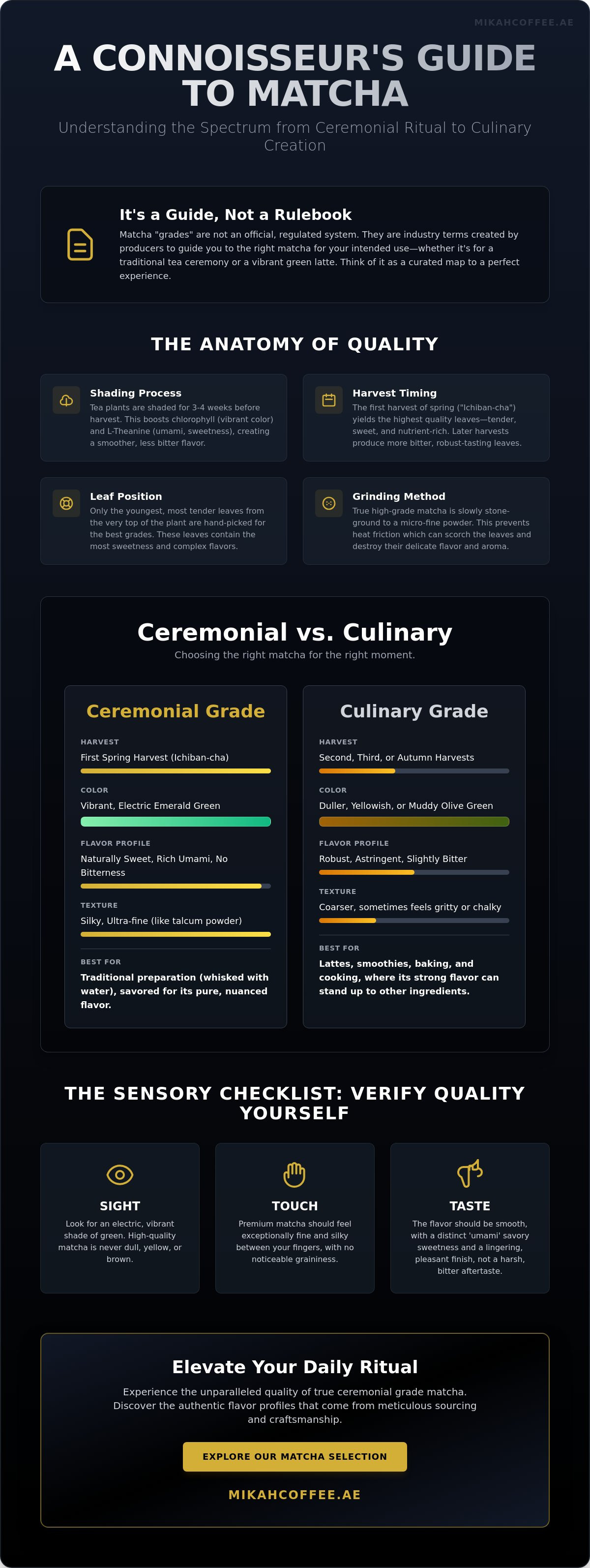
The industry reality is nuanced. It's vital to understand that no global governing body or government agency regulates these labels. "Ceremonial" and "Culinary" are descriptive tiers used by producers to guide your experience. While these terms are marketing-led, they represent a tangible hierarchy of quality, from the soil to the stone mill. Most producers determine a grade based on several key factors:
- Harvest Timing: The profound difference between the first spring flush and later summer picks.
- Leaf Position: Younger, tender leaves at the top of the plant offer a natural sweetness.
- Processing: Whether the leaves were slowly stone-ground or pulverized by high-speed machines.
Without these distinctions, consumers would struggle to choose between mass-produced powders and artisanal, hand-picked selections. Understanding the "why" behind the label is the first step toward becoming a true connoisseur.
The Origins of the Grading System
Centuries ago, the Japanese tea ceremony, or Chanoyu, demanded only the most exquisite leaves. These were reserved for the elite and the warrior class. As matcha's popularity grew globally, producers needed a way to categorize different harvests for different price points. This evolution birthed the modern tiers we see today. You can find more historical context on Matcha on Wikipedia. Modern enthusiasts look past the generic "premium" labels. They seek transparency from their provider regarding harvest dates, regional origin, and the specific cultivar used. This level of detail is the ultimate quality marker for those who value authenticity.
Why Grading Matters for Your Palette
Have you ever tasted a matcha latte that felt unpleasantly chalky or bitter? That's often the result of using the wrong grade for the occasion. High-grade matcha is rare. It depends on precise harvest timing, where the youngest leaves are picked during the first flush of spring. This rarity commands a higher price, much like a vintage wine from a specific vineyard. Using a culinary grade for a traditional tea ceremony will result in a harsh, astringent flavor that overpowers the palate. Conversely, using a delicate ceremonial powder in a heavy bake is a waste of its subtle, umami notes. It's about finding the right tool for your specific ritual. When you treat matcha as a curated specialty product, you begin to appreciate the craftsmanship behind every gram.
The Anatomy of Quality: From Shade-Grown Leaves to Stone-Ground Powder
The journey from a sun-drenched tea field to a fine, emerald powder is a testament to Japanese craftsmanship. It's a process of refinement that begins weeks before a single leaf is plucked. To truly grasp the nuances of matcha grades explained, one must look at the agricultural labor that precedes the powder. It isn't just about grinding tea; it's about a controlled botanical stress that forces the plant to concentrate its most precious compounds. While many brands use subjective terminology, the official ISO standards for matcha provide a technical framework for what constitutes authentic production, from the plant source to the final sensory profile.
Once the leaves are harvested, they undergo a rigorous cleaning process. Steam stops the oxidation, preserving the green color, while the removal of stems and veins ensures only the "tencha," or the meat of the leaf, remains. This pure tencha is then ground between traditional granite stones. This process must be slow; if the stones move too quickly, they create heat friction that scorches the delicate powder, dulling its flavor and aroma. If you're seeking to elevate your morning, exploring a curated ceremonial grade matcha can reveal the true potential of this meticulous process.
The Science of Shading and Chlorophyll
Approximately three to four weeks before the spring harvest, farmers cover the tea plants with black netting or bamboo mats. Why go to such lengths? By blocking out up to 90 percent of the sunlight, the plant overproduces chlorophyll to compensate, resulting in that iconic, electric green hue. This shading also prevents the conversion of L-theanine into bitter tannins. L-theanine is the amino acid responsible for the "calm alertness" effect. This chemical shift creates a profile that is naturally sweet, creamy, and rich in umami.
Harvest Timing: The Ichiban-cha Difference
The timing of the harvest is perhaps the most significant factor in how matcha grades explained translate to your cup. The first harvest of the year, known as Ichiban-cha, occurs in late April or May. These young, tender leaves are the crown jewels of the crop. They're soft and bursting with nutrients stored over the winter months. In contrast, later harvests in the summer or autumn produce leaves that are tougher and more sun-drenched. These later picks contain higher levels of catechins, which provide health benefits but also introduce a more aggressive, astringent bitterness that defines lower-tier powders.
Ceremonial vs. Culinary Matcha: A Side-by-Side Comparison
Choosing between the two primary tiers of powder is a decision based on the final destination of the tea leaf. Is it meant to be the sole protagonist of a quiet morning, or a structural element in a complex dessert? When we look at matcha grades explained, we see a spectrum of utility rather than a simple scale of "good" and "bad." It's a common misconception that culinary grade is an inferior product. In reality, it's a purposefully crafted tool designed to withstand the presence of other fats and sugars. Each has its place in the connoisseur's pantry.
For those seeking the pinnacle of the experience, the distinction is clear. Ceremonial grade is the standard for anyone pursuing an authentic ritual. It's a fragile, nuanced product that requires respect. Conversely, culinary grade is your kitchen workhorse. It offers the punch necessary to maintain the tea's identity when paired with milk, flour, or chocolate. Understanding which to invest in prevents the disappointment of a bitter tea or a flavorless bake.
Ceremonial Grade: The Zenith of Tea
Ceremonial grade represents the zenith of the harvest. It's characterized by a texture as fine as talcum powder and a hue so vibrant it almost appears neon. This grade is produced from the very first flush of spring, using only the youngest, shade-grown leaves. It's intended to be whisked solely with hot water to appreciate its delicate umami sweetness and creamy mouthfeel. If you're ready to experience this level of quality, you can find ceremonial grade matcha UAE buy online to begin your journey. Because this grade is low in tannins, it lacks the harsh bite found in later harvests, allowing the natural sweetness of the L-theanine to shine.
Culinary Grade: Built for Boldness
Culinary grade is built for boldness. While it may possess a duller, olive-green color, its profile is intentionally more astringent. This bitterness isn't a flaw; it's a feature. In a smoothie or a batch of shortbread, the subtle notes of a ceremonial tea would simply disappear. The higher level of catechins and the distinct chemical composition of matcha harvested later in the season provide the structural integrity needed for culinary applications. It stands up to heat and heavy ingredients without losing its characteristic "green tea" essence.
To help you decide which powder belongs in your bowl, consider these sensory markers:
- Appearance: Electric emerald (Ceremonial) vs. Muted khaki or olive (Culinary).
- Taste Profile: Creamy, sweet umami with no bitterness (Ceremonial) vs. Earthy, robust, and punchy (Culinary).
- Texture: Silky and smooth (Ceremonial) vs. Slightly grittier or more fibrous (Culinary).
- Best Use: Traditional tea whisked with water (Ceremonial) vs. Lattes, baking, or smoothies (Culinary).
How to Identify High-Quality Matcha: The Sensory Checklist
How do you know if the tin you just opened is worth the investment? Relying solely on a label is a gamble. Instead, use your senses as a guide. When we look at matcha grades explained through a practical lens, the powder itself tells the story of its origin and processing. A true connoisseur looks for four specific markers: color, texture, aroma, and froth. These elements provide an immediate, honest assessment of what's in your bowl. If you want to ensure your morning starts with the highest standards, you can explore our selection of premium ceremonial grade matcha and see these markers in action.
- The Colour Test: Look for a vibrant, electric green. This indicates high chlorophyll levels from proper shading. Dull khaki or brownish hues are red flags for oxidation or old, sun-scorched leaves.
- The Texture Test: High-quality powder is micro-fine, similar to the consistency of silk or talcum. If the powder feels gritty or sandy between your fingers, it hasn't been stone-ground correctly.
- The Aroma Test: It should smell fresh, grassy, and slightly sweet. A quality harvest has a distinct vegetal scent. If it smells like dry hay, tobacco, or nothing at all, the nutrients have likely degraded.
- The Froth Test: When whisked, look for fine, uniform bubbles. This "crema" should hold its shape and offer a thick, velvet-like mouthfeel. Large, soapy bubbles that dissipate quickly often indicate a lower-tier powder.
The Visual and Tactile Inspection
Perform the "smear test" to verify the quality at home. Place a small amount of powder on a clean sheet of white paper and pull your finger through it in a straight line. A high-quality powder leaves a long, smooth, vibrant emerald streak without any breaks. If the line is short, jagged, or feels like sandpaper, you're likely dealing with a culinary grade or a poorly processed tea. Interestingly, small clumps are actually a positive sign. They indicate static electricity, which only occurs when particles are ground to a micro-fine level. Simply sift these away to restore the silky flow.
The Taste Profile of a Connoisseur
The hallmark of excellence is umami. This savory, broth-like sensation should coat the back of your tongue, providing a sense of depth and richness. It's followed by a lingering, natural sweetness rather than a dry, puckering finish. While a slight vegetal bite is normal, it should never be aggressively bitter. If you're just starting your journey and find these nuances difficult to spot, exploring matcha for beginners can help you calibrate your palate to these subtle notes. A refined palate recognizes that the best tea doesn't need sugar to be enjoyable; the sweetness is already there, hidden within the leaf.
Elevating Your Ritual with Mikah Ceremonial Grade Matcha
Excellence isn't an accident. It's the result of a relentless search for the exceptional. At Mikah Coffee UAE, we've applied the same rigorous standards used to source our specialty coffee to the ancient world of Japanese tea. Now that you've seen the complexities of matcha grades explained, the path to a perfect bowl becomes a matter of intentional curation. We've brought the precision of Milanese craftsmanship to the hills of Japan; ensuring that the tea you whisk is as refined as the espresso we pull. Our focus remains steadfast on sourcing only the most vibrant, high-altitude ceremonial grade matcha for those who refuse to settle for the mediocre.
This isn't just about a beverage. It's about an Italian philosophy of "quality without compromise" meeting a storied Eastern tradition. We believe that your daily caffeine intake shouldn't be a rushed necessity. It should be a mindful pause. By selecting only the finest first-harvest leaves, Mikah Coffee UAE ensures that every tin contains the electric energy and sweet umami profile that defines a true ceremonial experience. You aren't just buying a powder; you're investing in a moment of clarity.
The Mikah Coffee UAE Standard of Purity
Our selection process is an exercise in restraint. We focus exclusively on ceremonial grade because it represents the ultimate expression of the leaf. There's a natural synergy between high-end coffee expertise and tea curation. Both require a deep respect for origin, soil chemistry, and precise processing. Mikah Coffee UAE Matcha is stone-ground in small batches to ensure peak freshness, preventing the oxidation that so often dulls the spirit of mass-produced alternatives. This ensures that the delicate L-theanine and antioxidants remain potent and pure from the mill to your whisk.
Completing the Experience
A master's ritual is only as good as the tools used to perform it. While tradition favors the bamboo whisk, the modern connoisseur often seeks a bridge between heritage and convenience. Using a Mikah Milk Frother allows you to achieve that signature velvet micro-foam for contemporary lattes without sacrificing the integrity of the tea. We encourage you to explore our range of professional brewing equipment, from V60 drippers to professional espresso machines, to create a complete sanctuary in your own home. Whether you're a devotee of traditional preparation or a fan of the modern matcha latte, the goal is always the same: the elevation of the everyday.
Explore our Ceremonial Grade Matcha and elevate your tea ritual today.
Mastering the Art of Your Daily Ritual
You now possess the sensory tools to navigate the nuances of the tea field with confidence. By understanding the profound impact of harvest timing and shading, you can distinguish between a vibrant, first-flush masterpiece and a muted culinary blend. This guide to matcha grades explained ensures that every gram you measure contributes to a moment of genuine luxury rather than a bitter disappointment. Your palate deserves the clarity that comes from expert curation.
At Mikah Coffee UAE, we bring an uncompromising Italian standard to our selection of Ceremonial Grade Matcha. Sourced from premium Japanese estates, our powder offers the first-harvest purity required for maximum umami and a velvet-like finish. It's a standard of excellence already trusted by discerning coffee and tea connoisseurs across the Emirates. Are you ready to transform your morning into a mindful experience? Discover the Purity of Mikah Coffee UAE Ceremonial Grade Matcha and begin your journey toward a more refined ritual today. The perfect bowl is waiting for you.
Frequently Asked Questions
Is ceremonial grade matcha worth the extra price?
Ceremonial grade is undeniably worth the investment for those who drink tea traditionally whisked with water. The price reflects the rarity of the first harvest and the slow, artisanal stone-grinding process that preserves delicate nutrients. You're paying for a lack of bitterness and a profound umami sweetness that simply cannot be replicated by later harvests. It's the difference between a mass-produced table wine and a curated vintage.
Can I use ceremonial grade matcha for lattes?
You can certainly use ceremonial grade for lattes if you prefer a smoother, more refined finish. While culinary grades are designed to cut through milk with their bitterness, a ceremonial powder offers a creamy texture that elevates the drink into a luxury experience. Many connoisseurs find that the natural sweetness of high-tier leaves requires less added sugar, allowing the pure tea profile to remain the protagonist.
What happens if I drink culinary grade matcha with just water?
Drinking culinary grade matcha with just water usually results in a harsh, unpleasantly astringent experience. These leaves are harvested later in the season and contain higher levels of tannins, which provide a dry mouthfeel and a punchy bite. While these traits are excellent for baking, they overwhelm the palate when the powder isn't balanced by fats or sweeteners. It's a tool for the kitchen, not the tea bowl.
How can I tell if my matcha has gone bad or oxidized?
Stale or oxidized matcha is easily identified by its dull, brownish-yellow color and a scent reminiscent of dry hay. Fresh, high-quality powder should always present an electric green hue and a grassy, vegetal aroma. If the powder has lost its "pop" or smells metallic, the antioxidants have likely degraded through exposure to light or air. Using oxidized tea will result in a flat, muddy flavor.
Does the region of Japan affect the grade of the matcha?
The terroir of specific Japanese regions, such as Uji or Kagoshima, plays a vital role in determining the final grade. Soil composition, altitude, and climate all influence the tenderness and nutrient density of the tea leaf. High-altitude estates often produce more delicate leaves with a higher concentration of L-theanine. Understanding these regional nuances is a key part of having matcha grades explained in a meaningful, connoisseur-level way.
Why is some matcha bright green and others more yellow?
The color of your matcha is a direct reflection of its chlorophyll content and harvest age. Bright, vibrant green comes from leaves that were properly shaded for three to four weeks before being plucked during the spring flush. In contrast, yellow or olive tones indicate leaves that were grown in full sun, harvested late in the year, or contain a higher percentage of stems and veins.
How should I store my matcha to maintain its grade quality?
To maintain the integrity of your powder, you must protect it from its four enemies: light, heat, air, and moisture. Store your tin in a cool, dark cupboard or the refrigerator in an airtight, opaque container. Once opened, the clock begins to tick on its freshness. Most experts recommend consuming your ceremonial powder within four to six weeks to enjoy the peak of its sensory profile and nutritional value.
Is there a "Premium Grade" that sits between Ceremonial and Culinary?
"Premium Grade" is a common marketing term used to describe a versatile middle ground between ceremonial and culinary tiers. It's often vibrant enough for a high-quality latte but robust enough to maintain its character when mixed with milk. While it lacks the extreme delicacy of a true ceremonial harvest, it offers a more accessible entry point for those seeking matcha grades explained for daily, modern consumption.