


Did you know that 70% of coffee drinkers globally now prepare their daily brew in their own kitchens, yet few truly capture the soul of a Milanese espresso bar? It's a common frustration. You invest in beautiful beans only to end up with a cup that lacks that signature velvety crema and aromatic depth. If you've ever felt overwhelmed by technical jargon or confused by the vast array of roast profiles, you aren't alone. Learning how to make italian coffee at home is less about luck and more about a curated synergy of heritage and hardware.
You deserve a morning ritual that feels like a deliberate act of luxury rather than a rushed necessity. We've designed this 2026 connoisseur’s guide to help you build a kitchen setup that performs as beautifully as it looks. You'll discover the essential equipment, from traditional stovetop icons to professional espresso machines, and the premium blends needed to master authentic flavors. We'll explore the nuances of specialty roasts and precision brewing to ensure every cup you serve is indistinguishable from a cafe masterpiece. It's time to transform your kitchen into a sanctuary of Italian craft.
Key Takeaways
- Identify the sensory blueprint of the authentic Italian ritual. You'll focus on the sophisticated Milano style that balances a bold body with refined, low acidity.
- Compare the nuances of Moka pots and professional machines. This helps you decide exactly how to make italian coffee at home based on your desired intensity.
- Learn to decode roast development and freshness windows. This ensures you select premium beans that deliver a lingering, cafe-quality crema every time.
- Discover why professional hardware features like PID temperature control and dual boilers are essential. These tools are the definitive choice for a consistent home gallery.
- Elevate your coffee service with the "Dolce" tradition. You'll explore perfect pairings and modern dietary standards that complete the contemporary Italian experience.
The Anatomy of the Italian Coffee Ritual at Home
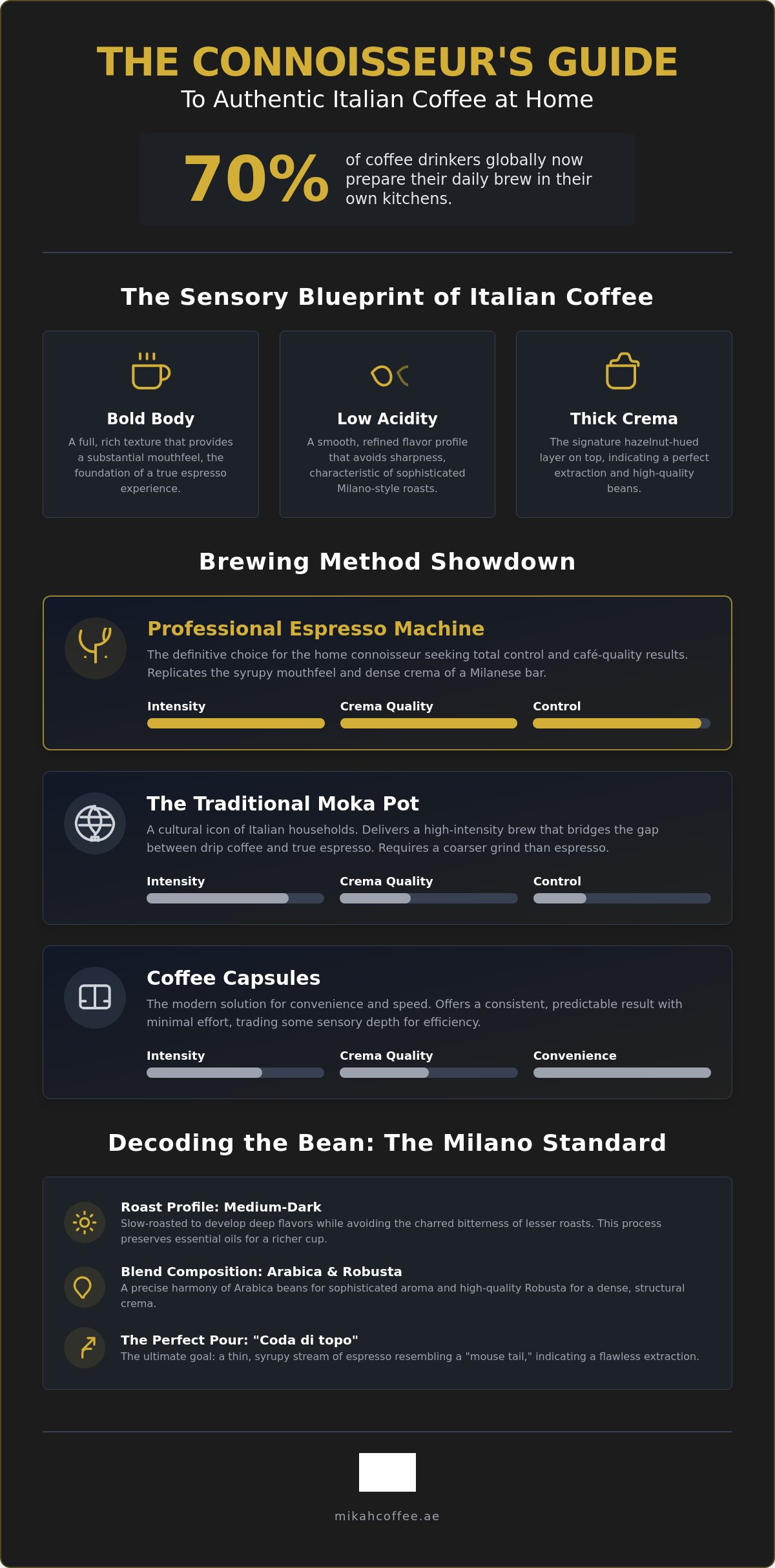
To master the art of how to make italian coffee at home, one must first understand that the experience is defined by a specific sensory architecture. It isn't merely about caffeine. It's about a bold body, remarkably low acidity, and a thick, hazelnut-hued crema that lingers long after the first sip. While many associate Italian coffee with the rustic charm of a Moka pot, modern Italian coffee culture has evolved into a sophisticated home ritual that mirrors the precision of a professional Milanese bar. This transition from a simple morning utility to a daily art form rests upon three non-negotiable pillars: the selection of the bean, the engineering of the machine, and the refinement of the technique.
With 70% of coffee drinkers globally now preparing their daily brew at home, the "home barista" movement has shifted from a niche hobby to a standard of living. This movement prizes quality over quantity. It values the precision of a curated kitchen setup that performs with the same reliability as a commercial gallery. When these three pillars align, the result is more than a drink; it's a masterpiece of liquid gold that provides a reliable anchor to your morning.
Understanding the Milano Blend Standard
The foundation of this ritual is the roast profile. In the north, the "Milano style" is considered the pinnacle of sophistication. It favors a medium-dark development that avoids the charred bitterness found in lesser roasts. When you choose Milano blend coffee beans, you're looking for a specific harmony. These beans are slow-roasted to ensure that essential oils are preserved rather than evaporated. This process is crucial for achieving the "coda di topo," or mouse tail, pour. This is the thin, syrupy stream of coffee that indicates a perfect balance of Arabica for aroma and high-quality Robusta for that dense, structural crema. Without this careful blend, the coffee lacks the "face" or "faccia" that Italians prize.
The Emotional Connection to the Craft
Beyond the technicalities, brewing coffee at home transforms the environment. The scent of a fresh grind provides an immediate sensory anchor, signaling a moment of pause. In Italy, coffee is the language of hospitality. It's a gesture of social grace. By learning how to make italian coffee at home with professional-grade tools, you elevate a routine task into a moment of intentional luxury. It becomes a performance for guests and a reliable sanctuary for yourself. This ritual isn't just about the final cup. It's about the precision of the grind, the warmth of the portafilter, and the quiet hiss of the steam wand. These elements combine to create a morning ritual that feels as good as it tastes.
Comparing Brewing Methods: Moka, Espresso, and Capsules
Choosing your vessel is the first step in mastering how to make italian coffee at home. Each method offers a distinct window into Italian heritage, dictating the texture, intensity, and clarity of your final cup. While the Moka pot remains a nostalgic favorite, delivering a high-intensity brew that bridges the gap between drip and espresso, the modern connoisseur often seeks the surgical precision of a prosumer machine. For those who refuse to compromise on body, a professional espresso setup is the only way to achieve that elusive, syrupy mouthfeel found in Milanese bars. Your choice should reflect not just your palate, but the rhythm of your daily life.
As the new wave of Italian specialty coffee continues to influence home kitchens, many enthusiasts are moving toward high-end hardware that allows for total control. This shift represents a desire to replicate the sensory experience of a boutique cafe without leaving the house. Whether you value the slow, tactile process of the past or the efficient precision of the future, understanding the mechanics of each method is vital for a consistent result.
The Traditional Moka Pot Experience
The Moka pot is more than a kitchen tool; it's a cultural icon that has defined Italian households for decades. For most, a 3-cup pot serves as the versatile standard, providing the perfect volume for a concentrated morning boost. Achieving success with this method requires respecting the "Moka grind." The coffee should be slightly coarser than the fine powder used for espresso but finer than standard drip coffee. To preserve the machine's "soul," never use soap. Rinsing with only hot water allows coffee oils to season the aluminum over time, creating a deeper flavor profile with every use. It's a method that rewards patience and attention to the subtle gurgle of the rising brew.
The Rise of Nespresso Compatible Systems
For those balancing a fast-paced UAE lifestyle with a refined palate, the premium capsule system has become a modern necessity. Identifying high-quality Nespresso compatible capsules UAE residents prefer involves looking for hermetically sealed aluminum. This technology locks in freshness and prevents oxidation, ensuring that the "Milano taste" is delivered in under sixty seconds. It's a reliable solution that provides a consistent, high-quality crema without the need for a dedicated grinder or extensive cleanup. If you're looking to explore these flavor profiles, browsing a curated selection of specialty coffee beans and capsules is an excellent place to start. Ultimately, deciding how to make italian coffee at home depends on whether you seek the meditative ritual of the stovetop or the seamless luxury of modern technology.
Selecting the Perfect Bean: A Sensory Buying Guide
The bean is the definitive soul of your cup. While the previous sections explored the mechanics of equipment, the "what" is equally vital when mastering how to make italian coffee at home. Many mistakenly believe an "Italian Roast" is simply a dark, oily bean pushed to the edge of bitterness. In reality, a true connoisseur's roast is about precise development. It's a careful caramelization of sugars that creates a full body without a burnt aftertaste. This nuance is becoming even more prominent as Italy's specialty-coffee scene embraces higher standards of sourcing and roasting, blending tradition with modern excellence.
To ensure your morning ritual remains superior, you must respect the freshness window. Coffee is a perishable product. Once roasted, beans reach their peak flavor between seven and twenty-one days. If you're using pre-ground coffee, you've already lost the battle against oxidation. Grinding increases the surface area exposed to the air, causing delicate aromatics to vanish in minutes. This is why investing in whole beans is non-negotiable for those seeking a cafe-quality experience. Once you bring your selection home, guard it against the three enemies: light, heat, and oxygen. A cool, dark pantry and an airtight container are your best allies in preserving the bean's integrity.
Whole Bean Mastery with the Milano Blend
For a truly sophisticated palate, the Milano Blend stands as the preferred choice. It isn't just coffee; it's a sensory journey. When you grind these beans on-demand, you release a bouquet of dark chocolate, toasted nuts, and a subtle hint of warming spice. This aromatic intensity is the hallmark of a high-end brew. By grinding just before you extract your shot, you ensure that every volatile oil ends up in your cup rather than dissipating into the air. It's the difference between a flat drink and a vibrant, multi-layered espresso.
Sourcing Quality in the UAE
Finding authentic Italian coffee beans online in the UAE requires a discerning eye. Look for a "Slow Roasted" certification. This traditional method ensures the heat penetrates the center of each bean evenly, reducing the metallic acidity that often causes stomach discomfort. Authentic Italian heritage isn't just a label; it's a commitment to these time-honored processes. When you source beans that honor this legacy, you aren't just buying a product. You're participating in a centuries-old craft that defines how to make italian coffee at home with uncompromising quality.
Professional Hardware: Investing in Your Home Cafe
While the bean provides the soul of the drink, your hardware provides the surgical precision required to extract it. To truly master how to make italian coffee at home, you must move beyond basic kitchen appliances and enter the world of "prosumer" equipment. These machines bridge the gap between a domestic brewer and the heavy-duty galleries found in Milan. Investing in professional espresso machines isn't about vanity; it's about thermal stability and pressure control. Without a machine capable of maintaining a constant nine bars of pressure and a precise temperature, even the finest Milano blend will fail to reach its full potential.
What should a connoisseur look for in a machine? The most critical features include a Proportional-Integral-Derivative (PID) controller and a dual boiler system. A PID allows you to adjust water temperature to the exact degree, which is essential for highlighting the specific flavor notes of different roasts. Dual boilers ensure you can pull a perfect shot while simultaneously using a commercial-grade steam wand to create "schiuma," the dense, velvety micro-foam that defines a true Italian cappuccino. This hardware allows for a level of consistency that entry-level machines simply cannot replicate.
The Mikah Hardware Standard
In the pursuit of excellence, the construction of your equipment matters. Stainless steel is the non-negotiable standard for professional-grade home machines. It offers superior durability and the thermal mass needed to keep brew water at a steady temperature. For enthusiasts who prefer a streamlined setup, the Mikah milk frother online provides a sophisticated solution. It achieves silk-textured milk through high-precision agitation, allowing you to create gourmet foam without the learning curve of a steam wand. If your preference leans toward the clarity and nuance of specialty beans, a V60 pour over kit UAE offers the manual precision necessary to explore delicate aromatic profiles.
Maintenance and Longevity
A professional machine is a lifelong companion if treated with respect. Daily maintenance rituals, such as backflushing the group head, are essential to remove spent coffee oils that can turn rancid. Weekly deep cleans with specialized kits protect the internal components from wear. Perhaps most importantly, consider your water. The mineral content of your water dictates both the flavor of your coffee and the health of your boiler. Using a high-quality filtration system prevents scale buildup and ensures that the purity of your beans remains the star of the show.
Browse our curated collection of professional espresso machines and brewing accessories to elevate your home ritual today.
The Final Touch: Pairings and the Modern Italian Table
The mastery of how to make italian coffee at home extends far beyond the machine and the bean. In Italy, the "Dolce" tradition suggests that a perfect espresso is rarely a solitary event. It's a social anchor. To truly replicate the authentic experience, one must consider the presentation and the pairings that accompany the brew. A curated dessert tray isn't just about indulgence; it's about a sophisticated balance of flavors that respects the intensity of your Milano roast. By offering a thoughtful selection of accompaniments, you transform a simple caffeine break into a refined moment of hospitality. Your guests will notice the difference between a rushed cup and a deliberate, sensory performance.
Creating this synergy requires an eye for detail. The visual appeal of your table setting, from the weight of the porcelain to the arrangement of the treats, reinforces the quality of the coffee itself. It's about elevating the daily routine into something meaningful. When every element aligns, the home environment is transformed into a private boutique where expertise is shared freely and tradition is honored through every small gesture.
The Perfect Pairing: Gluten-Free Excellence
Modern hospitality requires an awareness of diverse dietary needs without sacrificing the luxury of the experience. Sophisticated hosts are increasingly choosing gluten-free treats to serve alongside their coffee. These selections are designed to complement the dark chocolate and toasted nut notes of a premium Milano blend. The goal is to balance the natural bitterness of the espresso with a controlled level of sweetness. Providing high-quality, inclusive options ensures that every guest can participate in the ritual. You can browse our curated collection of premium gluten-free selections to find the perfect match for your next coffee morning. It's a simple way to demonstrate a commitment to excellence and guest comfort.
Beyond Coffee: The Matcha Ritual
A true connoisseur’s repertoire is often diverse. While espresso remains the heart of the home cafe, there are moments that call for a different kind of focus. Integrating ceremonial grade matcha UAE enthusiasts value into your daily routine offers a vibrant alternative. This high-grade green tea provides a steady, meditative energy that contrasts beautifully with the quick intensity of coffee. Preparing a matcha latte requires the same level of precision as a cappuccino, from the temperature of the water to the texture of the foam. High-grade matcha is rich in antioxidants, offering a health-conscious way to extend your beverage ritual. By mastering both, you ensure your home gallery is equipped for every mood, truly perfecting the art of how to make italian coffee at home and beyond.
Master Your Home Barista Ritual
Mastering how to make italian coffee at home is a journey of sensory refinement that balances timeless heritage with modern precision. You've discovered that the secret lies in the synergy between our exclusive Milano Blend, a favorite of professional baristas, and the technical excellence of prosumer hardware. By respecting the freshness window of your beans and the thermal stability of your machine, you ensure every extraction is a masterpiece. It's about more than just the caffeine; it's about the intentionality of the craft and the hospitality you extend through a curated table.
Since 1984, we've dedicated ourselves to preserving this authentic Italian heritage, offering a bridge between tradition and the contemporary kitchen. Whether you prefer the tactile ritual of a Moka pot or the surgical accuracy of a dual boiler machine, the goal remains the same: a reliable morning sanctuary. Complete your experience with our curated selection of dietary-conscious luxury treats designed to complement your brew perfectly. Elevate your coffee ritual with our premium Gluten-Free collection and transform your daily routine into a meaningful act of luxury. Your kitchen is now a gallery of taste, and the next perfect pour is entirely within your reach.
Frequently Asked Questions
What is the best coffee-to-water ratio for a Moka pot?
Fill the bottom chamber with water just below the safety valve and the filter basket completely with coffee without pressing it down. This traditional method ensures the steam pressure extracts the coffee evenly without burning the grounds. It's the most reliable way to achieve the concentrated intensity the Moka pot is famous for. Some connoisseurs prefer pre-heating the water to speed up the process and minimize the time the coffee spends on the heat.
Can I use regular coffee beans in an espresso machine?
You can use any high-quality beans, but the success of how to make italian coffee at home depends entirely on the grind profile. Standard grocery store beans are often roasted for drip methods and lack the structural integrity needed for high-pressure extraction. For an espresso machine, you need a fine, uniform grind that creates enough resistance for the water to extract oils properly. Using a dedicated Milano blend will yield far superior results compared to generic beans.
Is Italian coffee always a dark roast?
Italian coffee is defined by its development rather than just darkness. While southern regions prefer a robust, dark profile, the northern Milano standard favors a sophisticated medium-dark roast. This approach preserves the bean's natural acidity and complex aromatics while still delivering a full body. It's a common misconception that Italian equals burnt. True craft focuses on slow-roasting to caramelize sugars without introducing charred bitterness or an unpleasant aftertaste.
How do I get a thick crema on my home espresso?
Achieving a velvety crema requires fresh, whole beans and a machine capable of nine bars of pressure. The face of the espresso is actually an emulsion of CO2 and coffee oils. Using a blend with a small percentage of high-quality Robusta, like our Milano Blend, significantly enhances the thickness and longevity of the crema. If your crema is thin or pale, it's often a sign that your beans are stale or your grind is too coarse.
Do I need a special grinder for Italian coffee?
A high-quality burr grinder is the most important investment for a home gallery. Blade grinders shatter the beans into inconsistent pieces, which leads to a cup that is both sour and bitter. For authentic results, you need a grinder with stepped or stepless adjustments that can achieve the fine, powdery consistency required for espresso. Precision is the difference between a muddy brew and a clear, aromatic shot that mirrors a professional Milanese bar.
What is the difference between Milano and Napoletano coffee blends?
The difference lies in the roast intensity and regional heritage. Milano blends are typically more refined, using higher percentages of Arabica and a medium-dark roast to highlight chocolate and floral notes. Napoletano blends are the soul of the south, featuring a darker roast and more Robusta for a punchy, high-caffeine experience with a thicker crema. Each represents a different facet of the Italian ritual, allowing you to choose based on your desired morning intensity.
How can I make my home coffee taste less bitter?
Bitterness is usually the result of over-extraction caused by water that's too hot or a grind that's too fine. If you're learning how to make italian coffee at home, try lowering your brew temperature to around 92 degrees Celsius. You might also consider switching to a slow roasted bean, which reduces the metallic acidity that can be mistaken for bitterness. A slightly coarser grind can also help the water pass through the grounds more quickly.
Are Nespresso compatible capsules as good as original ones?
Premium Nespresso compatible capsules are often superior to original versions because they offer access to authentic Italian roastery blends. The key is ensuring the capsules use aluminum housing, which provides a total oxygen barrier to keep the coffee fresh. These capsules allow you to enjoy the specific flavor profiles of artisanal roasters with the convenience of a single-serve system. It's an excellent way to maintain high standards during a busy morning without sacrificing quality.