


What if the "espresso beans" in your pantry don't actually exist as a distinct botanical species? It's a question that haunts many enthusiasts as they stand before a shelf of polished bags. The confusion is understandable. While 73% of American adults now drink coffee on a weekly basis according to the Spring 2026 National Coffee Data Trends report, the technical nuances between espresso beans vs coffee beans remain shrouded in marketing labels that often obscure more than they reveal.
You likely want a cup that mirrors the excellence of a Milanese boutique, yet the fear of damaging expensive hardware with oily beans often lingers. We understand this pursuit of precision. It's an art rooted in respect for heritage. This guide clarifies the technical and traditional differences between roast profiles to elevate your daily brewing ritual. At Mikah Coffee UAE, our goal is to provide the clarity you need to select premium blends for your specific machine with absolute confidence. We will explore the botanical reality, the science of extraction, and how to identify the "Italian Soul" in every cup, ensuring your morning routine achieves the improved quality you deserve.
Key Takeaways
- Understand that while all beans share a botanical origin, "espresso" refers to a meticulous extraction method rather than a specific species of seed.
- Learn why the debate of espresso beans vs coffee beans is truly a matter of roast engineering designed to withstand high pressure and heat.
- Discover the physical transformation of the bean during roasting that allows for the emulsification of oils into a rich, velvety crema.
- Gain clarity on how to match your specific brewing equipment with the correct roast profile to avoid damaging machines and ensure consistent taste.
- Explore the "Italian Soul" of the Milano Blend, an expertly curated selection crafted to elevate your home ritual to a professional standard.
Is There Truly a Difference? The Botanical Reality vs. The Label
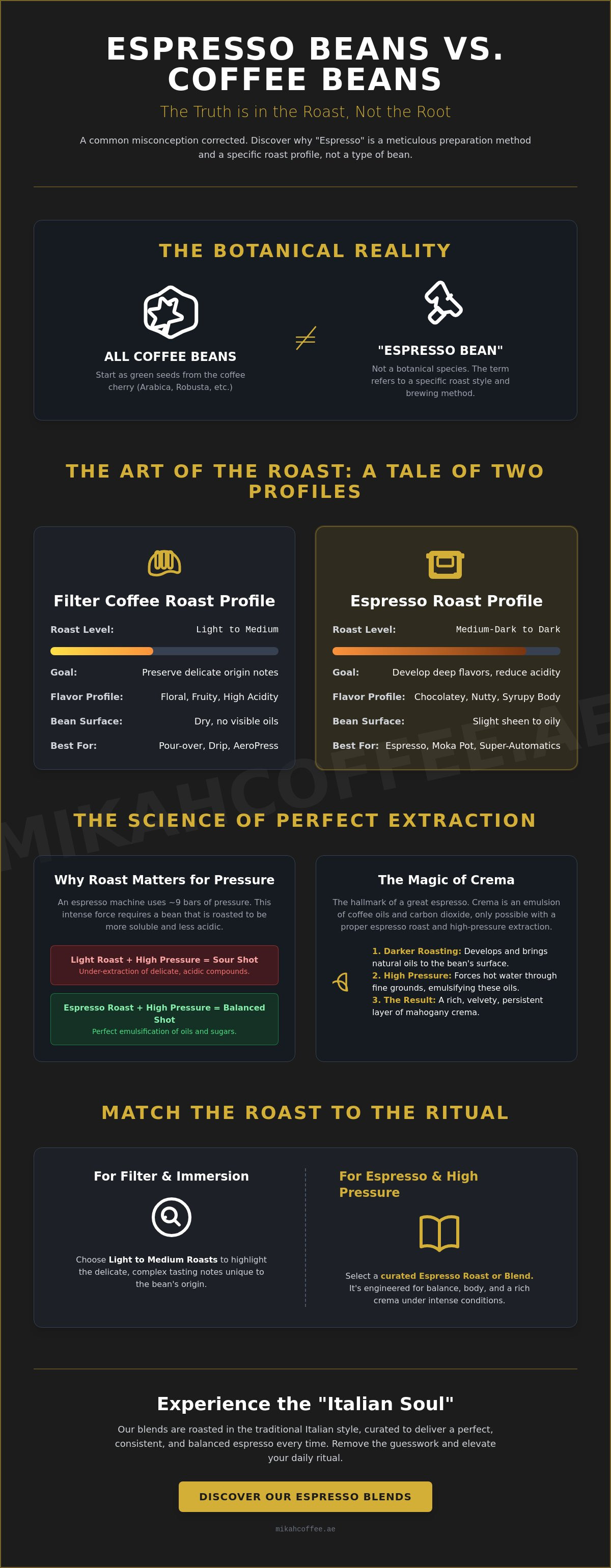
Every bag of coffee, whether destined for a delicate pour-over or a dense ristretto, begins its journey as a simple green seed. To understand the nuances of espresso beans vs coffee beans, we must first strip away the marketing gloss. The reality is that there is no such thing as an "espresso tree." The term "espresso" describes a specific preparation method rather than a botanical classification or a separate species of plant. It's a technique that requires precision, heat, and intense pressure to transform a dry ingredient into a liquid masterpiece.
Think of the label on your bag as a recommendation from a professional curator. It's a signal that the contents have been engineered to thrive under specific conditions. While any bean can technically be used in any machine, the distinction helps you achieve the sensory experience you desire. It's the difference between a random encounter and a carefully choreographed performance in your cup.
The Anatomy of a Coffee Bean
The coffee cherry is the vibrant fruit that serves as the source of all beans. Within this fruit, we find the two primary pillars of the industry: Arabica and Robusta. Arabica is prized for its elegant acidity and complex sugar browning, while Robusta is the secret behind that thick, mahogany crema. A bean's origin dictates its chemical potential. High-altitude beans often possess a density that requires specific heat application to unlock. If a bean is too acidic, the concentrated nature of what is espresso can make it taste sour or metallic. This is why the selection process at Mikah Coffee UAE is so critical for a balanced shot.
Why the "Espresso" Label Exists
If the beans are botanically identical, why do roasters bother with different names? The label serves as both technical guidance and a promise of consistency. Roasters curate specific blends to ensure that your morning ritual remains repeatable and rewarding. When you see "espresso" on a bag, the roaster has already done the hard work of balancing acidity, bitterness, and body. They've selected beans that won't just survive the nine bars of pressure in your professional espresso machines but will actually bloom under them.
The concept of the "Omni-roast" has gained traction among some specialty roasters recently. This approach suggests a single roast profile can suit every method. While this offers versatility, it lacks the focused precision of method-specific roasting. Traditional Italian craftsmanship leans toward the latter. By tailoring the roast to the extraction style, we ensure the bean's oils and sugars are perfectly primed for that short, intense pull. It removes the guesswork from the equation. You don't have to wonder if your espresso beans vs coffee beans will deliver that signature syrupy texture; the label tells you the work is already done.
The Art of the Roast: Italian Tradition vs. Modern Marketing
The sensory distinction between espresso beans vs coffee beans is forged in the fires of the roasting drum. While the botanical seeds are identical, the heat application creates two entirely different chemical potentials. Modern "Third Wave" trends often champion light roasts to preserve the delicate, floral terroir of single-origin crops. While these are exquisite for a slow pour-over, they often fail when subjected to the intensity of high-pressure extraction. A light roast can become startlingly sour when concentrated into a short shot. In contrast, the traditional Italian approach utilizes a slower, more deliberate roasting curve to ensure the bean is physically prepared for the machine.
This method focuses on the Maillard reaction. It is a complex chemical transformation where amino acids and sugars react to create hundreds of deep flavor compounds. By extending the roast time, a master roaster develops the syrupy sweetness and chocolatey notes that anchor a classic shot. A darker roast in a professional context doesn't mean "burnt." Instead, it represents a careful balance where bitterness is managed and body is maximized. This philosophy is the foundation of the authentic Italian soul of the Milano Blend, where every bean is treated with respect for its heritage by Mikah Coffee UAE.
Degassing and Freshness
Espresso requires a level of patience that filter coffee does not. Because espresso is a brewing method involving rapid extraction, the presence of carbon dioxide plays a massive role. Freshly roasted beans are packed with gas. If used too early, this gas creates turbulence in the portafilter, leading to an inconsistent, "fizzy" crema and a hollow taste. While filter beans might peak at three days, espresso beans often require a resting period of seven to ten days to de-gas properly. Maintaining these nuanced roast notes is a delicate task. We recommend learning how to store coffee beans for lasting freshness to ensure your investment doesn't oxidize before it reaches its peak.
The Italian Roast Standard
What defines a classic Milano-style roast? It is a sensory profile that prioritizes a velvety mouthfeel and a persistent aftertaste. To achieve this, over 70% of Italian espresso blends intentionally include high-quality Robusta beans. This is a deliberate engineering choice. Robusta provides the structural integrity for the crema and a caffeine kick that Arabica alone cannot match. It creates a cup that is bold yet polished. When comparing espresso beans vs coffee beans, the presence of Robusta is often the deciding factor for traditionalists who value a thick, lasting crema. If you are seeking to replicate this experience at home, the selection at Mikah Coffee UAE provides the exact profile used in Italy's finest boutiques.
Physicality and Extraction: Oils, Crema, and Grind Size
While the botanical origin is identical, the physical structure of the bean undergoes a radical metamorphosis during the roasting process. This is where the debate of espresso beans vs coffee beans moves from the label to the laboratory. To achieve a balanced shot, the bean must be sufficiently soluble to release its essence in a matter of seconds. When we examine the chemical changes during roasting, we see that longer heat exposure breaks down the internal cell walls. This makes the bean more porous, allowing water to penetrate and extract flavor compounds almost instantly.
Crema is the hallmark of a successful extraction. It's a delicate emulsion of coffee oils and carbon dioxide, forced together under nine bars of pressure. If you use a light, dense filter bean, the lack of developed oils and CO2 often results in a thin, lackluster appearance. The liquid may taste sharp or unpleasantly sour. Conversely, very dark roasts can develop heavy surface oils. While these oils contribute to a rich mouthfeel, they pose a risk to the integrated grinders found in many professional espresso machines. These sticky residues can clog the burrs over time, leading to inconsistent grinds and mechanical strain. It's a detail that separates the casual drinker from the true connoisseur.
Solubility and Pressure
The 30-second extraction window is a high-speed environment. Filter coffee beans are generally less soluble; they require minutes of contact time to release their full potential. In an espresso machine, these beans simply cannot keep up. The water passes through too quickly, leaving the best flavors trapped inside the bean. A properly engineered espresso roast ensures a uniform cell structure that yields its sugars and oils at the precise moment the pump reaches full pressure. It creates a syrupy, concentrated liquid that light roasts rarely achieve.
The Grind Size Factor
Precision is paramount. Espresso demands a fine, flour-like consistency. The density of the bean dictates how much resistance it provides to the water. A brittle, well-developed espresso bean grinds more predictably than a hard, lightly roasted one. This relationship between bean density and grinder settings is the key to a perfect pull. It's why a connoisseur often adjusts their settings by fractions of a millimeter to account for the unique physicality of a specific blend. Without this physical preparation, even the finest beans will fail to deliver their promise.
Choosing Your Beans: Matching the Roast to the Ritual
Selecting the right bean is a decision that defines your morning. It's a framework that balances your equipment with your desired sensory outcome. While we've explored the technicalities of espresso beans vs coffee beans, the practical application depends on your ritual. In the UAE, there's a distinct preference for bold, milk-based beverages. This cultural palate often means that even when using a V60, a slightly more developed roast is preferred to cut through the creaminess of the milk; it ensures the coffee's soul isn't lost in the cup.
Breaking the traditional rules can often lead to delightful discoveries. You don't have to limit "espresso roasts" to your machine. These beans often provide a fantastic base for a robust French Press or a milk-heavy filter coffee. Their higher solubility ensures that the coffee's character remains prominent. Water quality also acts as the silent partner in your extraction. Since coffee is roughly 98% water, the mineral content significantly alters how you perceive different roasts. A light roast might taste vibrant with soft water but turn unpleasantly thin with higher mineral concentrations. Traditional espresso roasts maintain their structural integrity across various water profiles, providing a reliable foundation for any method.
For the Espresso Machine & Moka Pot
Medium-to-dark roasts remain the gold standard for high-pressure environments. These roasts provide the necessary body and viscosity that enthusiasts crave. If you're using a stovetop method, refer to the connoisseur’s guide to coffee beans for moka pot brewing for a deeper dive into these nuances. These methods demand a bean that can withstand intense heat without losing its chocolatey foundation. It's about finding a balance where the sugars are perfectly caramelized but never scorched.
For Pour-Over and Cold Brew
When clarity is the goal, light-to-medium roasts shine. These beans preserve the floral and citrus notes that are easily lost in high-pressure brewing. For those seeking a refreshing alternative, matching the roast level to the best coffee beans for cold brew in the UAE is essential. Cold extraction highlights sweetness and minimizes acidity; it's the perfect canvas for single-origin treasures. You'll notice that the lighter the roast, the more the bean's origin speaks for itself. This clarity is why many connoisseurs treat espresso beans vs coffee beans as a spectrum rather than a strict divide.
Ready to elevate your home setup? Explore our selection of Specialty coffee to find your perfect match.
The Milano Standard: Why a Curated Blend Rules the Espresso Ritual
True excellence in the cup is rarely an accident. It is the result of intentional engineering. While the debate over espresso beans vs coffee beans often focuses on single variables, the Milano Standard looks at the symphony of the whole. Mikah’s Milano Blend represents the pinnacle of this philosophy. It's a curated selection that embodies the "Italian Soul," bringing the heritage of Milanese coffee houses directly to your kitchen. This blend is designed to do what single-origin beans often cannot; it provides a consistent, chocolatey foundation crowned with a velvety, persistent crema.
Versatility is its greatest strength. Whether you're a dedicated home barista or managing a high-volume commercial setting, the requirements for a perfect shot remain the same. You need stability. You need a profile that responds predictably to heat and pressure. The Milano Blend delivers this through a precise balance of origins, ensuring that every pull is as rewarding as the last. It's about more than just caffeine; it's about the elevation of a daily habit into a moment of pure craftsmanship.
Craftsmanship in Blending
Why choose a blend over a single-origin for your morning shot? Consistency is the honest answer. Single-origin beans fluctuate with every harvest, changing their acidity and density. A professional blend allows a roaster to maintain a specific sensory profile year-round. The Mikah roasting profile relies on a marriage of tradition and modern precision. This ensures the beans perform flawlessly across various professional espresso machines. It's about creating a bean that is resilient, soluble, and deeply aromatic, regardless of the season.
Elevating the Daily Ritual
It's time to move beyond the limitations of supermarket coffee. Mass-produced bags often sit on shelves for months, losing the volatile oils essential for a true espresso. Choosing a blend from a national UAE distributor with authentic Italian roots ensures you receive a product at its peak. It's an invitation to transform a mundane habit into a meaningful ritual. We invite you to experience the difference that a curated tasting can provide. Discover how the right choice in the espresso beans vs coffee beans spectrum can redefine your expectations of what coffee can be. Your machine deserves a partner that matches its potential.
Mastering the Art of Your Daily Extraction
The distinction between espresso beans vs coffee beans is ultimately a journey from botanical simplicity to technical mastery. We have explored how the same green seed is transformed through meticulous slow-roasting to thrive under intense pressure. You now understand that the right selection protects your professional equipment while ensuring a syrupy, balanced shot that lighter roasts simply cannot replicate. Precision in the roast is the secret to a velvet-like mouthfeel and a lasting sensory experience.
True connoisseurship requires a partner who respects these traditions. Since 1984, our heritage has been rooted in the authentic Italian craft of the perfect crema. We curate every blend with passionate expertise, ensuring that our national UAE delivery brings that boutique freshness directly to your door. It's time to stop settling for inconsistent results and start investing in a profile engineered for excellence. Your machine is an investment; it deserves a bean that honors its capability.
Experience the authentic Milano Blend: Shop premium Italian espresso beans
Your machine is ready to perform. Your ritual is waiting to be elevated. We look forward to being part of your morning masterpiece.
Frequently Asked Questions
Can I use regular coffee beans in an espresso machine?
You can technically use any coffee bean in an espresso machine, but the results may not meet your expectations. When debating espresso beans vs coffee beans, remember that light or medium roasts are often too dense for rapid extraction. This results in a shot that tastes unpleasantly sour or thin. Beans labeled for espresso are specifically roasted to be more porous, ensuring they release their full flavor in under thirty seconds.
Are espresso beans stronger than regular coffee beans?
Intensity is a result of the brewing method rather than the bean's inherent caffeine content. Espresso is a concentrated extraction, which provides a more powerful flavor experience. Interestingly, dark-roasted beans often contain slightly less caffeine than lighter roasts because the prolonged heat breaks down the caffeine molecules. The "strength" you perceive is actually the richness of the oils and the caramelized sugars developed during the roast.
Why are espresso beans so oily?
Visible oils are the result of a longer roasting process that breaks down the bean's internal structure. As heat is applied, the cell walls become porous, allowing natural oils and carbon dioxide to migrate to the surface. These oils are vital for creating a thick crema and a velvety mouthfeel. You should clean your grinder regularly to prevent these sticky residues from affecting the precision of your professional burrs.
What happens if I use espresso beans for drip coffee?
Using espresso roasts for drip coffee results in a bold, low-acid cup with heavy chocolate and caramel notes. Because these beans are more soluble, they extract very quickly in a filter machine. You may need to use a slightly coarser grind than usual to avoid over-extraction and bitterness. It's an excellent choice for those who prefer their morning coffee to have a substantial body and a lingering finish.
Can I use espresso beans in a Moka Pot?
Yes, espresso beans are the ideal choice for a Moka Pot ritual. This stovetop method relies on steam pressure, which mimics the conditions of a professional machine on a smaller scale. Using a bean engineered for espresso ensures that your Moka Pot coffee has the depth and intensity characteristic of traditional Italian coffee culture. It provides the necessary oils to produce a concentrated, syrupy liquid that stands up well to milk.
Is "Espresso Roast" just a dark roast?
An "Espresso Roast" is a technical recommendation rather than a simple color classification. While these roasts are often medium-dark, the label indicates the roaster has prioritized solubility and sugar development. The goal is to balance acidity and bitterness so the coffee performs predictably under nine bars of pressure. It's a refined profile designed to ensure your shot is balanced, sweet, and structurally sound every time you brew.
How should I store my espresso beans to keep them fresh?
You should store your beans in an airtight, opaque container in a cool and dry environment. Freshness is critical because the carbon dioxide trapped within the bean is what produces the crema. Avoid the refrigerator or freezer; moisture and odors can easily penetrate the bean's porous surface and ruin the delicate oils. For the best results, use your beans within two to three weeks of opening the bag.
What is the best grind size for espresso beans?
A fine, powdery grind is the essential standard for achieving a balanced extraction. When comparing espresso beans vs coffee beans, the grind size acts as the regulator for water flow. If the particles are too large, the water passes through too quickly, leaving the oils behind. A precise, flour-like consistency creates the necessary resistance to produce a syrupy body and a rich, mahogany-colored crema in your cup.