


That expensive, floral light roast you just bought might be the worst possible choice for your morning carafe. Many enthusiasts assume that any premium bean will yield a luxury result, yet cold brew is a low energy, high time extraction that demands a specific level of solubility and roast development. If you've ever waited eighteen hours only to pour a bitter, astringent batch down the sink, you know the sting of wasted potential. Finding the best coffee beans for cold brew UAE roasters offer requires more than just a high price tag; it requires an understanding of how cold water interacts with the bean's cellular structure over time.
We understand the desire to transform a simple habit into a refined ritual. You deserve a beverage that's naturally sweet, heavy bodied, and remarkably low in acidity. This guide promises to demystify the selection process, teaching you how to choose between vibrant single origins and sophisticated blends like the Mikah Milano. We will cover the essential mechanics of grind size and the impact of the current 2026 market trends, ensuring you have the confidence to produce professional results at home. From the science of extraction to the final pour, let's elevate your brewing craft together.
Key Takeaways
- Master the nuances of slow immersion to eliminate bitterness and unlock the hidden sweetness of your chosen beans.
- Discover why medium-to-dark roast profiles are often the best coffee beans for cold brew UAE enthusiasts select for a velvety, low-acid mouthfeel.
- Distinguish between the floral elegance of African single origins and the deep, nutty foundations provided by South American crops.
- Learn the essential extra coarse grind technique and precise water ratios that separate a muddy home attempt from a café-quality concentrate.
- Explore how the Mikah Milano Blend serves as a luxurious base for milk-integrated drinks, while our specialty selection caters to those seeking a pure, black extraction.
The Science of Cold Brew Extraction: Why the Bean Matters
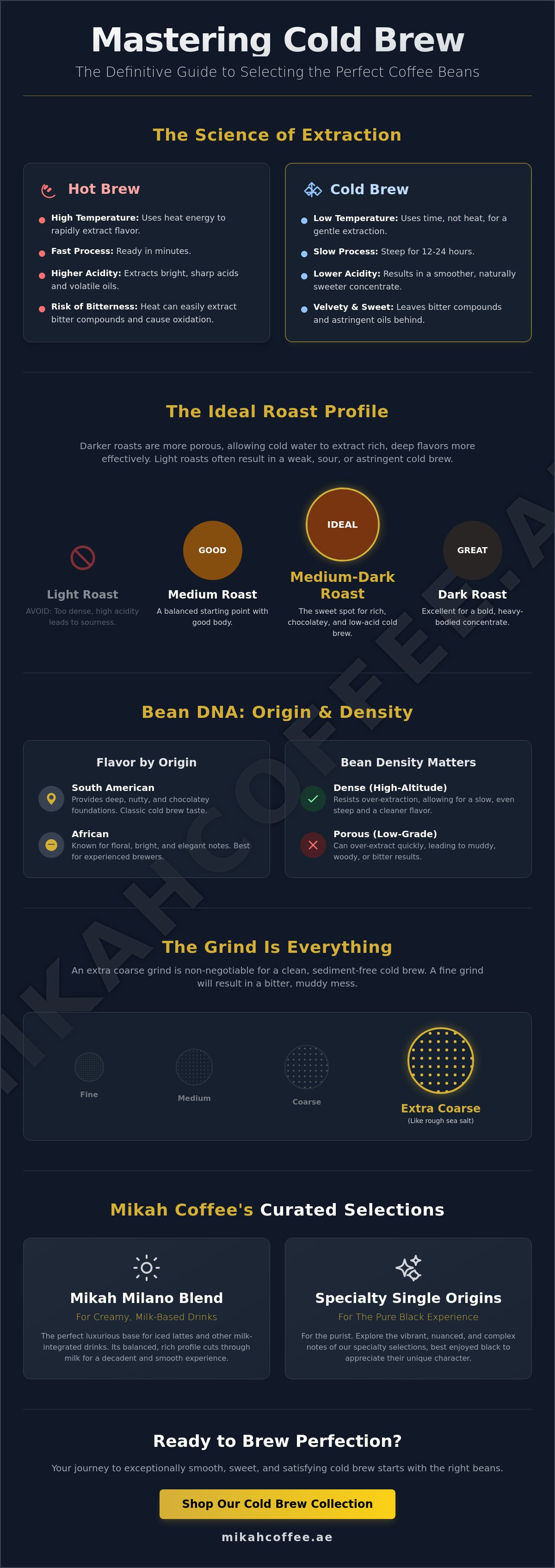
Time is the silent architect of flavor in a proper steep. Unlike traditional methods that rely on thermal energy to force flavors from the grounds, cold brew coffee is a slow immersion process that typically spans 12 to 24 hours. This extended contact time allows water to gently coax out soluble solids without the aggressive heat that often triggers rapid oxidation. Because cold water lacks the energy to dissolve high-molecular-weight bitter compounds and astringent oils, the resulting concentrate is famously smooth. Identifying the best coffee beans for cold brew UAE connoisseurs prefer starts with understanding this low-energy chemistry. When you remove heat from the equation, you're left with a beverage that boasts significantly lower acidity than its hot-brewed counterparts.
Bean density also plays a pivotal role in this marathon extraction. Denser beans, often grown at higher altitudes, possess a tighter cellular structure that resists immediate saturation. This resistance is actually a benefit. It ensures that the water penetrates the grounds slowly and evenly over the course of a day. If a bean is too porous or low-grade, it can over-extract early in the cycle, leading to a muddy or "woody" profile. Choosing the right bean isn't just about flavor notes; it's about finding a physical structure that can withstand a twenty-hour bath without collapsing into bitterness.
Solubility and Temperature: The Cold Extraction Curve
Why does the same bean taste different when brewed cold? Temperature dictates which chemical components enter your cup. Heat acts as a catalyst for acids and certain volatile oils that provide "brightness" but can easily tip into harshness. In a cold environment, these sharp acids remain trapped within the coffee grounds. This shift in the extraction curve is why cold brew tastes naturally sweeter. It highlights the inherent sugars and caramelization within the bean rather than the sharp citrus notes. High-quality Arabica remains the gold standard for this method. Its complex sugar profile and refined lipid content ensure a clean, sophisticated finish that doesn't require masks of heavy syrups.
Chemical Composition: Why Some Beans Fail in Cold Water
Extraction yield represents the percentage of the coffee bean's total mass that dissolves into the water during the brewing process. For home brewers in 2026, achieving a balanced yield requires beans with optimal freshness and gas content. If a bean is too old, it has already lost the vital carbon dioxide necessary to facilitate water movement through the grounds during an 18-hour steep. This often leads to a hollow, papery taste. Using defect-free specialty coffee is essential because the cold immersion method acts as a magnifying glass. Any subtle off-flavors in lower-grade beans won't be hidden by heat; they'll be amplified over the hours of contact. Selecting the best coffee beans for cold brew UAE markets offer means looking for recent roast dates to ensure the bean's chemistry is still vibrant and ready to perform.
Roast Profiles: Choosing Between Brightness and Body
Roasting is the transformative stage where a bean's potential becomes a sensory reality. It's not merely a matter of color; it is a complex chemical evolution that dictates how the coffee will behave when submerged in cold water for eighteen hours. For many, the search for the best coffee beans for cold brew UAE markets provide ends with a medium-to-dark roast. This preference isn't accidental. During the roasting process, the Maillard Reaction creates the deep, resonant compounds that define the classic cold brew experience. As sugars and amino acids react under heat, they produce the comforting notes of cocoa, toasted grain, and molasses that consumers in the Emirates have come to cherish.
Solubility is the key differentiator here. Darker roasts have spent more time in the roaster, which breaks down the bean's cellular structure and makes it more porous. This increased porosity allows cold water to enter the bean more easily, ensuring a rich and full-bodied extraction even without the aid of heat. While flavor is paramount, understanding how grind size affects your brew remains a vital companion to roast selection; even the perfect dark roast can fail if the physical surface area isn't managed with precision.
The Case for Dark and Medium-Dark Roasts
Traditionalists often gravitate toward medium-dark profiles because they offer a reliable, heavy mouthfeel. These beans excel at providing a "chocolatey" backbone that stands up beautifully to ice or a splash of milk. If you're seeking that authentic, syrupy texture, the Milano blend coffee beans provide a masterclass in balance. This profile emphasizes caramel and toasted nuts, creating a beverage that feels like a dessert in a glass. It's the dependable choice for those who value consistency and a lingering, sweet finish over experimental acidity.
Exploring Light Roasts for Floral Cold Brew
A modern movement is shifting toward light roasts, treating cold brew more like a delicate, chilled tea than a heavy coffee concentrate. These roasts preserve the bean's original terroir, offering vibrant notes of citrus, jasmine, and summer berries. However, extracting these flavors is a challenge. Light roasts are denser and less soluble, meaning they don't give up their secrets easily to cold water. To succeed with a light profile, you'll need to extend your steep time, often reaching the 24-hour mark to ensure the water has enough time to penetrate the hard, dense seeds. If you're ready to experiment with these nuanced flavors, browsing our curated Specialty coffee selection is the perfect starting point for your next batch.
Origin and Processing: Single Origin vs. Blends
Geography is the silent partner in every successful extraction. When selecting the best coffee beans for cold brew UAE connoisseurs often find themselves at a crossroads between the vibrant clarity of single origins and the curated harmony of blends. African origins, specifically those from the high-altitude plateaus of Ethiopia and Kenya, are the darlings of the "tea-like" cold brew movement. These beans possess an almost electric acidity and floral complexity. When steeped for twenty hours, they don't produce a heavy cup; instead, they yield a beverage reminiscent of a fine liqueur, brimming with notes of bergamot, stone fruit, and jasmine.
South American beans, particularly those from the volcanic soils of Brazil and Colombia, provide the structural integrity for a more traditional experience. They're the backbone of the chocolatey, nutty profiles that many associate with a classic cold brew. Beyond geography, the processing method used at the farm level significantly alters the final result. Washed process beans, where the fruit mucilage is completely removed before drying, are typically preferred for cold brew. This method ensures a clean, crisp finish, preventing the "muddled" or overly fermented flavors that can sometimes occur when natural process beans undergo a long, room-temperature soak.
The Reliability of Italian-Style Blends
There's a certain wisdom in the art of the blend. By combining beans from various origins, roasters can create a "symphony" of flavor that a single origin simply cannot match. Blends offer a dependable consistency, ensuring that your morning ritual tastes the same in July as it does in December. This reliability is a hallmark of the best coffee beans for cold brew UAE residents choose for their home bar. The same versatility found in premium coffee beans for moka pot often translates beautifully to the cold brew carafe, providing a deep, syrupy base that remains balanced even when diluted with ice or milk.
Single-Origin Specialty: The Terroir Experience
Choosing a single origin is an invitation to explore a specific time and place. High-altitude beans develop more concentrated sugars due to the slower maturation of the coffee cherry in cooler mountain air. These dense seeds require a meticulous approach to grinding, but the reward is a cup that tastes purely of its terroir. While washed beans offer clarity, some enthusiasts enjoy the "funky" profile of natural process beans in a cold brew. These beans, dried with the fruit still attached, can introduce wild notes of blueberry or tropical fruit, though they require a disciplined steep time to avoid becoming unpleasantly pungent. For those ready to venture into these unique profiles, our Specialty coffee collection offers a curated gateway to the world's most distinct growing regions.
The Practicalities: Grind Size, Water, and UAE Storage
Precision in preparation is what elevates a simple beverage into a connoisseur's delight. Even when you have sourced the best coffee beans for cold brew UAE roasters provide, the physical state of those beans during extraction remains the most critical variable. You must aim for an extra coarse grind. Think of the texture of granulated sea salt or cracked peppercorns. This deliberate lack of surface area is essential; it prevents the water from extracting the harsh, woody tannins that reside deep within the bean's structure during a twenty-hour soak. A fine grind will lead to a muddy, over-extracted liquid that masks the very nuances you've paid a premium to enjoy.
Ratios define the strength and versatility of your final pour. For those who prefer a concentrated "base" to mix with milk or tonic, a 1:8 water-to-coffee ratio is the industry standard. If you intend to drink your brew black and chilled, a 1:15 ratio offers a ready-to-drink experience that feels light and refreshing. Because the UAE's ambient room temperature often exceeds 25°C even indoors, we strongly advise against "counter-top" brewing. High heat can accelerate oxidation and lead to sour, fermented off-flavors. Always steep your carafe in the refrigerator to maintain a stable, low-temperature environment that preserves the delicate aromatic oils.
Water Quality: The Hidden Ingredient
Water is the canvas upon which your coffee is painted. In the Emirates, most tap water is desalinated and then re-mineralized, often resulting in a high Total Dissolved Solids (TDS) count that can make coffee taste unnecessarily bitter or "heavy." Conversely, using purely distilled water will leave your brew tasting flat and hollow because it lacks the minerals needed to pull flavors out of the grounds. Aim for a balanced, filtered water with a TDS between 75 and 150 ppm for the most vibrant results. For the most versatile results in 2026, we recommend a 1:8 water-to-coffee ratio to create a robust concentrate that maintains its character when diluted with ice or milk.
Preserving Freshness in the Heat
The intense humidity and heat of the region are the natural enemies of roasted coffee. Once a bag is opened, oxygen begins to degrade the volatile compounds that provide those sought-after chocolate and berry notes. To protect your investment, store your beans in an opaque, airtight container kept in a cool, dark cupboard. You should never store your beans in the refrigerator before brewing; the constant change in temperature creates condensation inside the bag, which effectively "pre-brews" the beans and ruins their integrity. For a deeper dive into protecting your supply, consult our guide on how to store coffee beans for expert techniques. Ready to begin your next batch? Browse our collection of Specialty coffee to find your perfect origin today.
Curating Your Collection: Mikah Coffee UAE’s Premium Cold Brew Selections
Selecting the right foundation is the final bridge between the theory of extraction and the reality of a perfect cup. While the techniques of grind size and water mineral content provide the framework, the inherent character of the bean provides the soul. At Mikah Coffee UAE, our approach is rooted in a slow-roasting tradition that respects the natural sugars within each seed. This methodical process is particularly effective when you're searching for the best coffee beans for cold brew UAE weather demands, as it ensures a balanced development that remains stable over long immersion periods. By avoiding the aggressive heat of rapid industrial roasts, we preserve the delicate aromatic compounds that define a luxury experience.
Professional results often require professional tools, even in a home setting. While the immersion happens in a carafe, the final filtration is where clarity is won or lost. Many connoisseurs find that using V60 paper filters for the final pour-through removes the fine silts that a standard mesh might miss. This extra step ensures a sparkling, sediment-free beverage that highlights the bean's purity. Whether you're seeking a deep, chocolatey base for a morning latte or a bright, floral black coffee, the selection below represents the pinnacle of our curated collection.
The Milano Blend: A Cold Brew Masterpiece
For those who appreciate a velvety, heavy-bodied beverage that pairs seamlessly with milk, the Milano Blend by Mikah Coffee UAE is an unrivaled choice. It carries a signature hazelnut finish and deep cocoa notes that remain prominent even after significant dilution. This profile is a direct result of Massimo Barbieri’s 1984 roasting philosophy, which prioritizes a gentle, extended heat application to develop uniform solubility throughout the bean. When you use these beans in a 1:8 concentrate, the result is a syrupy, indulgent liquid that stands up perfectly to ice and creamy textures. It is a reliable, sophisticated choice for the traditionalist who values a consistent, dessert-like finish.
Specialty Selections for the Adventurous Palate
If your preference leans toward black coffee with a crisp, wine-like clarity, the rotating specialty range at Mikah Coffee UAE offers a more adventurous path. These single-origin selections are curated for their distinct profiles, often featuring vibrant notes of stone fruit, dark chocolate, and exotic spice. Because these beans are sourced from specific high-altitude estates, they offer a transparency of flavor that celebrates the unique soil and climate of their origin. It's this commitment to variety and quality that makes our collection a leading source for the best coffee beans for cold brew UAE residents can find. Explore Mikah Coffee UAE’s full range of specialty coffee beans online to discover an origin that speaks to your unique palate and elevate your daily ritual into something truly extraordinary.
Mastering the Art of the Cold Extraction
Crafting a truly exceptional cold brew is a delicate balance of patience, chemistry, and the pursuit of the perfect bean. You now understand that the secret to a smooth, chocolatey finish lies in the intersection of a precise extra-coarse grind and the intentionality of an Italian slow-roast. By respecting the bean's origin and the subtle nuances of roast development, you can transform a simple morning habit into a sophisticated ritual. Finding the best coffee beans for cold brew UAE connoisseurs trust is no longer a matter of chance; it's a choice rooted in quality and heritage.
The commitment to excellence at Mikah Coffee UAE began in 1984, and it continues today through our curated selection of specialty coffee designed specifically for the discerning palate of the Emirates. With national delivery ensuring your beans arrive at the peak of their aromatic potential, the perfect carafe is always within reach. Elevate your ritual with the authentic Milano Blend from Mikah Coffee UAE and experience the difference that decades of roasting expertise can make. Your journey toward the ultimate home-brewed experience starts with the very next batch you steep. Enjoy the process.
Frequently Asked Questions
Can I use regular espresso beans for cold brew?
Yes, espresso beans are an excellent choice because their medium-dark roast profile is highly soluble for slow extraction. These beans possess the necessary development to provide a rich, chocolatey base that resists becoming sour over time. The Milano Blend from Mikah Coffee UAE is a classic example, offering a velvety texture and a lingering hazelnut finish that stands up beautifully to heavy ice or milk dilution.
Should I grind my coffee beans fine or coarse for cold brew?
An extra-coarse grind is mandatory to achieve a clean and balanced extraction. If the grounds are too fine, the water will over-extract bitter tannins and fine silts during the long steeping process. Aim for a texture resembling cracked peppercorns. This physical structure ensures that the water moves slowly through the grounds, resulting in the smooth profile characteristic of the best coffee beans for cold brew UAE enthusiasts prefer.
How long can I store cold brew coffee in the fridge in the UAE?
You can safely store your cold brew concentrate in an airtight glass container for up to ten days. Beyond this point, the volatile aromatics begin to dull and the flavor may turn papery due to oxidation. Given the high ambient temperatures in the region, it is vital to keep the carafe refrigerated from the moment you begin the steeping process to maintain its sensory integrity and prevent spoilage.
Do I need a professional machine to make cold brew at home?
No specialized machinery is required for this immersion technique. A simple glass jar and a reliable filter are all you truly need to produce a high-quality batch. For a more refined, sediment-free result, many connoisseurs use a V60 to filter the final liquid after the initial steep. It is a slow, meditative process that relies on the luxury of time rather than the force of pressure.
Is cold brew more caffeinated than regular hot coffee?
Cold brew typically contains more caffeine per ounce than hot coffee because of the higher coffee-to-water ratio used during the brewing process. While cold water extracts caffeine more slowly than boiling water, the 18 to 24 hour contact time and the concentrated nature of the recipe result in a very potent beverage. Always remember that a small portion of concentrate is designed to be diluted before consumption.
What is the best water-to-coffee ratio for a cold brew concentrate?
A 1:8 water-to-coffee ratio is the standard for creating a versatile concentrate that maintains its character when mixed. This allows you the flexibility to dilute the final product with milk, water, or even tonic to suit your personal preference. If you prefer a lighter, ready-to-drink beverage straight from the refrigerator, a 1:15 ratio is a more appropriate choice for a delicate and refreshing finish.
Can I use Nespresso capsules to make cold brew?
Whole beans are significantly better than capsules because the pre-ground coffee inside capsules is typically too fine for the cold brew method. Using these fine grounds often results in a cloudy, over-extracted beverage that lacks clarity. For the most refined experience, we recommend using fresh whole beans and reserving our Nespresso Compatible Capsules for their intended high-pressure, rapid-extraction preparation.
Why does my cold brew taste bitter even after 18 hours of steeping?
Bitterness is usually the result of a grind size that is too fine or the use of water with an excessively high mineral content. If your grounds are too small, the water extracts unwanted compounds too quickly. If your grind is correct, check your water source. High TDS levels common in the region can over-extract even the best coffee beans for cold brew UAE markets provide, leading to a harsh and astringent finish.