


Spending a premium on a bag of specialty beans only to find the flavor profile clashes with your palate is a silent tragedy for any enthusiast. You've likely stood before a shelf of beautifully designed bags, wondering how to read a coffee bag label without feeling like you need a degree in botany. It's a common frustration; the bridge between a label's cryptic notes and the actual sensory experience in your cup often feels unnecessarily complex. Your morning ritual deserves better than a gamble on marketing aesthetics.
This guide will teach you to master the art of interpreting these details to predict the body, acidity, and aroma of your next purchase before you even break the seal. By understanding these indicators, you can confidently select beans that align with your specific equipment and taste preferences. We'll decode everything from the significance of elevation and processing to the implications of the 2026 federal labeling laws, transforming a simple shopping trip into a sophisticated act of curation.
Key Takeaways
- Learn to distinguish between evocative marketing descriptions and the technical data that actually guarantees quality and ethical transparency.
- Understand how altitude and regional terroir shape the innate acidity and flavor profile of the bean before it ever reaches the roaster.
- Discover how to read a coffee bag label to predict the body and sweetness of your brew by decoding specific processing methods.
- Match your chosen beans to your specific brewing equipment, from a delicate V60 pour-over to a high-pressure professional espresso machine.
- Explore how heritage-driven selections like the Milano Blend balance traditional Italian craftsmanship with modern technical transparency.
The Anatomy of a Premium Coffee Label
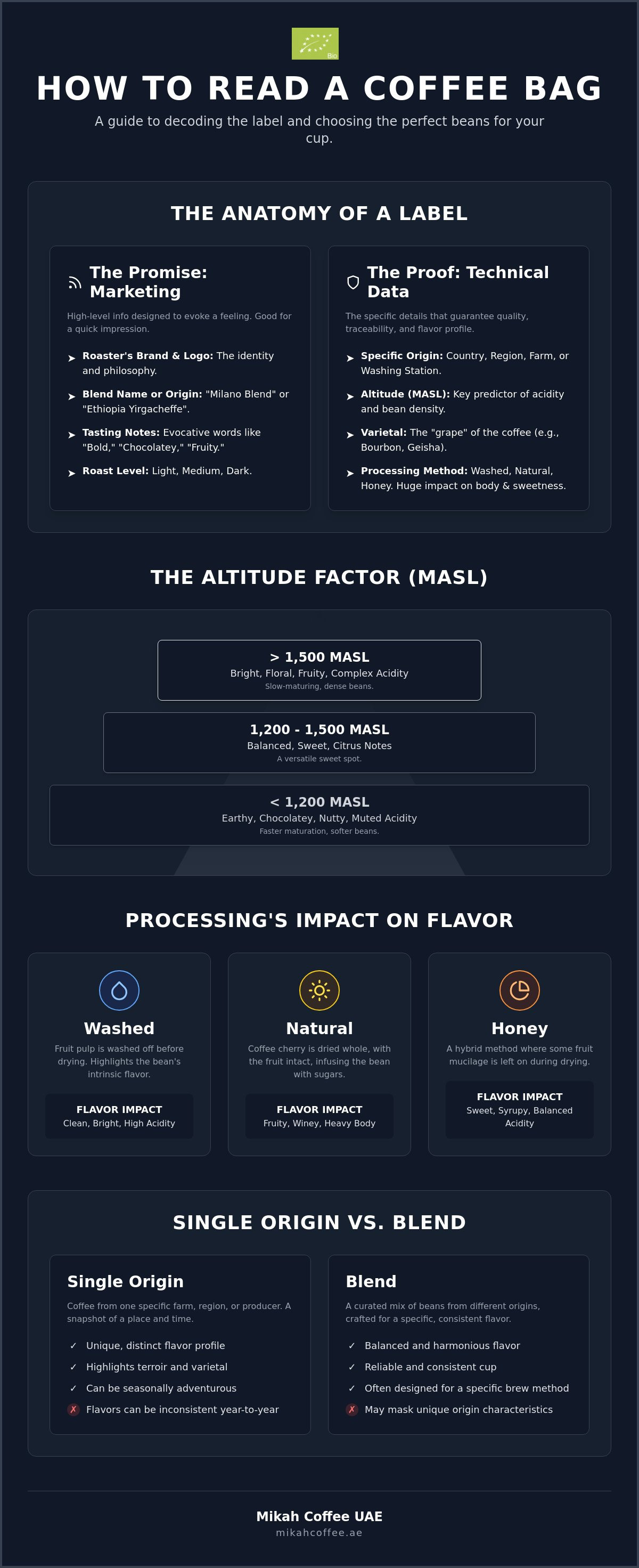
A coffee label is far more than a decorative sleeve; it's a curated resume that documents a bean's journey from a high-altitude hillside to your morning cup. For the discerning enthusiast, knowing how to read a coffee bag label is the difference between a generic caffeine fix and a sophisticated sensory event. While supermarket brands often rely on vague descriptors like "bold" or "smooth," premium roasters provide a wealth of technical data. This transparency isn't just for show. It's a commitment to quality and ethical sourcing that ensures you know exactly where your investment goes. When you learn to decode these symbols, you'll find that the label acts as a promise of character and craftsmanship.
There is a profound psychological shift that occurs when you master these details. You're no longer just "buying coffee." Instead, you're selecting a specific flavor profile that matches your mood, your equipment, and your palate. Understanding the technical nuances of coffee species and growing regions is the first step in moving beyond the generic "medium roast" designation. It allows you to appreciate the heritage behind the bean, recognizing the effort required to produce specialty-grade crops in challenging climates.
The Front Label vs. The Technical Card
The front of the bag usually establishes the roaster’s identity and mission, but the real depth lies in the technical specifications. Look for "hero" information like the specific region and roast level, which serve as the primary indicators of taste. You'll also encounter various certifications. While terms like "Organic" or "Fair Trade" provide a baseline for ethical standards, the most prestigious labels often go further, listing the exact farm or washing station to prove total traceability.
Single Origin vs. The Art of the Blend
Choosing between a single origin and a blend is a matter of intent. Single-origin labels focus on the unique, often eccentric characteristics of a specific micro-climate. They're snapshots of a single harvest. In contrast, a signature blend is an exercise in curated balance. For example, our Milano blend coffee beans are crafted to deliver a consistent, luxurious experience year-round. While single origins celebrate seasonal variety, a masterfully executed blend provides a reliable ritual, harmonizing different beans to create a profile that is greater than the sum of its parts. Understanding how to read a coffee bag label helps you decide whether you want a wild, singular adventure or a polished, dependable classic.
Origin and Terroir: Decoding the Geography of Flavor
Why does a coffee from the volcanic soils of Guatemala differ so wildly from the sun-drenched hills of Vietnam? The answer lies in terroir. This concept, borrowed from the wine world, encompasses the soil composition, rainfall, and temperature that define a bean’s character. When mastering understanding coffee labels, identifying the origin within the "Coffee Belt" is your first clue to flavor. This narrow band around the equator hosts the world’s finest crops, each region offering a distinct sensory signature. Traceability to a specific estate or washing station isn't just about prestige; it ensures the flavor hasn't been diluted by lower-quality harvests from neighboring farms.
MASL, or Meters Above Sea Level, serves as the primary indicator for a bean's potential acidity and physical density.
Altitude and Density: The "MASL" Metric
High-altitude environments, typically above 1,500 meters, present a challenging climate for the coffee plant. The cooler temperatures and thinner air force the cherry to mature slowly. This extended development period allows complex sugars to concentrate, resulting in the bright, floral, or fruity acidity prized by connoisseurs. Conversely, coffee grown at lower elevations tends to be less dense, offering earthier, chocolatey profiles with a more muted acidity. Why does this matter for your morning brew? Denser, high-altitude beans are physically harder, often requiring a slightly coarser grind or more heat during extraction to unlock their full potential.
Varietals: The "Grape Type" of the Coffee World
If terroir is the environment, the varietal is the DNA. Much like the difference between a Pinot Noir and a Cabernet Sauvignon, the plant’s genetics dictate its baseline flavor profile. Arabica remains the undisputed choice for those seeking quality, offering a vast spectrum of nuance compared to the more resilient, bitter Robusta. Within the Arabica family, you'll see names like Bourbon, known for its buttery sweetness, or Typica, the foundational variety of the Americas. The rare Geisha varietal is the crown jewel, often fetching record prices for its tea-like clarity and intense aromatics.
Selecting the right specialty coffee begins with recognizing these geographical markers. It's the start of a journey that respects the land as much as the craft. Learning how to read a coffee bag label transforms your kitchen into a global tasting room, where every cup tells a story of its unique home.
Processing and Roast: Predicting Body and Acidity
If terroir provides the raw potential of a bean, processing is the hand that sculpts it. This stage acts as the essential bridge between the farm and the roaster, determining how much of the coffee cherry’s natural sugars remain on the seed. When you're learning how to read a coffee bag label, the processing method is your most reliable predictor of mouthfeel. It's the invisible influence that dictates whether your morning cup will be a crisp, tea-like experience or a heavy, fruit-forward indulgence. Understanding these methods is vital for interpreting processing and roast data effectively.
Roast levels further refine this profile. A light roast preserves the bright acidity and floral nuances of high-altitude beans. As the roast progresses toward the bold Italian tradition, heat triggers the Maillard reaction, unlocking aromatic oils and developing rich, caramelized notes. This chemical transformation replaces delicate acidity with a profound, lingering body. The roast is the final signature on the bean's journey.
Washed vs. Natural vs. Honey Processed
- Washed Process: The fruit is entirely removed before drying. Expect a cup defined by clarity, vibrant acidity, and a clean finish that highlights the bean's origin.
- Natural Process: The beans dry inside the cherry. This method imparts heavy body and "funky" fruit notes, often reminiscent of berries or tropical wine.
- Honey Process: A portion of the sticky mucilage is left on the bean. It offers a sophisticated middle ground, providing more sweetness than a washed coffee and more refined texture than a natural.
The Roast Date: The Only Real Freshness Indicator
Connoisseurs know that "Best Before" dates are largely irrelevant. They're often set months or even years in advance and tell you nothing about the bean's current state. Instead, search the label for the specific roast date. Freshly roasted coffee needs time to degas, as trapped carbon dioxide can interfere with water contact and lead to uneven extraction. You shouldn't brew beans on Day 1. Most specialty coffees reach their peak flavor between 7 and 21 days after roasting. This sweet spot is when the aromatics are most potent and the flavors have fully stabilized. Mastering how to read a coffee bag label means prioritizing this window to ensure every cup is a masterpiece of freshness.
From Label to Cup: Matching Beans to Your Ritual
The coffee label is your blueprint for a perfect extraction. Once you understand the technical data, the next step is translating those metrics into a practical brewing strategy. It's about matching the bean's inherent character to the physics of your chosen method. For instance, high-altitude beans with a light roast profile present a higher "extraction difficulty." Because they are physically denser, they often require higher water temperatures, typically between 92°C and 96°C, to dissolve the complex sugars locked within. Learning how to read a coffee bag label allows you to adjust your ritual before the first drop even hits the carafe.
Tasting notes are perhaps the most misunderstood part of the label. They aren't a literal ingredient list. Instead, they represent the sensory associations a professional experienced during the quality control process. If a label mentions "Bergamot" or "Stone Fruit," it suggests a specific type of acidity and sweetness, not an infusion. These notes act as a compass. They guide you toward the nuances you should expect to find when your technique is dialed in. Mastering how to read a coffee bag label transforms these descriptors from marketing jargon into a sensory map for your palate.
Selecting for the V60 and Pour-Over
For those who appreciate clarity and tea-like elegance, a V60 pour over kit UAE is the ideal companion for high-altitude, washed beans. These methods excel at highlighting the delicate floral and citrus notes often found on the label. When selecting for filter coffee, look for a clear "Origin" statement. Traceability to a specific farm or washing station ensures that the bright, vibrant characteristics of the terroir aren't muddied by lower-quality fillers, allowing the pure essence of the geography to shine through.
Selecting for Espresso and Moka Pots
Espresso requires a bean that can withstand high pressure and rapid extraction. Medium-to-dark roasts remain the gold standard for professional espresso machines because they develop the solubility needed for a rich, syrupy body. Look for tasting notes like "Chocolatey," "Nutty," or "Caramel." These profiles harmonize beautifully with milk, while a masterfully balanced blend provides the structural complexity required for a persistent, hazelnut-colored crema.
Explore our curated selection of specialty coffee to find the perfect match for your brewing ritual and elevate your daily cup.
The Mikah Standard: Reading Our Signature Blends
While single-origin beans offer a seasonal snapshot, the hallmark of a master roaster lies in the consistency and complexity of their signature blends. In the world of specialty coffee, blends are often unfairly viewed as less transparent than their single-farm counterparts. However, at Mikah, we believe that understanding how to read a coffee bag label for a blend is just as critical for the connoisseur. A premium blend isn't about hiding flaws; it's about intentional orchestration. We select specific lots to achieve a flavor architecture that remains stable throughout the year, ensuring your morning ritual is never subject to the whims of a single harvest. This approach addresses the gap between technical data and the emotional experience of the perfect cup.
Our Milano blend coffee beans exemplify this philosophy. The label on these bags balances traditional Italian soul with the technical data modern enthusiasts demand. You'll find a focus on regional harmony and roast precision that speaks to our "Slow Roast" method. This technique involves extended roasting times at lower temperatures, which allows the beans to develop a uniform color and deeper solubility. It's a craft that the label implies through its sensory descriptors, even if the physical bag doesn't show the hundreds of hours spent perfecting the heat curve. This dedication brings the authentic Italian cafe experience directly to the UAE, bridging the distance between heritage and home.
Interpreting Mikah Tasting Notes
When you look at a Mikah label, you'll notice a specific focus on "Body" and "Intensity." For our UAE customers, we define body as the weight and texture of the coffee on the tongue, while intensity refers to the aromatic impact and persistence of the finish. Developing your palate starts with these cues. We suggest tasting our selections side-by-side to notice the difference between the velvety cocoa notes of the Milano and the brighter, more botanical profiles of our specialty origins. It's a sensory journey designed to refine your appreciation for the art of the roast, turning every sip into a lesson in quality.
The Connoisseur’s Next Step
Mastering how to read a coffee bag label is only the beginning of your education. The true feedback loop happens when you compare your visual expectations with the liquid reality in your cup. Whether you prefer the ritual of manual brewing or the refined convenience of our Nespresso compatible capsules UAE, the goal remains the same: excellence in every extraction. We invite you to explore our professional hardware and curated beans to elevate your daily ritual into something truly meaningful. Your journey from a casual drinker to a sophisticated curator starts with the very next bag you choose to decode.
Mastering Your Sensory Selection
Mastering the nuances of terroir, altitude, and processing transforms your morning ritual from a guessing game into a deliberate act of curation. You now possess the framework to identify how high-altitude density and specific processing methods will manifest in your cup. By learning how to read a coffee bag label, you've bridged the gap between technical data and the sensory delight of a perfectly extracted brew. This knowledge empowers you to choose beans that harmonize with your equipment and your palate.
Your journey doesn't end with understanding; it begins with the first sip of an exceptional roast. Since 1984, Mikah has maintained an authentic Italian heritage by delivering excellence to enthusiasts. Our curated selection, overseen by Massimo Barbieri, ensures that every bean meets the highest standards of the craft. Whether you're refining your technique with a manual pour-over or seeking the bold intensity of a professional espresso, the right beans are the foundation of your success.
Elevate your brewing ritual and experience the difference of precision roasting. Shop our signature Milano Blend and Specialty Beans today. With nationwide delivery across the UAE, your next masterpiece is only a selection away. Confidently step into your role as a connoisseur and enjoy the rewards of a perfectly matched profile.
Frequently Asked Questions
What is the most important piece of information on a coffee bag?
The roast date is the most critical detail for any enthusiast. It serves as the definitive starting point for the bean’s peak flavor window. While origin and processing define the profile, a stale bean cannot deliver the nuances promised by its terroir. You should aim for beans roasted within the last 7 to 21 days to ensure you’re experiencing the full aromatic potential of the craft.
How do tasting notes get on the coffee label?
Tasting notes are the result of a professional sensory evaluation called cupping. Master roasters or Q-graders sample the brew and record the specific associations they perceive, such as "dark chocolate" or "citrus." These aren't added flavors. Instead, they are evocative descriptors that help you understand how to read a coffee bag label and predict the innate character of the bean before you buy it.
Does a "Dark Roast" label mean the coffee has more caffeine?
No, dark roasts actually contain slightly less caffeine by volume than lighter roasts. The prolonged heat of a dark roast causes the bean to expand and lose mass, which also breaks down a small portion of the caffeine molecules. While the flavor is more intense and bold, a light or medium roast will typically provide a more potent caffeine kick per bean.
What does "100% Arabica" actually mean for quality?
This designation indicates the coffee consists entirely of Arabica beans, which are prized for their sweetness and complex acidity. Compared to the hardier and more bitter Robusta species, Arabica offers a much wider spectrum of flavor. It’s a baseline indicator of specialty potential. However, the specific terroir and processing methods still dictate whether the beans truly reach a connoisseur’s standard.
Can I use beans labeled for "Filter" in my espresso machine?
You can certainly use filter beans for espresso, though it requires a more disciplined approach. Filter roasts are often lighter and denser, meaning they resist extraction more than traditional espresso roasts. To succeed, you'll need to use a finer grind and perhaps a higher water temperature. Many enthusiasts enjoy the vibrant, tea-like clarity that light-roast filter beans bring to a modern espresso shot.
Why do some coffee bags have a one-way valve?
The valve is a functional necessity that allows carbon dioxide to escape without letting oxygen inside the bag. Freshly roasted beans degas naturally for several days after the roast. Without this valve, the pressure could cause the packaging to swell or burst. Crucially, by blocking oxygen, the valve prevents the delicate oils from oxidizing and turning the beans stale prematurely.
How long do beans stay fresh after the roast date on the label?
Whole beans are at their absolute peak between 7 and 21 days after the roast date. After the first month, the volatile aromatic compounds begin to dissipate, and the flavor profile starts to flatten. While the beans remain perfectly safe to consume for several months, the vibrant notes you see when learning how to read a coffee bag label will gradually fade into a generic coffee taste.
Is "Single Origin" always better than a "Blend"?
Neither is inherently superior; they simply offer different experiences. A single origin is a transparent look at a specific micro-climate and harvest, often featuring eccentric or singular flavors. In contrast, a masterfully crafted blend is an exercise in balance and consistency. Blends are often the preferred choice for those who want a reliable, harmonious flavor profile that stands up well to milk.