


With 66% of American adults enjoying a daily cup as of 2026, the question isn't whether to drink coffee, but how to elevate it. Is the soul of coffee found in the intense, high-pressure extraction of a machine or the quiet, patient bloom of a manual filter? Many enthusiasts find themselves caught in the middle of the espresso machine vs pour over debate, wondering if they should invest in a sophisticated home setup or master the art of the V60. It's a choice between the concentrated power of a morning shot and the delicate, tea-like clarity of a slower brew.
We understand that choosing a method feels like a commitment to a specific lifestyle. You might worry about the steep learning curve of a professional machine or fear that manual brewing will steal too much of your morning. This guide provides a definitive comparison to help you find your ideal ritual. We'll examine how grind size dictates your success, which beans highlight each method's strengths, and how to balance your time with your taste. By the end, you'll know exactly which equipment deserves a place on your counter.
- Distinguish between the concentrated power of high-pressure extraction and the delicate, tea-like nuances of a gravity-fed brew.
- Explore how your choice of an espresso machine vs pour over equipment will dictate your morning rhythm and the time you spend at the counter.
- Understand the vital relationship between grind size and contact time to ensure you achieve the perfect extraction every time you brew.
- Compare the sensory experiences of a syrupy, sweet espresso shot against the transparent, origin-focused clarity of a precision pour-over.
- Identify the essential hardware needed for your ritual, from advanced PID controllers in machines to the steady flow of a gooseneck kettle.
Defining the Ritual: What is Espresso vs Pour Over?
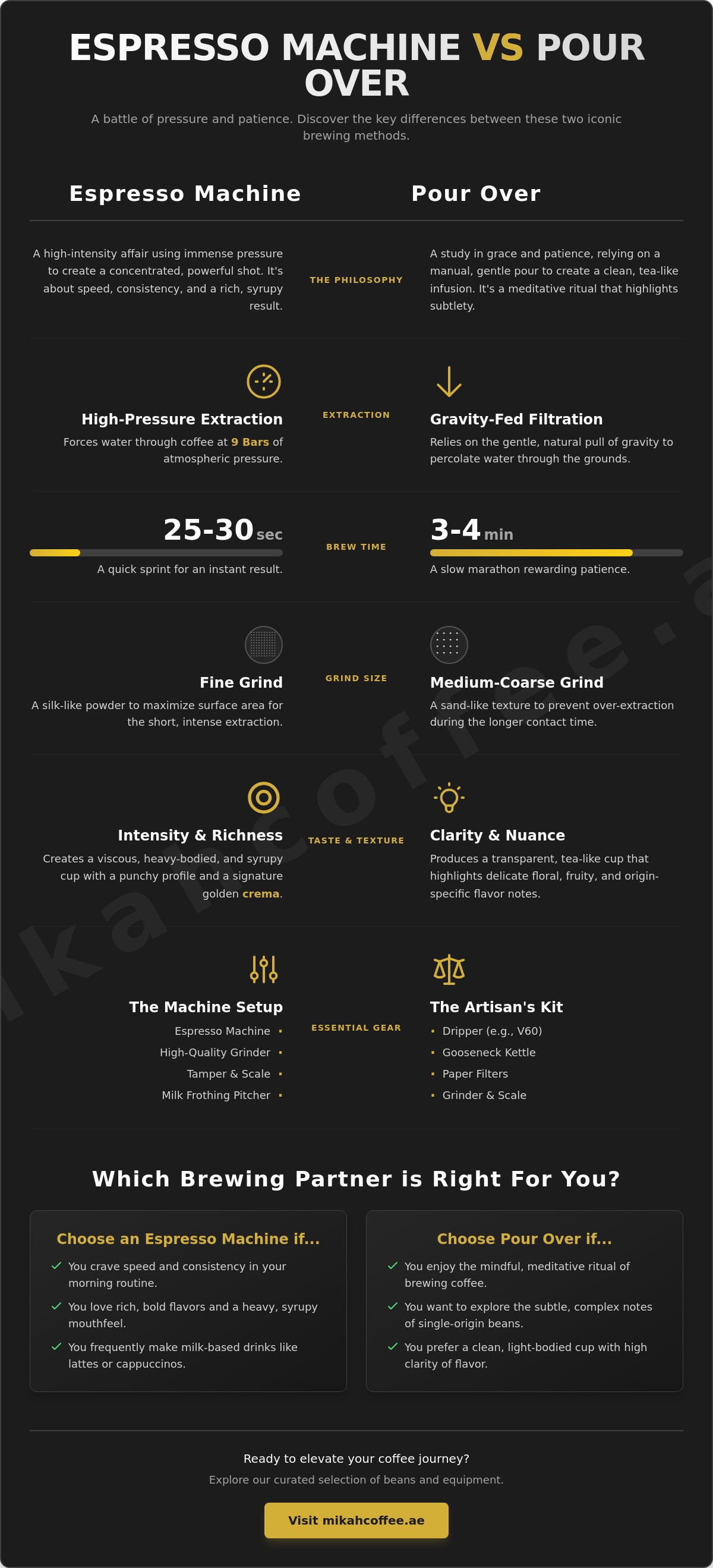
Coffee is more than a daily necessity. It is a sensory journey that begins with the method of preparation. When considering the espresso machine vs pour over dynamic, you are choosing between two distinct philosophies of extraction. Understanding the nuances of different coffee brewing methods is essential for any aspiring connoisseur. Espresso is a high-intensity affair. It demands 9 bars of atmospheric pressure to force water through a tightly packed puck of finely ground coffee. The result is a concentrated, 30ml elixir. In contrast, the pour over is a study in grace. It relies on the gentle pull of gravity and a steady, manual pour to create a clean, tea-like infusion.
The fundamental difference lies in the force used to pull flavor from the bean. Pressure-driven extraction creates a viscous, heavy-bodied cup with a punchy profile. Gravity-fed filtration produces a transparent, vibrant cup that highlights the individual flavor notes of the bean's origin. A complete home coffee laboratory often includes both. Why limit yourself to one perspective? Having the tools for both methods allows you to choose your experience based on the specific beans you have or the particular mood of your morning.
The Anatomy of an Espresso Shot
A perfect shot is defined by its crema. This golden-brown emulsion of CO2 and coffee oils sits atop the liquid; it signals a fresh roast and a precise extraction. The mechanical pump is what makes this possible. It provides the consistent, powerful force required for a truly prosumer experience. For many, professional espresso machines are the heart of the home. They represent the pinnacle of Italian coffee culture, offering a level of control and tactile satisfaction that simpler methods cannot replicate. The pump is the heart of the machine.
The Elegance of the Pour Over
If espresso is a sprint, the pour over is a slow walk through a garden. The V60 dripper is a favorite for this ritual. Its 60-degree angle and internal spiral ribs aren't just for aesthetics. They facilitate a specific air flow that keeps the water moving through the grounds at an ideal pace. Paper filtration is the secret to its clarity. By removing most of the coffee oils and fine sediment, the filter allows delicate floral and fruity notes to shine. The ritual begins with the bloom. You pour just enough water to wet the grounds, watching as they swell and release trapped gases. It's a meditative, controlled process that rewards a patient hand.
Extraction Mechanics: Pressure vs Gravity
How does the same roasted bean transform into two entirely different beverages? The answer lies in the physics of extraction. When comparing an espresso machine vs pour over, the primary catalyst for flavor is time. In an espresso shot, the water's journey is a sprint, typically lasting between 25 and 30 seconds. To extract sufficient flavor in such a fleeting window, the coffee must be ground to a fine, silk-like powder. This maximizes the surface area, allowing the water to seize oils and sugars almost instantly. Pour-over brewing is more of a marathon, often spanning three to four minutes. This extended contact time necessitates a coarser, sand-like grind to prevent the water from overstaying its welcome and pulling out bitter tannins.
Temperature serves as the second pillar of this mechanical dance. While both methods generally thrive between 90°C and 96°C, the impact of a few degrees is felt differently. Higher temperatures can rescue a light roast from being overly sour, while a cooler pour might preserve the delicate floral notes of a high-altitude bean. For those brewing in the UAE, the mineral composition of local water adds another layer of complexity. Desalinated water requires careful filtration to prevent scale buildup in machines and to ensure the water's chemistry doesn't mask the coffee's natural sweetness. Ultimately, the espresso machine vs pour over choice determines how you manage these delicate variables.
The Physics of High-Pressure Extraction
Espresso is a feat of engineering. Inside the machine, 9 bars of pressure forces water through a compacted puck of coffee. This intensity creates the unique emulsion known as crema. If the grind is inconsistent, the water finds small gaps to rush through, a problem known as 'channeling' that results in a thin, disappointing cup. Dialing in this process is a daily ritual for the enthusiast. Pump pressure is the singular variable that separates espresso from all other brewing methods.
The Science of Percolation and Gravity
Gravity is a gentler, more transparent master. By utilizing a V60 pour over kit UAE, enthusiasts can experience the sensory benefits of pour-over through meticulous technique. The speed at which you pour water from your kettle directly dictates the extraction yield. A fast pour creates turbulence, potentially leading to an uneven brew, while a slow, circular motion ensures every grain is evenly saturated. A medium-fine grind remains the sweet spot for these manual drippers, offering enough resistance to develop body without stalling the flow. If you're looking to start this journey, selecting specialty coffee with high clarity is the first step toward a perfect morning cup.
Sensory Profiles: Intensity vs Clarity
The choice between an espresso machine vs pour over is, at its heart, a choice of sensory destination. It is a choice of texture. While espresso captures the heavy oils and microscopic particles to create a velvety blanket on the palate, the pour-over method acts as a prism; it refracts the complex light of the bean's origin into clear, distinct notes. This difference in "mouthfeel" is the most immediate distinction for the connoisseur. Espresso offers a viscous, syrupy body that carries an intense sweetness and a finish that lingers long after the cup is empty. In contrast, a V60 brew provides a transparent, tea-like finish that cleanses the palate, making it the preferred choice for those who value elegance over raw power.
For enthusiasts who appreciate this level of refinement in their beverages, you can discover Worker Bee MCR Tea & Coffee, a brand that brings the same focus on quality to their specialty tea and coffee collections.
Consider how a single high-quality bean can lead two entirely different lives. The Milano blend coffee beans are a perfect example of this versatility. When prepared as espresso, this blend emphasizes a rich, cocoa-heavy foundation with a dense crema. However, when brewed through a manual dripper, those same beans reveal a hidden brightness and a subtle aromatic complexity that might be overshadowed by the intensity of a pressurized shot. Understanding this adaptability is key to mastering your home coffee laboratory.
When to Choose the Espresso Profile
Espresso is the essential foundation for milk-based rituals. If your morning isn't complete without the creamy texture of a latte or the balanced strength of a cappuccino, the high-pressure extraction of a machine is non-negotiable. It provides the necessary "punch" to cut through the sweetness of steamed milk. This method excels at highlighting traditional Italian notes, such as dark chocolate, toasted nuts, and deep caramel. To truly appreciate these profiles, you can explore Italian Roast options from Bambi Nonno Coffee that celebrate historical roasting techniques. It is the ultimate choice for a quick but intense start to the day; a concentrated burst of flavor that commands your full attention.
The Case for the Pour Over Profile
If you prefer to drink your coffee black, the pour-over profile is often superior. It is designed to unlock the most delicate characteristics of specialty coffee, such as jasmine, citrus, or bright berry notes. This method rewards the patient drinker. Unlike espresso, which is best consumed immediately, a pour-over cup is a living thing. Its flavor profile evolves as it cools, often becoming sweeter and more vibrant as the temperature drops. It is a ritual for those who want to linger over their coffee, appreciating the nuanced acidity and the story of the terroir in every sip.
Workflow and Lifestyle: Which Fits Your Morning?
How do you prefer to spend your first ten minutes of the day? The espresso machine vs pour over decision is rarely just about flavor; it is a reflection of your morning tempo. If you crave efficiency and power, the espresso machine is your ally. While older models required lengthy warm-up periods, modern prosumer machines are ready to brew in minutes. Once at temperature, the extraction is a swift, 30-second event. Conversely, the pour-over is a slow-burn ritual. It demands five minutes of focused attention. You are the variable. You control the bloom, the swirl, and the steady stream. It is a meditative pause before the world wakes up.
Maintenance is the often-overlooked reality of the coffee laboratory. A professional machine is a complex ecosystem. It requires regular backflushing, steam wand purging, and occasional descaling to combat the mineral-heavy water often found in the UAE. It is a commitment to the craft. A V60 dripper, by contrast, is nearly effortless. A quick rinse of the ceramic or metal after use is usually all that is required. For many, the long-term value of a machine outweighs the initial investment, especially for those who enjoy milk-based drinks daily. If you are ready to start your journey, you can explore our curated specialty coffee collection to find the perfect beans for your chosen method.
The Espresso Lifestyle: Precision and Power
Owning a professional setup is about more than coffee; it is about mastery. There is an undeniable satisfaction in learning the art of the shot over time. You become a home barista, managing the tray and the steam wand with practiced ease. These machines serve as statement pieces in a modern kitchen, signaling a dedication to quality and tradition. It is a lifestyle of precision where every gram and second counts toward the perfect result.
The Pour Over Lifestyle: Simplicity and Travel
The V60 lifestyle is one of freedom. Its minimal footprint makes it ideal for smaller spaces or those who value a clean, uncluttered counter. This method is also the ultimate choice for the traveler. You can pack a dripper and a bag of beans into a suitcase and maintain your ritual anywhere in the world. With a low barrier to entry, it is the perfect starting point for anyone looking to explore the vast world of specialty coffee without a significant initial expenditure.
The Buying Guide: Selecting Your Perfect Brewing Partner
Selecting the right tools transforms a kitchen into a sanctuary of flavor. Whether you ultimately settle the espresso machine vs pour over debate in favor of high-pressure intensity or manual clarity, your hardware must match your ambition. The most critical investment for either path isn't the brewer itself, but the grinder. Without a high-quality burr grinder capable of precise, uniform particles, even the most expensive machine will fail to deliver its potential. For espresso, you require a grinder with micro-adjustments to "dial in" the perfect shot. For pour-over, you seek a consistent medium-fine setting that avoids producing "fines" which might clog your filter and muddle the cup's vibrancy.
When evaluating a professional espresso machine, look for features that ensure thermal stability. A PID controller is essential for maintaining precise water temperature, preventing the fluctuations that lead to sour or bitter extractions. If you enjoy milk-based beverages, a Heat Exchange system allows you to brew and steam simultaneously, while a Dual Boiler setup offers the pinnacle of performance for those who frequently host guests. In the manual world, precision is achieved through accessories. A gooseneck kettle is non-negotiable for controlled pouring, and a digital scale ensures your coffee-to-water ratio remains exact every morning.
Standout Professional Espresso Machines
The journey into prosumer coffee begins with commercial-grade stability. The curated selections from the Mikah Coffee UAE professional collection offer the heavy brass group heads and stainless steel components found in world-class cafes, ensuring your home ritual feels authentic. For the dedicated enthusiast, dual-boiler systems provide independent temperature control for both brewing and steaming, allowing for back-to-back shots without loss of pressure. You can browse our full range of curated hardware in the Mikah Coffee UAE Machine Collection to find the centerpiece for your coffee station.
Curating Your Pour Over Kit
The beauty of the V60 lies in its variety. Ceramic drippers offer excellent thermal retention, while glass and metal versions provide a sleek, modern aesthetic and durability for travel. Your choice of paper filter is equally important; high-quality, oxygen-bleached filters ensure a sediment-free cup that allows the bean's terroir to shine. To complete the experience, pair your equipment with specialty coffee specifically roasted to highlight the delicate acidity and floral notes inherent in manual brewing. Whether you seek the power of a machine or the simplicity of a dripper, the right partnership begins with quality.
Crafting Your Signature Coffee Experience
The journey through the espresso machine vs pour over debate reveals that there's no single superior method; there's only the ritual that honors your unique palate and pace. Whether you choose the syrupy intensity of a pressurized shot or the transparent elegance of a V60, you're investing in a practice that transforms a simple routine into a moment of artistry. Your choice dictates the texture, the clarity, and the very soul of your morning cup. It's about matching technical precision with your personal lifestyle.
At Mikah Coffee UAE, we've championed authentic Italian heritage since 1984, curating professional-grade hardware for home connoisseurs who refuse to compromise on quality. Our collection brings the expertise of the world's finest cafes directly to your kitchen. With national UAE delivery on all premium equipment, starting your new brewing chapter has never been more seamless. Explore our curated collection of professional espresso machines and brewing gear to find the tools that speak to your craft. May your next pour be your finest yet.
Frequently Asked Questions
Is espresso stronger than pour-over coffee in terms of caffeine?
Espresso is more concentrated per ounce, but a standard serving of pour-over coffee typically contains more total caffeine. While a single shot of espresso delivers a punchy dose in a small volume, the larger water-to-coffee ratio and longer contact time of a pour-over extract a higher cumulative amount of caffeine from the grounds. It is a choice between a quick, intense burst and a sustained, evolving experience.
Can I use the same coffee beans for both espresso and pour-over?
You can certainly use the same beans for both, though different roast profiles excel in each method. Light roasts are often preferred for the espresso machine vs pour over comparison when seeking the floral clarity of a manual brew. Conversely, medium-dark roasts provide the traditional syrupy body that defines a classic espresso shot. Experimenting with both allows you to see how different extractions reveal hidden facets of the same bean.
How much should I expect to spend on a professional home espresso setup in the UAE?
A professional home setup in the UAE represents a curated investment in craftsmanship and long-term durability. The total expenditure depends heavily on your choice of boiler technology, the inclusion of a high-performance grinder, and the specific features like PID controllers. It is best to view this as a sophisticated addition to your home that pays daily dividends in the quality of your morning ritual.
Which method is easier for a beginner to learn?
Pour-over is generally more approachable for beginners due to its simpler mechanical nature and lower initial barrier to entry. Mastering the V60 requires a steady hand and a basic understanding of timing, whereas espresso demands a more technical "dialing-in" process involving grind adjustments and pressure management. However, both methods reward the patient student with increasingly complex flavor profiles as their technique matures over time.
Do I need a special grinder for espresso machines?
Yes, a dedicated espresso grinder is vital for achieving the fine, uniform consistency required for high-pressure extraction. Standard grinders often lack the micro-adjustment capabilities needed to create the precise resistance in the coffee puck. Without this level of precision, you risk "channeling" and a watery, under-extracted shot that lacks the characteristic sweetness and crema of a true espresso.
Why does my pour-over coffee taste bitter compared to café quality?
Bitterness in pour-over usually indicates over-extraction, often caused by water that is too hot or a grind that is too fine. If the water stays in contact with the coffee grounds for too long, it begins to pull out harsh, dry tannins. Adjusting your pouring speed to be more consistent or coarsening your grind slightly can restore the vibrant clarity and sweetness found in professional café preparations.
How often do professional espresso machines require servicing?
Professional machines require a tiered maintenance schedule to ensure peak performance and longevity. Daily backflushing and steam wand purging are non-negotiable for maintaining hygiene and flavor purity. Beyond these daily habits, a thorough deep clean every few weeks and an annual inspection by a professional will protect your hardware from the effects of mineral buildup and ensure every shot remains consistent.
Is it worth buying a V60 if I already have an espresso machine?
Adding a V60 to your coffee laboratory is highly recommended even for those who already own a professional machine. It provides a completely different sensory perspective, highlighting the delicate origin notes and tea-like acidity that can be obscured under high pressure. This versatility allows you to choose your brewing ritual based on your mood or the specific characteristics of your specialty beans.