


Why does that expensive carton of oat milk sometimes produce a velvet masterpiece, while other times it collapses into a watery disappointment before you even reach for your latte art pen? It's a common frustration for anyone striving to recreate the high-end boutique experience at home. You've likely stood in the dairy aisle, puzzled by "Barista" labels and wondering which bottle holds the secret to that elusive, glossy texture. Finding the best milk for frothing latte is less about trial and error and more about mastering the hidden chemistry of proteins and fats.
We understand that a latte is more than just a morning caffeine fix; it's a daily ritual that deserves precision and craft. You deserve a foam that doesn't just sit on top, but integrates into a silky microfoam capable of holding intricate art. This guide will teach you how to identify the chemical structures required for stability, whether you prefer traditional dairy or are part of the 65% of the global population managing lactose intolerance. We will examine the creamy performance of almond milk, which currently leads the market with a 30% share, the rapid rise of oat alternatives, and the specific science that turns simple liquid into a luxurious, pourable cloud.
Key Takeaways
- Understand how milk proteins like casein and whey act as the essential scaffolding to stabilize tiny air bubbles into a velvety microfoam.
- Discover why whole milk remains the industry gold standard for luxury, helping you identify the best milk for frothing latte to suit your specific palate.
- Learn why oat milk’s unique starch profile makes it the premier plant-based rival to dairy for achieving a glossy, pourable texture.
- Master the precision of temperature by starting with milk at 4°C and finishing at 65°C to ensure peak sweetness and structural integrity.
- Elevate your daily ritual by pairing premium Milano blend beans with the Mikah Milk Frother to engineer a professional-grade vortex at home.
The Science of Silk: Why Some Milks Froth Better Than Others
Achieving a cafe-quality pour begins with a fundamental understanding of molecular architecture. Microfoam is not merely "bubbly milk"; it is a sophisticated suspension of microscopic air bubbles stabilized by a delicate web of milk proteins. When you search for the best milk for frothing latte, you are essentially looking for a liquid with the right chemical balance to support this ephemeral structure. This process, often referred to as The Science of Silk: Why Some Milks Froth Better Than Others, relies on proteins to act as the "bricks" of the foam while lipids, or fats, serve as the "mortar" that provides a glossy, viscous finish. Without this harmony, your latte is destined to be either too airy or disappointingly flat.
Protein: The Secret to Long-Lasting Foam
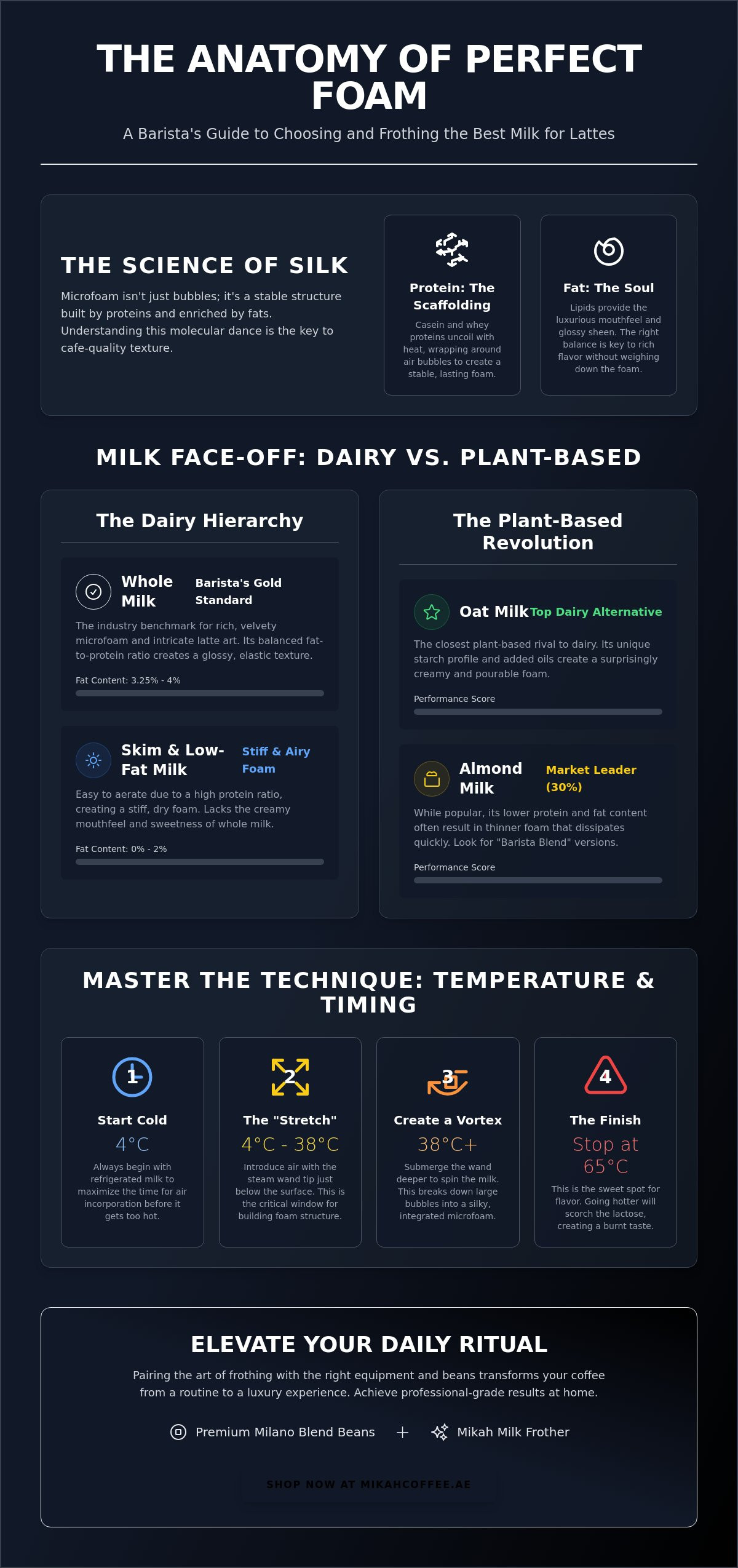
As you introduce steam into the pitcher, the heat causes protein molecules, specifically casein and whey, to denature or uncoil. These long chains wrap themselves around the air bubbles, creating a protective coating that prevents them from merging and popping. It's the reason skim milk often creates a "stiff" foam that stands tall but feels dry; it has a high protein-to-fat ratio. In contrast, the proteins in whole milk work harder to support the added weight of fats, resulting in a velvety, integrated texture. The critical "stretch" phase occurs at the very beginning of the ritual, while the milk is between 4°C and 38°C. This is the only window where proteins are receptive enough to capture air effectively. If you wait until the pitcher is warm to the touch to start stretching, you've already missed the opportunity for structural stability.
Fats: The Key to a Luxurious Mouthfeel
If proteins provide the scaffolding, fats provide the soul. Lipids are responsible for the heavy, luxurious mouthfeel and the natural sweetness that characterizes a world-class latte. However, fat is a double-edged sword. While it creates a beautiful gloss, too much fat can actually weigh down the protein structures, causing the foam to dissipate prematurely. The "sweet spot" for a traditional Italian-style latte usually sits between 3.25% and 4% fat content. This balance ensures the foam is light enough for intricate art but rich enough to coat the palate. Temperature acts as the final catalyst. As you approach 65°C, the fats melt into a liquid state, creating that signature shine that signals the best milk for frothing latte has reached its peak potential. Exceeding this temperature causes the lactose to degrade, resulting in a burnt flavor that masks the delicate notes of your espresso beans.
The Dairy Hierarchy: Ranking Traditional Milks for Latte Art
While the plant-based movement continues to expand, traditional dairy remains the benchmark for many connoisseurs. It is the original medium for the craft, possessing a biological complexity that is difficult to replicate. Understanding the chemical science of milk foam allows us to see why dairy sits at the top of the hierarchy. The interaction between bovine proteins and natural sugars creates a sweetness that enhances, rather than masks, the nuanced notes of a high-quality espresso. When selecting the best milk for frothing latte, your choice between whole, reduced-fat, or skim will fundamentally alter the viscosity and longevity of your microfoam.
Whole Milk: The Barista’s First Choice
Whole milk, typically containing between 3.25% and 4% fat, is widely regarded as the gold standard for latte art. This specific fat-to-protein ratio creates a heavy, elastic texture that flows with a liquid-mercury consistency. From a sensory perspective, the richness of whole milk is the perfect partner for the deep, chocolatey profile of Milano blend coffee beans. The fats act as a buffer, softening the intensity of the roast while providing a glossy finish that makes a Rosetta or heart pop against the crema. To avoid scorching the natural lactose, always stop steaming when the pitcher feels just too hot to hold comfortably. This preserves the delicate sweetness that defines a truly authentic Italian experience.
Low-Fat and Skim: For the 'Cloud' Texture
Beginners often reach for skim or 2% milk because it's remarkably easy to aerate. Because these milks have a higher protein-to-fat ratio, the bubbles are incredibly stable. You can create a "stiff" or "dry" foam that sits like a cloud atop your cup. However, this stability comes at a cost. Skim milk often lacks the "soul" of a traditional latte, feeling thin on the palate and sometimes developing a soapy texture if over-stretched. While 2% milk offers a balanced compromise for the health-conscious, it requires a more precise hand to achieve "wet" microfoam, the pourable, paint-like consistency needed for intricate art. If you find your foam is too dry to pour, try reducing the air injection phase to just the first few seconds of the ritual.
The processing of the milk also plays a silent role in your results. Pasteurized milk is standard, but UHT (Ultra-High Temperature) milk, while shelf-stable, has already had its proteins partially broken down by heat. This can lead to inconsistent results compared to fresh, chilled dairy. For those seeking the ultimate foundation for their morning cup, pairing fresh whole milk with the precision of Mikah Milk Frother ensures that even the most delicate protein structures are handled with the respect they deserve.
The Plant-Based Revolution: Best Non-Dairy Alternatives
The pursuit of the perfect pour is no longer tethered exclusively to the dairy farm. As plant-based alternatives now account for approximately 16% of retail milk dollar sales in the U.S., the technology behind these liquids has evolved to satisfy the most discerning palates. When seeking the best milk for frothing latte in the non-dairy category, you're looking for a substitute that mimics the structural integrity of bovine protein. Oat milk has emerged as the clear frontrunner. Its unique starch profile provides a natural creaminess and weight that closely rivals whole milk, allowing for a glossy finish that holds intricate art for minutes rather than seconds.
Soy milk remains a formidable high-protein alternative. It possesses a protein density similar to dairy, which creates a stable, long-lasting foam. However, it is notoriously temperamental. If the espresso is too acidic or the steam is too hot, the proteins can clump, leading to a curdled appearance. Almond milk, while popular for its nutty aroma, presents the greatest challenge. Its low protein density often leads to a thin, "fizzy" foam that dissipates quickly. For those who enjoy a tropical or buttery undertone, coconut and cashew milks offer niche flavor profiles, though they often lack the "stretch" required for professional-grade microfoam.
The 'Barista Edition' Distinction
Have you ever wondered why your favorite cafe's almond milk foams perfectly while yours falls flat? The secret lies in the "Barista Edition" label. These professional-grade formulations include acidity regulators like dipotassium phosphate. These minerals act as a buffer, preventing the plant proteins from reacting to the high acidity of the espresso. They also contain added emulsifiers that mimic the structural role of dairy fats. When reading labels, look for these stabilizers; they are essential for maintaining the foam's architectural integrity throughout the drinking experience.
Matching Plant Milks to Coffee Roasts
A true connoisseur understands that the milk must complement the bean. The natural nuttiness of almond milk pairs exquisitely with lighter specialty roasts, where it doesn't overwhelm the delicate floral notes. In contrast, the robust creaminess of oat milk is the perfect partner for more intense profiles. It provides a smooth foundation that supports the bold, concentrated flavors of Nespresso compatible capsules UAE. If you prefer the traditional Italian experience, be mindful of soy's "beany" aftertaste. It can sometimes clash with darker roasts, though it performs beautifully when steamed at a slightly lower temperature to preserve its natural sweetness.
Troubleshooting Your Texture: Temperature and Technique
Even the most exquisite selection of the best milk for frothing latte will fall short if the ritual lacks thermal precision. The Golden Rule of the craft is simple: always begin with refrigerator-cold milk, ideally at 4°C. This low starting point is essential because it maximizes the "stretch" time, allowing you more room to incorporate air before the proteins begin to set. If you start with room-temperature liquid, the window for creating microfoam closes almost instantly, leaving you with a thin, bubbly mess rather than a silky texture. Precision is not an option; it is the requirement for any serious home barista.
Thermal mastery culminates at the "sweetness peak" of 65°C. At this specific temperature, the natural sugars in the milk are at their most expressive. If you push beyond this limit, the lactose begins to degrade and the proteins break down, resulting in a scorched, flat flavor that masks the complexity of your espresso. To remove the guesswork from your morning routine, consider the precision of the Mikah Milk Frother, which is engineered to reach these critical thermal benchmarks automatically, ensuring a perfect result every time.
Temperature Control for Maximum Sweetness
Why do some lattes taste naturally sweet while others require added sugar? The answer lies in the science of heat. When milk is steamed correctly, the heat breaks down long-chain carbohydrates into simpler sugars. However, "extra hot" lattes are a common mistake. Once you exceed 70°C, you aren't just heating the milk; you are destroying its delicate flavor profile. While some prefer the hand-on-the-pitcher method to judge temperature, a digital thermometer is the only way to guarantee consistency. A clean steam wand is equally vital. Any dried milk residue creates turbulence, which prevents the smooth vortex needed for microfoam.
Technique: Frothing vs. Steaming
There is a distinct difference between aerating milk for a dry cappuccino and texturing it for a silky latte. Frothing involves aggressive air incorporation to create volume, while steaming focuses on creating a whirlpool that shears large bubbles into microscopic ones. For a deeper look at the hardware required for these tasks, see our Milk Steamer vs Frother guide. Once the steaming is complete, you must "groom" your milk. Gently tap the pitcher on the counter to pop any stray surface bubbles, then swirl it vigorously. The milk should look like wet, glossy paint. This final swirl ensures the best milk for frothing latte remains fully integrated before you begin your pour.
The Mikah Ritual: Elevating Your Home Latte Experience
The journey to a perfect cup is a holistic endeavor. While selecting the best milk for frothing latte provides the structural integrity you crave, the foundation must be equally exceptional. We believe in starting with the Milano Blend. These premium Italian beans offer a robust, chocolatey profile that stands up to the creaminess of a well-textured microfoam. When these elements meet, the result is a symphony of flavor that rivals the most exclusive UAE boutiques. It is about more than just caffeine; it is about the "Third Choice" experience, where the home kitchen becomes a sanctuary of curated excellence.
Precision meets passion in our hardware. The Mikah Milk Frother is specifically engineered to create a silent, powerful vortex that shears air into the liquid at a molecular level. This isn't just about generating bubbles. It is about engineering a liquid that behaves like liquid velvet on the palate. To maintain this sensory purity, hygiene is paramount. Residual proteins from previous sessions can sour the flavor and clog delicate components, destroying the clarity of your espresso. Consult our connoisseur's checklist on how to clean a milk frother to ensure every pour remains as pristine as the first.
Integration with Professional Equipment
While automatic frothers offer a seamless and efficient experience, professional-grade steam wands provide a different level of tactile control for the dedicated student of the craft. High-end hardware allows you to manipulate the angle of the steam to achieve consistency across different milk types, from dense dairy to lighter plant-based alternatives. For those ready to advance their brewing ritual with more sophisticated setups, our Professional Espresso Machines guide explores the nuances of manual texturing and pressure profiling. Whether you choose the convenience of a dedicated frother or the manual art of the wand, the objective remains a glossy, integrated finish.
The Final Pour: Bringing It All Together
The visual of "wet paint" in the pitcher is the hallmark of a master. Your milk should be glossy, dense, and entirely devoid of visible surface bubbles. The ritual is simple but requires discipline. Chill your pitcher to 4°C. Select the best milk for frothing latte for your dietary needs. Steam with precision until you reach the 65°C sweetness peak. Tap the pitcher to settle the foam, swirl to integrate the fats, and pour with a steady, confident hand. To begin your own transformation from coffee enthusiast to true connoisseur, explore the Mikah Milk Frother online and discover the difference that professional engineering makes in your daily ritual.
Mastering Your Morning Ritual
Transforming your home kitchen into a high-end boutique requires more than just practice; it demands the right chemical foundation and professional precision. You now understand that finding the best milk for frothing latte is about balancing structural proteins with luxurious fats. Whether you prefer the traditional richness of whole dairy or the modern performance of plant-based alternatives, the science remains consistent. Don't underestimate the power of thermal precision. By respecting the 65°C sweetness peak, you ensure every pour is a masterpiece of texture and taste.
Since 1984, our mission has been rooted in an authentic Italian heritage of craftsmanship. We bring this expertise to your countertop through professional-grade hardware and our signature Milano Blend beans, specifically curated as the perfect latte base. Ready to achieve that elusive, glossy finish every morning? Discover the Mikah Milk Frother for Cafe-Quality Microfoam and begin your journey toward sensory excellence. The art of the perfect pour is finally within your reach.
Frequently Asked Questions
Is whole milk or skim milk better for latte art?
Whole milk is widely regarded as the superior choice for latte art because its higher fat content creates a pourable, "wet paint" consistency. While skim milk produces a very stable, stiff foam, it lacks the elasticity required to flow gracefully into intricate patterns. The fats in whole milk provide the necessary weight to help the microfoam slide under the crema, creating the sharp contrast needed for a perfect heart or Rosetta.
Why does my almond milk curdle when I add it to coffee?
Curdling is a chemical reaction caused by the high acidity of the espresso and the thermal shock of cold milk meeting hot liquid. Almond milk lacks the natural buffering agents found in dairy, so its proteins clump together when they encounter the acidic environment of a dark roast. To prevent this, use a "Barista Edition" alternative or warm your milk slightly before integration to bridge the temperature gap.
What is the best temperature for frothing milk for a latte?
The ideal temperature for the best milk for frothing latte is between 60°C and 65°C. This is known as the sweetness peak, where the lactose sugars are at their most flavorful. If you push the temperature beyond 70°C, the proteins begin to break down and the sugars scorch, resulting in a flat, thin texture that tastes more like burnt dairy than a curated beverage.
Can you froth milk more than once?
You shouldn't attempt to froth milk a second time. Once the proteins have been denatured by heat and air, they lose the molecular "stretch" required to capture and hold new air bubbles. Re-steaming milk results in a watery, inconsistent texture and a significantly diminished flavor profile. For a truly professional result, always start with fresh, refrigerator-cold milk for every individual cup you prepare.
What does 'Barista Edition' actually mean on plant milk cartons?
'Barista Edition' indicates that the liquid has been fortified with acidity regulators and emulsifiers like dipotassium phosphate. These minerals act as a buffer, preventing the plant proteins from curdling when they hit the acidic espresso. These versions are specifically engineered to mimic the structural integrity of dairy, allowing you to achieve the glossy microfoam necessary for high-end latte art without sacrificing dietary preferences.
How do I get microfoam with an automatic milk frother?
To achieve microfoam with an automatic device, start with high-quality, cold whole milk and ensure the frothing whisk is free of any dried residue. The Mikah Milk Frother is designed to create a precise vortex that integrates air into the body of the milk rather than just creating a layer of dry bubbles on top. Always pour the milk immediately after the cycle finishes to prevent the foam from separating from the liquid.
Does the freshness of the milk affect the foam quality?
Freshness is a vital factor because as milk ages, a chemical process called lipolysis begins to break down fats into free fatty acids. These fatty acids act as "foam killers" that destabilize the protein chains surrounding your air bubbles. Even if your technique is perfect, older milk will often produce a foam that collapses almost instantly. For the most resilient microfoam, use milk that has been opened for less than three days.
Why is my frothed milk too bubbly instead of creamy?
Bubbly milk is usually the result of injecting too much air for too long during the initial "stretch" phase of the ritual. You should only hear that distinctive paper-tearing sound for the first few seconds until the pitcher reaches body temperature. After that, you must create a powerful whirlpool to shear those large bubbles into microscopic ones. This vortex is what transforms a sea of bubbles into a dense, creamy microfoam.