


Have you ever wondered why a single sip of coffee can suddenly evoke the intense sweetness of sun-ripened blueberries or the deep complexity of a fine vintage wine? This vivid sensory experience is the hallmark of a natural process coffee taste, a profile that feels less like a standard beverage and more like a captured moment in time. It's the unfiltered vintage of the specialty world. Here, the fruit's soul is literally sun-baked into the seed, creating a cup that is as wild as it is refined.
You might feel overwhelmed by industry jargon or disappointed when expensive specialty beans yield inconsistent results at home. It's common to struggle with describing these complex notes. We'll help you confidently identify these vibrant flavors and choose the right tools, whether you prefer the precision of a V60 or the power of professional espresso machines. You're about to discover how to unlock these sensory profiles and appreciate the immense artisanal effort required to produce award-winning natural coffees. Let's elevate your daily ritual into something truly meaningful.
Key Takeaways
- Explore the heritage of the traditional "dry" process, where coffee cherries are sun-dried on raised beds to imbue the seed with natural fruit sugars.
- Confidently identify the signature natural process coffee taste, characterized by a syrupy, heavy body and elegant acidity reminiscent of a fine vintage.
- Contrast the wild complexity of natural beans with the clarity of washed and honey methods to find the perfect sensory balance for your palate.
- Learn why these porous beans extract faster and how to adjust your brewing temperature to protect their delicate, fruit-forward notes.
- Decode specialty labels to select exceptional single-origin naturals that reflect the meticulous care and terroir of the world’s finest producers.
The Essence of Sun-Dried Soul: What Defines Natural Process Coffee?
To understand the depth of a premium cup, one must look back to the origins of the craft. Long before industrial machinery and high-pressure water systems existed, there was the sun. Natural processing, also known as the dry process, is the oldest method of processing coffee. It is a technique rooted in patience and a profound respect for the fruit's inherent character. While other methods seek to strip the bean bare as quickly as possible, the natural process allows the seed to linger within its fruit, absorbing the very essence of its terroir through a slow, sun-drenched dehydration.
The visual journey of these beans is nothing short of cinematic. Imagine vast, "African raised beds" draped in crimson coffee cherries, stretching toward the horizon. These mesh platforms allow air to circulate both above and below the fruit, ensuring an even dry. It is a delicate, artisanal dance. Producers must meticulously monitor the weather and turn the cherries by hand every few hours. Without this constant attention, the fruit could rot or ferment unevenly, ruining an entire harvest. This labor-intensive commitment is exactly why a high-quality natural process coffee taste is so prized by connoisseurs; it represents weeks of human dedication and environmental harmony.
The Anatomy of the Coffee Cherry
To appreciate the transformation, we must look at the fruit's structure. Every coffee cherry consists of several layers: the outer skin (exocarp), the fleshy pulp (mesocarp), and a sticky, sugar-rich layer called mucilage. At the center sits the precious seed, protected by a thin, paper-like shell known as parchment. During the natural process, the mucilage acts as a vital sugar reservoir. As the cherry dries and shrivels, these concentrated sugars and aromatic compounds migrate inward, deeply saturating the bean. This migration is the secret behind the heavy, syrupy body that defines the natural process coffee taste.
The Role of Fermentation in Flavour
It's a common misconception that "natural" implies a lack of processing. In reality, it is a period of intense biological transformation. As the cherries bask in the heat, wild yeasts and bacteria present in the environment begin to interact with the fruit's sugars. This isn't a flaw; it's a curated evolution of flavor. This wild biological activity is what creates the distinctively "funky" profile that defines the most adventurous cups of specialty coffee. When managed with precision, this fermentation produces the complex, wine-like acidity and berry-forward notes that make these beans truly unforgettable.
Decoding the Sensory Profile: The Signature Taste of Natural Process Beans
A true natural process coffee taste is unmistakable. It is a sensory revelation that challenges the traditional concept of what coffee can be. While washed coffees are celebrated for their clarity and bright, citric acidity, naturals offer a deep, syrupy body that feels substantial on the palate. This viscosity is a direct result of the bean’s extended contact with the fruit’s mucilage during the drying phase. The result is a cup that doesn't just pass over the tongue; it lingers with a persistent, honey-like sweetness that coats the mouth long after the final sip. This labor-intensive commitment is why the natural process coffee taste is so highly regarded by those who value depth over simple clarity.
Perhaps the most captivating element is the "Winey" characteristic. This specific type of acidity mimics the sophisticated structure of a fine red vintage, offering a complexity that is both tart and deeply sweet. Scientific studies have shown how specific volatile compounds influence the aromas and flavors of these beans, particularly during the biological transformation of the drying fruit. This process creates the legendary "Berry Bomb" phenomenon. It is not uncommon to find intense notes of blueberry and sun-ripened strawberry dominating the profile, making the experience feel more like a decadent fruit infusion than a standard morning brew.
The Fruit Spectrum: From Berries to Tropicals
The flavor lexicon of a natural bean is remarkably broad. Within the red fruit family, you will often encounter sharp raspberry or dark cherry. However, high-altitude naturals can pivot toward the tropical. It is here that nuances of dried mango, passionfruit, and even the zesty punch of pineapple emerge. In some exceptional lots, you might even detect stone fruit notes like apricot or peach. These layers of flavor are why many connoisseurs choose to explore specialty coffee selections to find a profile that perfectly matches their personal taste.
Texture and Mouthfeel: The Syrupy Secret
Texture is where the natural process truly diverges from its peers. While a washed coffee might be described as "tea-like" or "clean," a well-processed natural possesses a nectar-like or even heavy cream mouthfeel. This luxurious coating sensation is highly desirable. Because of this inherent density and sweetness, these beans are exceptional candidates for milk-based drinks. The syrupy body cuts through the fat of the milk, ensuring the coffee's unique character isn't lost. When you experience this level of craftsmanship, you'll understand why it represents the pinnacle of the curator's art.
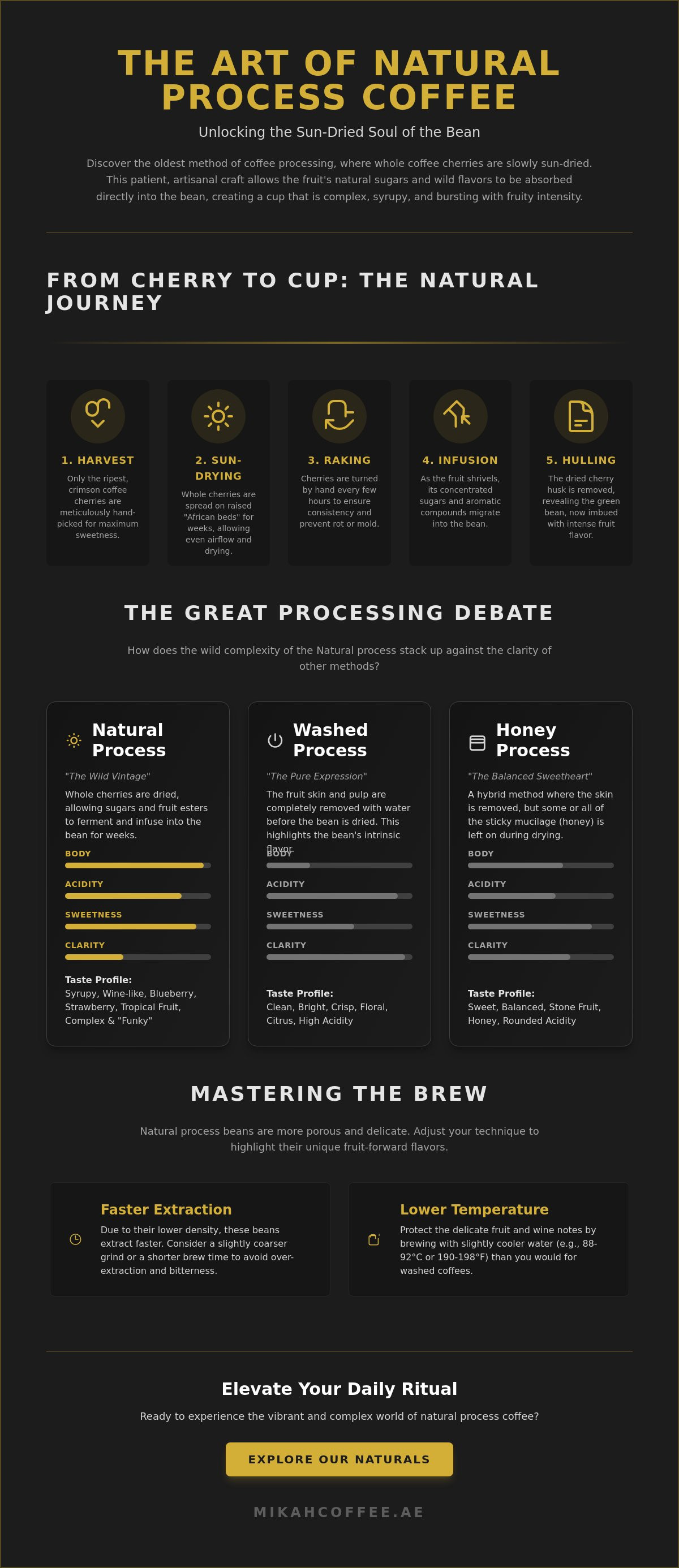
The Great Processing Debate: Natural vs. Washed and Honey Methods
How do you choose between the crystalline clarity of a mountain stream and the opulent depth of a forest floor? This is the central question when comparing coffee processing methods. While the natural process coffee taste is celebrated for its wild, fruit-forward intensity, washed and honey methods offer alternative pathways to sensory excellence. It's a debate of philosophy as much as flavor. One method seeks to reveal the bean's naked truth, while the other embraces the transformative power of the fruit itself.
In the specialty world, we often say that "terroir" speaks loudest in washed coffees. Because the fruit is removed immediately, the acidity and mineral notes from the soil are presented without interference. Conversely, the natural process allows the drying fruit to saturate the seed, making the "process" the primary architect of flavor. This doesn't mean the origin is lost; it simply means the terroir is expressed through a more complex, fermented lens. Some critics once labeled naturals as "unpredictable," but modern artisanal standards have corrected this. Today’s producers use rigorous sorting and moisture monitoring to ensure these cups are as clean and stable as any washed counterpart.
Washed Process: The Pursuit of Clarity
The washed method is a pursuit of precision. By removing the skin and pulp before drying, producers highlight the bean’s intrinsic acidity. This results in the "crisp" and "bright" notes typical of high-end washed Ethiopian beans. Connoisseurs often reach for a washed coffee when they want to taste the specific influence of high altitude or volcanic soil. When brewed through a V60, these coffees offer a transparent, tea-like elegance that is difficult to replicate with any other method.
Honey Process: The Sweet Compromise
For those seeking a middle ground, the honey process offers a stunning balance. In this "sticky" method, the skin is removed, but a specific amount of mucilage (the "honey") is left on the bean during drying. This creates a profile that marries the clean acidity of a washed coffee with the heavy sweetness of a natural. Producers categorize these by the amount of fruit left behind:
- White and Yellow Honey: Less mucilage, resulting in a cleaner, more floral cup.
- Red and Black Honey: More mucilage and longer drying times, creating a deeper, jammy natural process coffee taste that stops just short of the "funk" found in full naturals.
Mastering the Brew: How to Highlight Natural Flavours at Home
You have secured a bag of exceptional sun-dried beans. Now, how do you ensure that wild, natural process coffee taste reaches its full potential in your cup? Brewing these beans requires a subtle shift in perspective. Because they have spent weeks dehydrating within their own fruit, the cellular structure of the bean becomes more porous. This physical change means they are highly soluble; they release their sugars and oils much faster than their washed counterparts. If you brew them with the same aggression as a standard bean, you risk over-extraction. This often turns those delicate berry notes into a muddy, unpleasant bitterness that masks the bean's true character.
Patience is your greatest ally in this process. Freshly roasted natural beans often require a longer resting period than other varieties. We recommend waiting at least seven to ten days after the roast date before your first brew. This allows the internal gases to dissipate, ensuring the flavors are clear and the acidity is perfectly balanced. When you are ready, using the right tools, such as a high-quality V60 pour over kit, allows you to navigate these nuances with professional precision. It is about creating a controlled environment where the fruit can shine.
The V60 Ritual for Natural Coffee
The V60 is the preferred choice for those who value the elegant, wine-like acidity of a natural bean. To manage the faster extraction rate, start with a slightly coarser grind than you would for a washed coffee. This adjustment ensures the water flows through the bed at a rhythmic, controlled pace. We also advise a lower water temperature, specifically between 90°C and 92°C. This cooler range protects the volatile fruit aromatics from being scorched by excessive heat. The 30-second bloom phase is essential for degassing these sun-dried beans, clearing the way for a clean and vibrant extraction.
Natural Espresso: A Syrupy Delight
For those who prefer intensity, using professional espresso machines can transform a natural bean into a concentrated fruit syrup. Traditional espresso ratios of 1:2 can often feel too sharp or intense with these beans. Instead, try a longer brew ratio of 1:2.5. This slight extension rounds out the acidity and highlights the jammy, lingering sweetness. The real magic happens when you add milk. A natural process latte often tastes remarkably like a strawberry milkshake, as the dairy softens the fermented notes into pure, creamy indulgence. Ready to start your journey? Explore our full collection of specialty coffee to find your next favorite origin.
Elevating the Daily Ritual: Selecting and Savouring Specialty Naturals
Finding the perfect bag begins with a discerning eye for detail. When you browse a boutique selection, look specifically for the terms "Natural" or "Dry Process" on the label. These markers are your gateway to that vibrant, unadulterated natural process coffee taste we have explored. For those seeking the purest expression of a region, single-origin naturals are the gold standard. They offer a unique intersection where the specific terroir of the land meets the transformative power of the sun. You might encounter an Ethiopian natural that bursts with iconic blueberry notes, or perhaps a Brazilian lot where the dry process enhances a rich, nutty, and chocolatey profile. While these single origins are thrilling, our Milano blend coffee beans offer a different kind of mastery. It's a study in roasting tradition, where the wildness of specialty beans is balanced with the steady, reliable soul of an authentic Italian profile.
The Mikah Standard of Excellence
Our approach to selection is methodical and intentional. We curate specialty lots across the UAE with a focus on quality and traceable heritage. Our slow-roasting philosophy ensures we never rush the process; we roast to preserve the fruit's integrity rather than masking it with heat. This bridges the gap between centuries of Italian tradition and the modern nuances of specialty processing. It's a standard of excellence that honors the farmer's hard work and the roaster's intuition.
Building Your Sensory Memory
Developing a sophisticated palate is a journey of intentionality. We encourage you to keep a tasting journal to track your evolving natural process coffee taste preferences. Note the body, the acidity, and those fleeting aromatic notes that define a great cup. A side-by-side tasting is an illuminating exercise. Brew a washed coffee and a natural from the same origin simultaneously. The contrast in clarity and complexity will deepen your appreciation for the artisanal effort behind each bean. When you're ready to expand your horizon, our curated specialty coffee collection awaits your discovery.
Begin Your Journey Into the Wild Soul of Coffee
The transition from sun-drenched raised beds to your morning cup is a profound testament to the art of the craft. You now understand that a true natural process coffee taste is more than just simple fruitiness. It's a complex, syrupy experience born from biological transformation and tireless human dedication. By mastering the delicate balance of water temperature and grind size, you can unlock these wild sensory profiles within your own home brewery. Every sip becomes a captured moment of terroir and tradition.
At Mikah, we have honored an authentic Italian slow-roasting heritage since 1984. Our premium specialty lots are sourced directly from world-class estates to ensure every bean tells its story with absolute clarity. We provide nationwide UAE delivery to guarantee that peak freshness reaches your doorstep. It's time to elevate your daily ritual into something far more meaningful and sensory-driven.
Explore our curated Specialty Coffee collection and taste the natural difference today.
Your next great sensory revelation is waiting. Let the ritual begin.
Frequently Asked Questions
Does natural process coffee have more caffeine than washed coffee?
No, the processing method does not fundamentally alter the caffeine content of the bean. Caffeine is a stable compound that remains consistent whether the fruit is removed immediately or dried on the seed. While some believe the extended contact with fruit pulp increases potency, caffeine levels are primarily determined by the coffee species and the altitude at which it was grown.
Why does some natural process coffee taste like vinegar or fermented fruit?
A vinegary or overly sharp profile usually indicates that the cherries underwent excessive fermentation during the drying phase. While a controlled biological transformation is essential for a high-quality natural process coffee taste, poor airflow or high humidity can lead to over-fermentation. This results in a "funky" or sour profile rather than the clean, wine-like acidity and berry sweetness that connoisseurs seek in premium lots.
Is natural process coffee better for the environment?
Natural processing is generally considered more environmentally sustainable because it requires significantly less water than the washed method. Since the fruit is dried whole under the sun, there is no need for the massive amounts of water used in pulping and fermentation tanks. This makes it an ideal choice in regions where water is a scarce resource, reducing the ecological footprint of the estate.
Can I use natural process beans in my Nespresso machine?
You can enjoy these vibrant flavors through Nespresso Compatible Capsules that feature specialty natural beans. While you cannot put whole beans directly into the machine, many premium roasters offer capsules specifically designed to preserve the fruit-forward character of natural processing. This allows you to experience the syrupy body of a natural lot with the convenience of a single-serve system.
How long should I let natural process coffee beans rest after roasting?
We recommend letting natural process beans rest for approximately seven to ten days after the roast date. Because these beans are more porous and sugar-dense, they need time to degas and stabilize their internal chemistry. Brewing too early can result in a sharp, grassy flavor. Waiting allows the profile to settle into the smooth, berry-like sweetness that defines an exceptional natural process coffee taste.
What is the best roast level for natural process coffee beans?
A light to medium roast is typically the best choice for highlighting the delicate fruit notes of a natural bean. Darker roasts tend to caramelize the sugars to a point where the unique berry and tropical nuances are replaced by generic smoky or roasty flavors. A careful, medium roast preserves the bean's origin character while developing the heavy, syrupy mouthfeel that enthusiasts love.
Is natural process coffee the same as organic coffee?
No, "natural process" refers to how the fruit is removed from the seed, while "organic" refers to the farming practices and lack of synthetic chemicals. A coffee can be naturally processed but not organic; or vice versa. However, many specialty producers who invest the artisanal effort into natural drying also follow organic and sustainable farming principles to ensure the highest possible quality for their harvest.