


What if the perceived strength of your morning cup has nothing to do with its caffeine content? Many enthusiasts reach for a dark bean expecting a powerful energy boost, yet the reality of light roast vs dark roast coffee taste reveals a much more intricate story. It's a common misconception that bitterness equals potency. In truth, the roasting process acts as a bridge between a bean's origin and its final expression. While light roasts tell the story of the soil, dark roasts celebrate the mastery of the flame.
You've likely felt the frustration of investing in premium beans only to find the profile too acidic, or perhaps you've struggled to match the right roast level to your V60 or professional espresso machine. With 62% of specialty coffee drinkers now preferring lighter profiles as of 2025, understanding these nuances is essential for any connoisseur. We'll help you master the sensory vocabulary of the specialty world so you can identify exactly which profiles suit your palate. You'll discover how light roasts preserve delicate floral notes while dark roasts offer bold, chocolatey depth. This guide ensures you can confidently select the finest Mikah Coffee Beans to elevate your morning ritual into a moment of pure excellence.
Key Takeaways
- Understand the metamorphosis of the bean and how precision heat application unlocks thousands of unique aromatic compounds.
- Master the fundamental differences in light roast vs dark roast coffee taste, balancing the bright acidity of origin with the rich bitterness of the roast.
- Uncover the truth about the caffeine paradox to understand why the boldest flavors don't always equate to the highest caffeine content.
- Match your chosen beans to the correct ritual, ensuring your V60 or espresso machine extracts the maximum expression from every roast level.
- Explore the elegance of the Milano Blend, a sophisticated medium-dark profile that honors the timeless tradition of Italian balance.
The Spectrum of Roast: From Green Bean to Italian Tradition
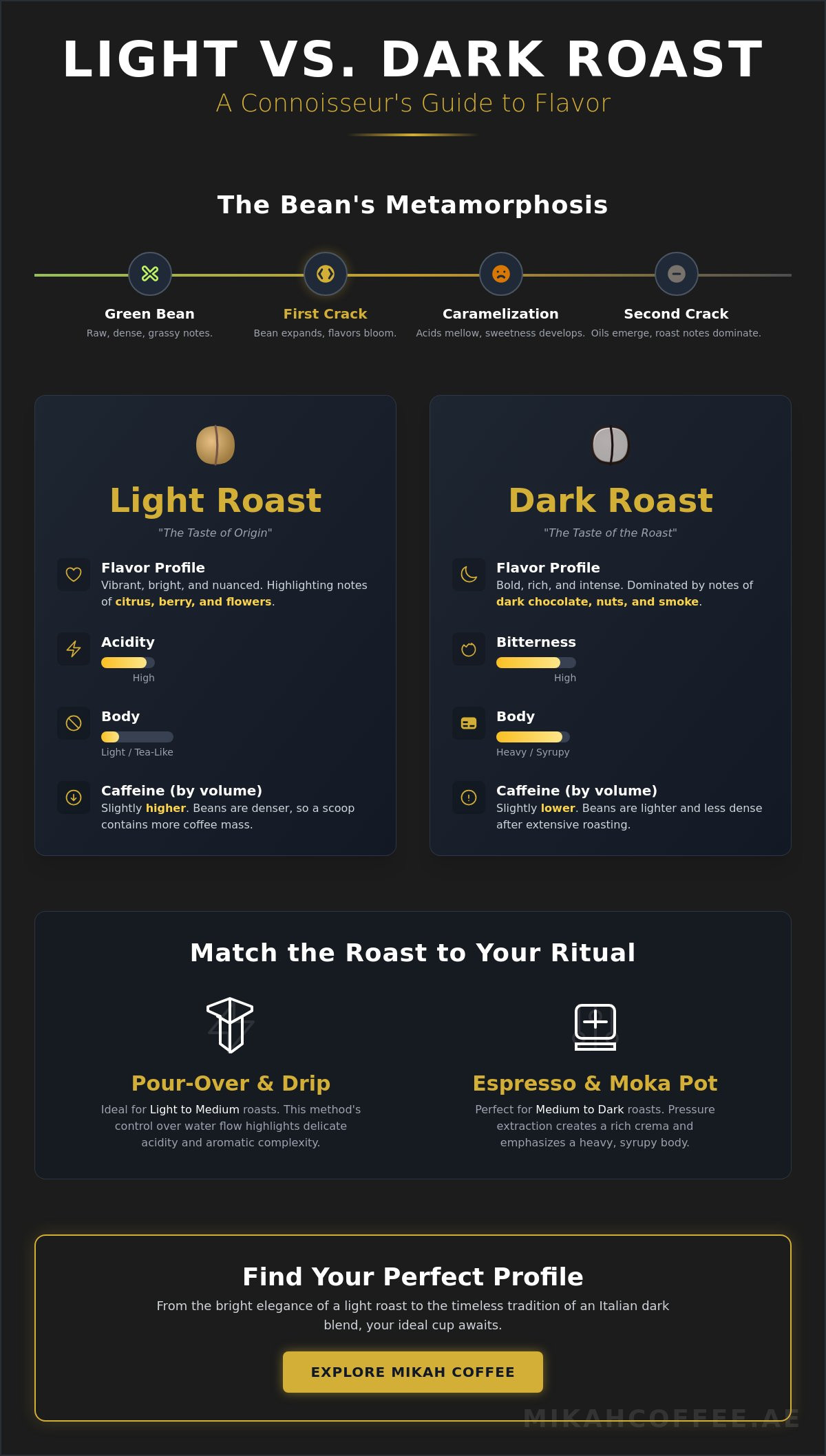
The raw coffee bean is a humble, inert seed. It possesses a grassy scent and a texture as hard as stone. To unlock the thousands of aromatic compounds hidden within, one must apply heat with absolute precision. This transformation is not merely a change in color. It is a profound metamorphosis. As the temperature climbs, the bean sheds its moisture and begins to expand, eventually reaching the pivotal "first crack." This audible snap signals that the cellular structure has fractured, allowing the internal gases to escape and the flavors to bloom.
Understanding the nuance of light roast vs dark roast coffee taste requires recognizing where the flavor originates. In lighter roasts, the bean's biography is the protagonist. You taste the high-altitude volcanic soil, the rainfall, and the specific heirloom variety. However, as the roast deepens, the "taste of the roast" begins to overshadow the "taste of the origin." By the time a bean reaches a dark level, the master roaster has used the flame to create a new profile entirely. This profile is defined by carbonization and caramelization rather than raw terroir.
The Roasting Process: A Chemical Metamorphosis
The centerpiece of this transformation is the Maillard reaction. This complex chemical dance between amino acids and reducing sugars is what gives coffee its savory complexity and toasted notes. The coffee roasting process involves a delicate transition where bright, organic acids are slowly replaced by rich, caramelized sugars. If the heat is removed too early, the coffee may taste thin or overly vegetal. If left too long, those sweet sugars turn to bitter carbon. The master roaster must find the "sweet spot" where these elements exist in perfect equilibrium.
Defining the Levels: Light, Medium, and Dark
Every roast level offers a distinct sensory destination. The choice depends entirely on your preferred morning ritual and palate:
- Light Roast: These beans are removed shortly after the first crack. They are dry to the touch and offer a vibrant acidity that highlights floral and citrus notes. It's the purest expression of the bean's origin.
- Medium Roast: This is the balanced middle ground. It's a favorite for specialty blends because it retains origin character while adding a velvety body and sweetness. It's approachable yet deeply complex.
- Dark Roast: Reaching the "second crack," these beans are often oily and deep in color. The light roast vs dark roast coffee taste contrast is most evident here. Dark roasts trade bright acidity for a heavy body and decadent notes of dark chocolate, spice, or toasted nuts.
Decoding the Palate: Light Roast vs Dark Roast Coffee Taste
To truly appreciate the nuances of light roast vs dark roast coffee taste, one must first master the fundamental axis of acidity and bitterness. These aren't just flavors. They're the architectural foundations of your morning cup. Acidity provides the spark and brightness that dances on the tip of the tongue. Bitterness, when handled with craftsmanship, provides the structure and a lingering, luxurious finish. Finding your preference is a journey of sensory discovery.
The "Terroir" factor is the defining characteristic of lighter roasts. It's the biography of the bean. You taste the high-altitude volcanic soil and the specific rainfall patterns of the region. However, as the roasting process continues, the "Roast" factor begins to dominate. The flavor of the fire eventually overtakes the inherent characteristics of the bean. Scientific insights from UC Davis Coffee Center research confirm that as roasting duration increases, the delicate organic acids dissipate while heavier, toasted compounds take their place. This shift transforms the aroma from citrus and jasmine into notes of dark chocolate and smoke.
Light Roast: The Bright, Floral, and Acidic Profile
Light roasts are often described as vibrant and tea-like. They possess a refreshing clarity that appeals to those who enjoy a clean, complex cup. Because the beans are stopped shortly after the first crack, they retain a high concentration of the original fruit acids. This results in a palate featuring stone fruit, citrus, or even delicate berry notes. It's a sophisticated choice for the curious drinker who wants to explore the purity of a single-origin bean. If you're eager to taste this clarity for yourself, browsing a curated selection of specialty coffee is the best way to begin your education.
Dark Roast: The Bold, Smokey, and Chocolatey Experience
In contrast, dark roasts offer a viscous and low-acid experience. The "second crack" brings surface oils to the exterior of the bean, which creates a heavy, luxurious mouthfeel. These roasts are characterized by toasted, smokey descriptors and a deep sweetness reminiscent of dark chocolate or molasses. This is the classic Italian profile that has defined traditional espresso for generations. It provides a steady, reliable comfort that stands up beautifully to milk, making it a staple for those who value tradition and intensity in their daily ritual.
Beyond the Flavour: Caffeine, Body, and the Density Myth
Many enthusiasts equate a bold, smokey profile with high caffeine. It's a natural assumption. However, the physical reality of the bean tells a different story. While the light roast vs dark roast coffee taste comparison often focuses on bitterness, the physiological impact is governed by density and measurement. Understanding this distinction is the hallmark of a true connoisseur.
As detailed in the National Coffee Association's roast guide, roasting levels fundamentally alter the bean's cellular structure. Darker roasts spend more time in the heat, causing them to lose significant moisture and expand. They become larger, more porous, and lighter in weight. In contrast, light roasts remain compact and dense. This physical discrepancy is the root of the "density myth." It changes how you should approach your morning ritual.
The Caffeine Debate: Which Roast Packs More Punch?
Caffeine is remarkably stable. It doesn't simply "burn off" during the roasting process. The perceived difference in energy comes down to how you dose your coffee. If you measure by the scoop, a light roast will typically contain more caffeine because the beans are smaller and more densely packed. You're fitting more coffee into that single volume. Conversely, if you use a scale to weigh your dose, the caffeine content remains virtually identical across the spectrum. Precision matters. It's the difference between a guessed cup and a perfect extraction.
Texture and Mouthfeel: Why Dark Roast Feels Heavier
Body is the physical weight of the liquid on your tongue. It's a tactile sensation. Dark roasts often feel more viscous and creamy due to the emergence of lipids and oils on the bean's surface. These oils create a lingering, luxurious finish that coats the palate. Light roasts, by comparison, possess a consistency closer to juice or tea. They are clean, bright, and fleeting. This difference in solubility also means dark roasts extract much faster. Their porous structure allows water to penetrate and pull out flavors with less effort. This is why dark roasts are so well suited to the high pressure of professional espresso machines.
Ultimately, the light roast vs dark roast coffee taste debate is as much about physics as it is about flavor. Whether you prefer the tea-like clarity of a light roast or the heavy, chocolatey body of a dark roast, knowing the "why" behind the sensation allows you to buy premium beans with absolute confidence.
Matching the Roast to Your Ritual: Brewing for Maximum Expression
Selecting the right bean is only half the journey. The equipment you choose acts as the lens through which the coffee's character is focused. If you've mastered the theory of light roast vs dark roast coffee taste, you'll know that different chemical compositions require specific extraction strategies. A light roast's vibrant acidity can easily turn sour if under-extracted. Conversely, a dark roast's rich oils can become unpleasantly charred if exposed to excessive heat or prolonged brewing times. Success lies in the harmony between the flame and the filter.
Precision Methods: Why V60 Loves Light Roasts
For those seeking the tea-like clarity and floral nuances of a light roast, the pour-over method is unrivaled. The V60 pour over kit UAE utilizes fine paper filters that catch heavier sediments and surface oils. This allows the delicate stone fruit and citrus notes to pass through with crystalline purity. Because light roasts are physically denser, they require higher water temperatures, typically between 92°C and 96°C. This heat is necessary to effectively pull the complex organic acids from the compact cellular structure of the bean. It's a ritual that rewards patience and a steady hand.
Pressure and Fire: The Best Roasts for Espresso and Moka Pots
When you move toward the traditional Italian experience, pressure becomes the primary driver of flavor. Darker, oilier beans are the natural companions for professional espresso machines. The high pressure emulsifies the surface lipids, creating the thick, stable crema that characterizes the light roast vs dark roast coffee taste contrast. Similarly, the Moka Pot thrives on a medium-dark roast. Its intense heat and rapid extraction cycle complement the bold, chocolatey profiles that define the classic morning ritual. It's an aggressive yet elegant way to start the day.
Texture is the final element of a perfect cup. If you enjoy a cappuccino or a silky latte, the Mikah milk frother online provides the micro-foam necessary to balance the intensity of a dark roast's smokey notes. Don't forget to adjust your grind size. Dark roasts are more brittle and soluble, so a slightly coarser grind often prevents the bitterness of over-extraction. Light roasts, being tougher, usually require a finer setting to unlock their hidden sweetness. Ready to refine your technique? You can buy premium specialty coffee beans and start experimenting with these precision methods at home.
The Italian Legacy: Why the Milano Blend Defines Balance
Balance is the ultimate expression of craft. In the heart of Italy, roasting is never an act of aggression against the bean. It is a slow, methodical courtship. The philosophy behind the Milano Blend centers on elegance. It avoids the harsh, carbonized notes often found in mass-produced dark roasts. Instead, it offers a sophisticated equilibrium. While the ongoing debate of light roast vs dark roast coffee taste often highlights the extremes of acidity and bitterness, the Italian legacy resides in the nuanced space between them. It is a profile designed for those who seek intensity without the sacrifice of clarity.
Consistency is the hallmark of a professional roastery. Achieving the same sensory profile across different harvests requires a deep understanding of bean density and heat transfer. Mikah Coffee UAE achieves this through a "Sophisticated Medium-Dark" profile. This approach bridges the gap between the terroir-driven brightness of the third-wave movement and the deep, chocolatey comfort of traditional espresso. It is a versatile expression that honors heritage while embracing the precision of modern specialty standards.
Mastering the Art of the Slow Roast
The secret to a refined cup lies in the duration of the roast. Italian tradition favors a slow-roasting technique that ensures heat penetrates the core of the bean evenly. This gradual application of energy prevents the exterior from scorching while the internal sugars undergo a deep caramelization. This method significantly reduces unwanted bitterness. It replaces it with a velvety sweetness and notes of toasted hazelnut and cocoa. The result is the signature profile found in Milano blend coffee beans, a selection that represents the authentic Italian soul in every extraction.
Finding Your Perfect Profile with Mikah Coffee UAE
Identifying your ideal roast level is a personal journey. It is about matching the bean to your specific morning ritual. If you value the tactile experience of the grind and the hiss of a professional espresso machine, whole beans offer the greatest control. For those who prioritize precision and elegance in a modern, fast-paced environment, Nespresso compatible capsules UAE provide a curated boutique experience with a single touch. To find your perfect match, consider this final checklist:
- The Sensory Preference: Do you crave the vibrant, citrus-led acidity of a light roast or the viscous, chocolatey finish of a darker profile?
- The Equipment: Are you using a V60 for clarity or seeking the rich crema produced by pressure-based methods?
- The Final Expression: Do you drink your coffee black to explore origin notes, or do you require a roast that stands up to the silkiness of frothed milk?
By understanding the nuances of light roast vs dark roast coffee taste, you are no longer just a consumer. You are a curator of your own experience. We invite you to explore our collection of premium specialty coffee and elevate your daily ritual into a moment of pure, Italian-inspired excellence.
Elevating Your Morning Ritual
Choosing between the vibrant, terroir-driven notes of a light roast and the decadent, chocolatey depth of a dark roast is more than a preference; it is a personal evolution. You now understand that the perfect cup isn't just about perceived strength. It's about the sophisticated harmony between the bean's chemistry and your preferred brewing method. Whether you reach for a V60 to unlock floral clarity or a professional espresso machine for a rich, stable crema, your mastery of the light roast vs dark roast coffee taste ensures every extraction is intentional and rewarding.
Since 1984, Mikah Coffee UAE has practiced the art of authentic Italian roasting to bring this exquisite balance directly to your home. Our premium beans remain the trusted choice for professional baristas across the Emirates. With nationwide UAE delivery, the pinnacle of coffee craftsmanship is always within your reach. We invite you to refine your palate and discover the difference that decades of expertise can make in your daily routine. Every cup is an opportunity to celebrate the heritage and precision of the craft.
Explore the Milano Blend and find your perfect roast today at Mikah Coffee UAE. Your journey toward a more meaningful and elevated coffee experience starts with the right bean.
Frequently Asked Questions
Is dark roast coffee more bitter than light roast?
Dark roast coffee is indeed more bitter due to the increased carbonization and breakdown of chlorogenic acids during prolonged heat exposure. While light roasts celebrate origin-driven acidity, the dark roast focuses on the palate of the flame. This fundamental difference in light roast vs dark roast coffee taste allows connoisseurs to choose between bright, floral notes and deep, toasted bitterness depending on their mood.
Which coffee roast has the most caffeine?
Light roasts typically possess more caffeine when measured by volume, such as with a scoop. This occurs because the beans are denser and haven't expanded as much as their darker counterparts. However, if you weigh your dose on a scale, the caffeine content is almost identical. The strength you feel from a dark roast is often just the intensity of the flavor rather than a higher caffeine hit.
Can I use light roast beans in my espresso machine?
You can certainly use light roasts in professional espresso machines, a practice popular in modern specialty circles. This method produces a vibrant, acidic shot that tastes of fruit and citrus. However, light beans are harder to extract. For a more reliable, traditional experience with a thick crema, many baristas prefer a medium-dark profile. It provides the solubility needed for a balanced, pressurized extraction.
Why does light roast coffee taste sour sometimes?
A sour taste in light roast coffee often indicates under-extraction. Because light beans are dense and less porous, they require high water temperatures and a fine grind to release their sweetness. If the water passes through too quickly or isn't hot enough, you'll only taste the sharpest acids. Increasing your water temperature to 94°C or 96°C can often transform that sourness into a pleasant, fruity brightness.
Which roast is better for weight loss or health benefits?
Light roasts are often cited for having higher antioxidant properties, specifically chlorogenic acid. Shorter roasting times preserve more of these natural compounds before they break down. While both levels offer health benefits, the light roast is a better choice if you're seeking maximum antioxidant intake. Ultimately, the healthiest cup is one enjoyed black or with minimal additives, allowing the purity of the bean to shine through.
How can I tell the roast level if it isn’t on the bag?
You can identify the roast level by examining the bean's color and texture. Light roasts are a pale, cinnamon brown and always have a matte, dry exterior. Medium roasts are a deeper brown but still lack visible oil. Dark roasts are characterized by a dark chocolate hue and a shimmering, oily surface. This oil is a result of the high heat breaking the bean's internal structure.
Does the roast level affect the shelf life of coffee beans?
Roast level significantly impacts shelf life, as dark roasts tend to age faster. The porous structure and surface oils of a dark roast make it more susceptible to oxidation and staling. In contrast, the dense nature of a light roast protects its internal compounds for slightly longer. Regardless of the light roast vs dark roast coffee taste you prefer, keeping your beans in an airtight container is vital for quality.
What is the best roast for a latte or cappuccino?
A medium-dark or dark roast is best for lattes and cappuccinos. These roasts possess the bold, chocolatey intensity required to stand up against the richness of the milk. A light roast often becomes lost or tastes unpleasantly sour when diluted. When you use a Mikah milk frother to create velvety micro-foam, a darker profile provides the necessary structural foundation for a truly sophisticated milk-based beverage.