


You might believe that specialty coffee begins and ends with 100% Arabica, but the secret to a truly balanced cup often lies in the very bean many purists avoid. It's a common sentiment among enthusiasts in the UAE who find themselves frustrated by inconsistent brewing results or a specialty roast that feels overwhelmingly acidic. You want that sophisticated, cafe-quality experience at home, yet the labels on the shelf often feel like a cryptic language. We understand the desire for precision in every pour.
This guide will help you decode the nuances of the arabica vs robusta flavor profile so you can curate your own perfect morning ritual. You'll learn to identify specific tasting notes and understand how caffeine levels directly impact the bitterness and body of your brew. We'll explore how these species behave in professional espresso machines compared to a delicate V60 setup. By the end, you'll have the expertise to select the ideal Mikah Coffee Beans or Nespresso compatible capsules to suit your unique palate, turning a simple caffeine fix into a moment of genuine craftsmanship.
Key Takeaways
- Learn how high-altitude cultivation slows the ripening process to develop the complex, vinous acidity prized by global coffee connoisseurs.
- Master the arabica vs robusta flavor profile to distinguish between elegant floral notes and the intense, earthy body that defines traditional Italian espresso.
- Understand the chemical role of caffeine in taste, explaining why Robusta offers significantly higher caffeine levels and a more pronounced, rhythmic bitterness.
- Discover the secret to a thick, persistent crema by exploring why master roasters blend species for structural balance and sensory depth.
- Gain a clear framework for selecting beans based on your ritual, whether you prefer the clarity of a V60 or the intensity of Nespresso compatible capsules.
The Botanical Origins of Flavor: Arabica vs Robusta
Every exceptional cup of coffee begins with a botanical pedigree. While there are over 120 species within the Coffea genus, the global market is defined by a primary duo: Coffea Arabica and Coffea Canephora, widely known as Robusta. This distinction is far more than a naming convention; it's a fundamental divergence in genetics, geography, and sensory potential. To appreciate the nuances of the arabica vs robusta flavor profile, one must first look at the landscapes where these plants thrive. The Botanical Origins of Flavor: Arabica species accounts for roughly 75% of global production, prized for its elegance, while Robusta provides the backbone for approximately 25% of the world's supply, including the largest producers in Vietnam.
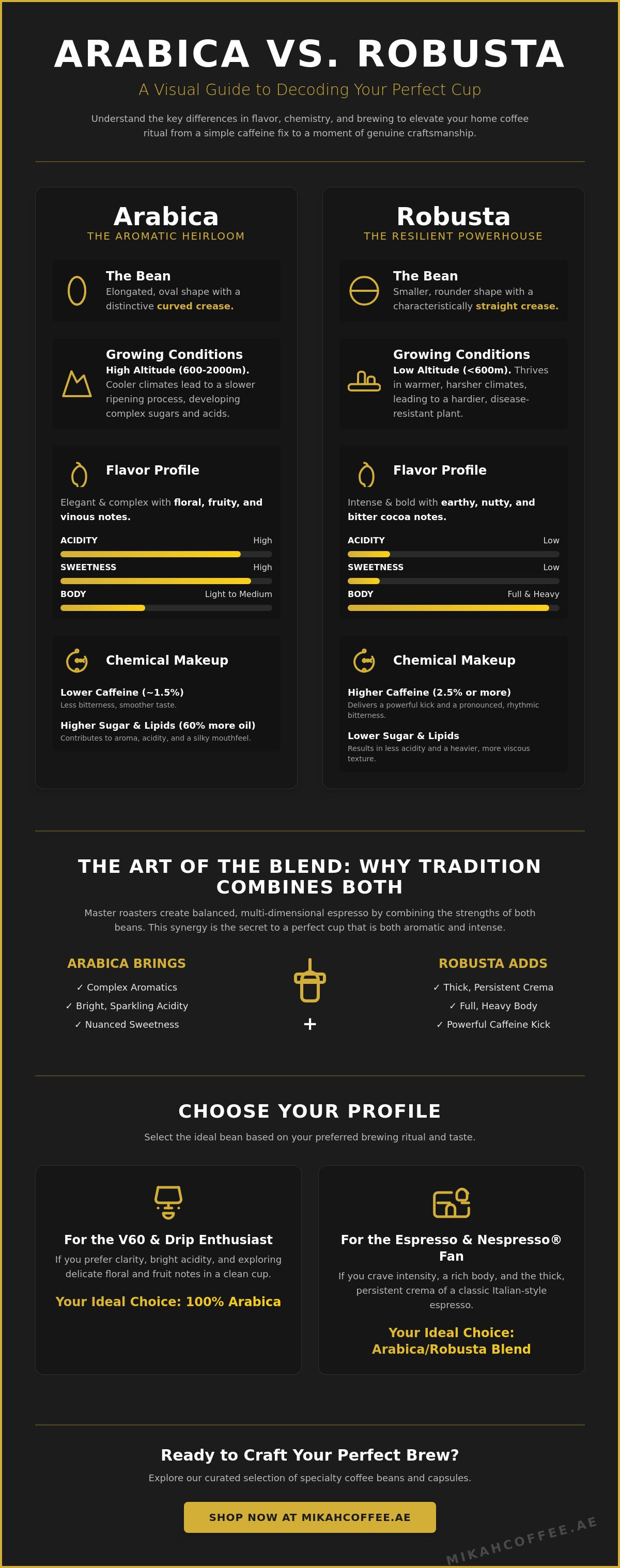
Altitude serves as the primary architect of taste. Arabica plants are often cultivated at elevations between 600 and 2,000 meters. In these cooler, high-altitude climates, the coffee cherries ripen slowly. This extended maturation period allows the plant to develop a higher concentration of sugars and complex organic acids, which translate into the bright, sparkling acidity found in specialty coffee. Conversely, Robusta is a lowland dweller, flourishing in warmer temperatures below 600 meters. Its rapid growth results in a denser, harder bean that carries a more singular, bold intensity. This environmental contrast creates the essential sensory divide: Arabica’s delicate, fruit-forward acidity versus Robusta’s deep, earthy resilience.
Arabica: The Delicate High-Altitude Heirloom
Arabica is often referred to as "Strictly High Grown" (SHG) when cultivated at peak elevations. This label isn't just a mark of prestige; it's a physiological indicator of quality. High-altitude stress forces the plant to focus its energy on seed development, creating a bean with superior density and a refined chemical composition. Visually, you'll recognize Arabica by its elongated, oval shape and a characteristic curved crease. It's a fragile plant, susceptible to pests and climate fluctuations, which necessitates meticulous harvesting and hand-sorting to maintain its integrity. This fragility is exactly why the arabica vs robusta flavor profile remains a topic of intense study for connoisseurs seeking purity.
Robusta: The Resilient and Robust Alternative
Robusta lives up to its name through pure botanical strength. The Canephora bean is notably rounder with a straight center crease. Because the plant is hardy and resistant to disease, it offers a consistent yield that serves as a reliable base for many traditional blends. While it's often unfairly dismissed as a lower-quality filler, the rise of "Fine Robusta" is changing the conversation. These carefully processed beans offer a clean, chocolatey profile and a heavy mouthfeel without the harshness associated with mass-market crops. For the UAE home barista, understanding this resilience is key to achieving that classic, thick crema often sought in professional espresso machines.
Deep Dive into the sensory Flavor Spectrum
Stepping away from the botanical foundations, we enter the sensory theatre where the arabica vs robusta flavor profile truly diverges. Think of Arabica as a high-frequency melody: bright, intricate, and resonant. It offers a spectrum that ranges from the ethereal scent of jasmine to the deep, vinous sweetness of forest berries. Robusta, by contrast, provides the rhythmic bass. It is defined by "darker" sensory markers such as toasted walnuts, bitter cocoa, and charred oak. This difference isn't merely subjective; it is rooted in the bean's composition. Arabica contains nearly 60% more lipids and almost twice the sugar concentration of Robusta, resulting in a cup that feels silky and elegant on the tongue.
The complexity of these profiles is heavily influenced by the chemical differences in coffee aromas, where volatile compounds dictate whether you perceive a hint of citrus or a whiff of tobacco. While Arabica is celebrated for its aromatic diversity, Robusta’s strength lies in its structural contribution to the cup. If you are seeking a truly curated experience, exploring specialty coffee selections allows you to witness these nuances firsthand.
Acidity and Sweetness in Arabica
Premium Arabica beans are prized for their vibrant acidity, often described as "sparkling" or "crisp." This is the result of organic acids like citric and phosphoric acid, which provide a zest similar to a green apple or a ripe lemon. Understanding how these acids interact within the arabica vs robusta flavor profile is essential for those who enjoy a bright, multi-layered cup. This acidity is balanced by a natural sweetness that leaves a clean, refreshing finish. However, the roast profile is critical. A light roast preserves these delicate sugars and acids, while a darker roast begins to mute them, replacing floral top notes with caramelized sweetness.
Body and Bitterness in Robusta
Robusta is the architect of mouthfeel. It contributes a velvety, heavy body that coats the palate, a quality often missing in pure Arabica brews. This "weight" is accompanied by a distinct bitterness derived from higher levels of chlorogenic acids. In high-quality Robusta, this isn't a harsh or unpleasant sensation. Instead, it manifests as a sophisticated bitter-sweetness, reminiscent of high-percentage dark chocolate or exotic spices. The finish is long and persistent, lingering far after the last sip. This makes it a formidable choice for those who prefer the intensity of a traditional espresso, where the crema must be thick and the flavor unwavering.
The Science Behind the Sip: Caffeine and Chemical Differences
To truly master the arabica vs robusta flavor profile, we must look beneath the surface at the chemical compounds that dictate every note. While the sensory experience is what we savor, the science is what we select. The most striking difference lies in caffeine concentration. Robusta beans are a powerhouse, containing between 2.2% and 2.7% caffeine. Arabica, by comparison, offers a more modest 1.2% to 1.5%. This isn't just about the energy kick. In nature, caffeine serves as a potent natural pesticide, protecting the plant from insects. In your cup, this high concentration manifests as an inherent, rhythmic bitterness that provides the "nerve" of the coffee.
Beyond caffeine, the presence of chlorogenic acids plays a vital role in the final character. Robusta is rich in these antioxidants, which contribute to the astringent, slightly medicinal notes found in lower-grade harvests. However, when handled with precision, these same acids provide a clean, direct profile. Because Robusta has lower lipid content, the flavors don't linger on the tongue through oils. Instead, the taste is immediate and punchy. This chemical directness is what allows the coffee to cut through milk, making it an essential component for those using a Mikah Milk Frother to create a balanced latte or cappuccino.
Caffeine as a Flavor Component
The higher caffeine content in Robusta does more than wake the senses; it introduces a specific sharpness to the profile. This intensity is the cornerstone of the traditional Italian espresso philosophy. Without this sharp edge, the "morning ritual" in many UAE households would lack its characteristic depth. It provides a structural bite that balances the softer, more floral characteristics of other beans. For the connoisseur, this caffeine-driven bitterness is not a flaw but a deliberate choice for achieving a high-impact sensory experience.
Lipids and Sugars: The Texture Architects
Why does Arabica feel so different on the palate? The answer lies in its 60% higher lipid content. These fats act as carriers for volatile aromatic compounds, ensuring that the scent of the coffee is as rich as the taste. During the roasting process, the higher sugar levels in Arabica beans undergo a complex transformation. They caramelize to produce the signature "Milano" sweetness found in the Mikah Milano Blend. This creates a sophisticated, multi-dimensional cup that evolves as it cools. Sugar content is the primary reason Arabica is perceived as "smoother" by beginners. This natural sweetness masks the more aggressive chemical notes, allowing the delicate acidity to shine through in manual brewing methods like the V60.
The Art of the Blend: Why Tradition Combines Both
While many modern enthusiasts view Arabica and Robusta as rivals, the Italian tradition of "L’Espresso" treats them as essential partners. This philosophy isn't about compromise; it’s about synergy. A master curator understands that a pure Arabica shot, while aromatic, can often lack the structural integrity required for a truly visceral experience. By skillfully integrating specific percentages of Robusta, roasters can mask the inherent thinness of some high-altitude crops while highlighting their bright, floral top notes. It’s a delicate dance that defines the arabica vs robusta flavor profile in a professional context. This approach ensures a balance of aroma, body, and the elusive, persistent crema that defines luxury coffee in the UAE.
Achieving this synergy requires a deep knowledge of origin and processing. A roaster doesn't simply throw beans together. They look for how the earthy, chocolatey base of a "Fine Robusta" can provide a foundation for the citrusy peaks of an Ethiopian Arabica. This curated balance is what separates a generic cup from a masterpiece. If you're looking to experience this harmony, you can explore our range of specialty coffee blends designed for the discerning palate.
Crema: The Robusta Contribution
Crema is the golden hallmark of a perfect pull. Paradoxically, the lower oil content in Robusta beans is exactly what allows this foam to stand. While Arabica’s high lipid levels create a beautiful scent, they can actually destabilize the bubbles in the crema, causing it to dissipate quickly. A well-crafted blend utilizes Robusta to create that sought-after "tiger-skin" effect, characterized by dark, mottled streaks across the surface. It provides a visual and textural depth that a 100% Arabica shot often struggles to replicate, making the visual appeal of a blend far more striking for your guests.
Achieving the "Milano" Balance
The classic North Italian roast is a study in sophistication. It avoids the charred bitterness of darker southern roasts, opting instead for a profile that is rich, chocolatey, and exceptionally smooth. The Milano blend coffee beans exemplify this harmony, using precise curation to create an authentic Italian soul in every cup. For those who prefer the convenience of modern systems, our connoisseur’s guide to capsules explains how this same intricate balance is preserved in pod form. Understanding the arabica vs robusta flavor profile allows you to appreciate why these blends remain the gold standard for home baristas across Dubai and the wider Emirates.
Choosing Your Profile: A Guide for the UAE Home Barista
How do you translate botanical theory into your daily morning cup? The final decision depends entirely on your equipment and the sensory outcome you desire. In the UAE, where coffee culture ranges from traditional hospitality to high-end specialty boutiques, understanding how your hardware interacts with the arabica vs robusta flavor profile is the ultimate step toward mastery. Whether you're preparing a delicate pour-over in a quiet villa or pulling back-to-back shots for guests, your choice of bean acts as the architect of the experience.
Selecting the right profile requires an honest assessment of your palate. Do you crave the tea-like clarity of a high-altitude heirloom, or do you seek the visceral, chocolatey punch of a Mediterranean espresso? By matching the species to your method, you ensure that the inherent qualities of the bean aren't just preserved, but celebrated. It's the difference between a simple caffeine fix and a curated ritual that respects the art of the craft.
The Pour-Over Choice: Arabica’s Clarity
For manual methods like the V60 or Chemex, 100% Arabica is almost always the superior choice. These gravity-fed brewing techniques excel at highlighting the "high-frequency" notes we discussed earlier. When browsing for beans, look for specialty descriptors such as "citrus," "stone fruit," or "jasmine." These labels indicate a bean that possesses the vibrant acidity and floral complexity that only high-altitude Arabica can provide. V60 users should prioritize light-to-medium roasted Arabica for maximum flavor clarity. Anything darker may overshadow the delicate nuances that make pour-over coffee so captivating.
The Espresso Choice: Blending for Intensity
When you move to professional espresso machines, the requirements change. The intense pressure of an espresso extraction can sometimes make pure Arabica taste overly sharp or thin. This is where a high-quality blend becomes essential. A hint of Robusta provides the structural integrity needed to stand up to the pressure, ensuring a rich mouthfeel and a persistent crema. If you enjoy milk-based drinks like lattes or cappuccinos, a Robusta-inclusive blend is vital; it prevents the coffee character from "getting lost" in the sweetness of the milk. For daily ease, Nespresso compatible capsules offer a pre-curated balance, while whole beans remain the gold standard for your dedicated weekend ritual.
Elevate Your Daily Ritual
Mastering the arabica vs robusta flavor profile transforms your morning coffee from a routine habit into an intentional act of curation. You've discovered how botanical origins and chemical structures dictate the elegance of a V60 pour-over or the persistent crema of a perfect espresso. Whether you seek the sparkling acidity of high-altitude heirlooms or the velvety, chocolatey depth of a traditional blend, the power to choose now rests in your hands. Precision in selection is the hallmark of a true connoisseur. It's about understanding the "why" behind every sip.
Since 1984, we've honored the authentic Italian tradition of slow-roasting to bring these sensory nuances to life. Every batch is carefully curated by Massimo Barbieri to meet the standards of the most sophisticated palates in the Emirates. You don't have to choose between aroma and intensity when the right blend offers both in perfect harmony. Experience the perfect balance of Arabica and Robusta in our signature Milano Blend and enjoy premium delivery across the UAE. We invite you to refine your home brewing ritual and savor the excellence of a truly professional cup.
Frequently Asked Questions
Is Arabica coffee better than Robusta coffee?
Quality is subjective and depends entirely on your desired sensory experience. Arabica is prized for its elegant acidity and aromatic complexity, making it the choice for those who enjoy floral or fruity notes. However, a high-quality "Fine Robusta" is far superior to a low-grade Arabica. Robusta provides the essential body, caffeine, and crema that many connoisseurs require for an authentic, high-impact espresso.
Why is 100% Arabica so common on coffee labels?
The label has become a marketing shorthand for premium quality, established during the rise of specialty coffee culture. It signals a specific arabica vs robusta flavor profile characterized by sweetness and clarity. While it guarantees a certain level of acidity, this label often overlooks the functional and structural benefits that a masterfully curated blend can provide, particularly for traditional espresso preparations.
Does Robusta coffee have more caffeine than Arabica?
Yes, Robusta beans typically contain nearly double the caffeine of Arabica. While Arabica averages around 1.2% to 1.5% caffeine, Robusta levels usually sit between 2.2% and 2.7%. This higher concentration doesn't just provide a stronger energy boost. It also contributes to the bean's inherent bitterness and serves as a natural pesticide that protects the plant in lowland environments.
Can I use Robusta beans for a V60 pour-over?
You can use them, but the results may not suit the method's strengths. The V60 is engineered to highlight delicate, tea-like clarity and sparkling acidity, which are the hallmarks of Arabica. Robusta’s heavy body and earthy, woody profile can become overwhelming and muddy when prepared as a filtered brew. For the best V60 experience in your UAE home, stick to light-roasted Arabica heirlooms.
Which coffee bean is best for a thick crema in espresso?
Robusta is the undisputed champion of crema. Its lower lipid content allows the foam to remain stable and persistent under the intense pressure of professional espresso machines. If you're looking for that thick, golden "tiger-skin" layer on your morning shot, a blend containing a percentage of high-quality Robusta is essential. It provides the textural depth that pure Arabica often lacks.
Does Arabica or Robusta taste more bitter?
Robusta is inherently more bitter due to its chemical composition. The higher levels of caffeine and chlorogenic acids create a sharp, rhythmic bitterness that defines its character. Arabica is perceived as smoother and sweeter because it contains roughly 60% more lipids and nearly twice the natural sugar concentration. This chemical balance allows Arabica’s fruity acidity to take center stage on the palate.
How do I know if my coffee is a blend or single origin?
The packaging will usually specify the coffee's geographic pedigree. A single origin bean comes from a specific farm or region, highlighting a very particular arabica vs robusta flavor profile tied to its terroir. A blend, such as our Mikah Milano Blend, combines beans from various origins. This curation ensures a consistent, balanced, and synergetic taste that remains reliable throughout the year.
What flavor notes should I look for in a premium Italian coffee?
Look for markers of sophisticated luxury such as dark chocolate, toasted walnuts, and a caramelized, syrupy sweetness. A premium Italian roast isn't about charred bitterness; it's about a harmonious balance. It should offer the aromatic top notes of Arabica alongside the deep, earthy foundation of Robusta. This combination creates a complex cup that feels both traditional and refined for the modern palate.